Benefits of Reishi Mushrooms
Reishi Mushroom Benefits: What It Does, How People Use It, and How to Grow It at Home
Reishi is one of the oldest and most widely used medicinal mushrooms in the world. It has been part of Chinese, Japanese and Korean food and wellness culture for over 2,000 years, traditionally brewed as a tea or ground into powder for daily use. In recent years, it has found its way into mushroom hot chocolates, supplement formats and even sustainable packaging materials.
If you have seen Reishi mentioned on product labels or in wellness articles and wondered what it actually does, whether the reputation is deserved, and how you can try it yourself, this guide covers the essentials without overclaiming.
We use Reishi extract in our mushroom hot chocolate and sell a Reishi mushroom growing kit here in the UK, so we have hands-on experience with both the mushroom itself and how people choose to use it.
What is Reishi?
Reishi refers to several species within the Ganoderma genus, the most commonly used being Ganoderma lucidum and Ganoderma multipileum (the strain we grow). In the wild, Reishi grows on hardwood trees in warm, humid climates across Asia, though it is now cultivated worldwide. The mushroom has a distinctive appearance: a hard, glossy, kidney-shaped cap with a reddish-brown lacquered surface. It looks more like a decorative shelf fungus than something you would put in a frying pan.
Like Chaga, Reishi is not a culinary mushroom. It is far too tough and bitter to eat directly. Instead, it is traditionally dried and simmered for long periods to make tea, or processed into extracts and powders for use in drinks and supplements. The bitter taste is actually a marker of its active compounds, particularly the triterpenes that are central to Reishi's traditional uses.
In Chinese medicine, Reishi is known as Ling Zhi, which roughly translates as "mushroom of immortality" or "spirit mushroom," reflecting the high regard in which it has been held for centuries. In Japan, it is called Mannentake, meaning "10,000 year mushroom."
What are the benefits of Reishi?
Reishi has been studied more extensively than many other medicinal mushrooms, though as with most functional foods, the evidence base is stronger in some areas than others. Here is a summary of the main areas where Reishi has shown promise, with honest notes on what the research does and does not tell us.
Sleep and relaxation
This is arguably Reishi's strongest traditional association, and the area where anecdotal reports are most consistent. Reishi is classified as an adaptogen, meaning it is thought to help the body manage stress more effectively. The mechanism most often discussed involves cortisol regulation. Cortisol is the body's primary stress hormone, and elevated cortisol levels, particularly in the evening, can make it harder to fall asleep and reduce sleep quality. Reishi's adaptogenic properties may help bring cortisol levels back toward a normal rhythm, which in turn supports the body's natural wind-down process.
Several small human studies have found that participants taking Reishi reported improvements in sleep quality and reduced fatigue, though researchers note that larger trials are still needed. What we can say is that the traditional use of Reishi as an evening calming ritual is well established, and the direction of the modern research is consistent with that tradition.
Immune system support
Reishi contains beta-glucans and triterpenes, both of which have been studied for their effects on immune function. Beta-glucans are polysaccharides that appear to modulate the immune system, helping it respond more effectively to threats without becoming overactive. Triterpenes, which give Reishi its characteristic bitter taste, have shown anti-inflammatory activity in laboratory studies.
The immune-modulating properties of Reishi are among the best-supported aspects of the research, with multiple studies demonstrating effects on white blood cell activity. This is also one of the areas where beta-glucans from various mushroom species are being studied more broadly, with Reishi being one of the richest natural sources.
Stress and mood
Beyond sleep specifically, Reishi's adaptogenic properties are associated with broader stress management and emotional balance. The idea behind adaptogens is that they help the body maintain equilibrium under stress, rather than pushing it in one direction. People who include Reishi in their daily routine often describe a general sense of feeling calmer and more even, though individual experiences vary and these are not clinical claims.
A note on health claims: Reishi is a food ingredient with a long history of traditional use, but it is not a medicine. We are not making therapeutic claims about our products. The research summarised above reflects the current state of scientific interest, and we have tried to represent it fairly. If you have specific health concerns or take medication, speak to your GP before adding Reishi to your routine.
How Reishi compares to other medicinal mushrooms
Reishi, Chaga and Lion's Mane are the three medicinal mushrooms you will encounter most often in UK wellness products. Each has a different profile, and understanding those differences helps when choosing what to try.
Reishi is most closely associated with relaxation, sleep quality and immune modulation. It is the mushroom people tend to reach for in the evening or when stress management is the priority.
Chaga is known for its exceptionally high antioxidant content and is associated with immune support and cell protection. It is commonly found in coffee blends designed for daily wellness.
Lion's Mane is primarily associated with cognitive function, focus and mental clarity, thanks to compounds that may stimulate nerve growth factor production. It is also the only one of the three that works as a culinary mushroom.
These mushrooms complement each other rather than competing, which is why many products combine them. Our mushroom hot chocolate, for example, uses Reishi alongside Lion's Mane and Cordyceps, combining the calming properties of Reishi with the cognitive support of Lion's Mane in a format that works well as an evening drink.
How to include Reishi in your routine
Because Reishi is not a culinary mushroom, the format you choose matters. The three most common ways people consume Reishi in the UK are through mushroom hot chocolate or drink blends, dedicated Reishi tea, and supplement capsules or tinctures.
For most people, a drink format is the easiest starting point because it fits naturally into an existing routine. If you already have a hot drink in the evening, swapping it for a Reishi-containing hot chocolate is a simple change. Our mushroom hot chocolate contains 200mg of Reishi extract per serving alongside Lion's Mane and Cordyceps. It tastes like hot chocolate, not like mushrooms, and works well with oat milk or any milk of your choice.
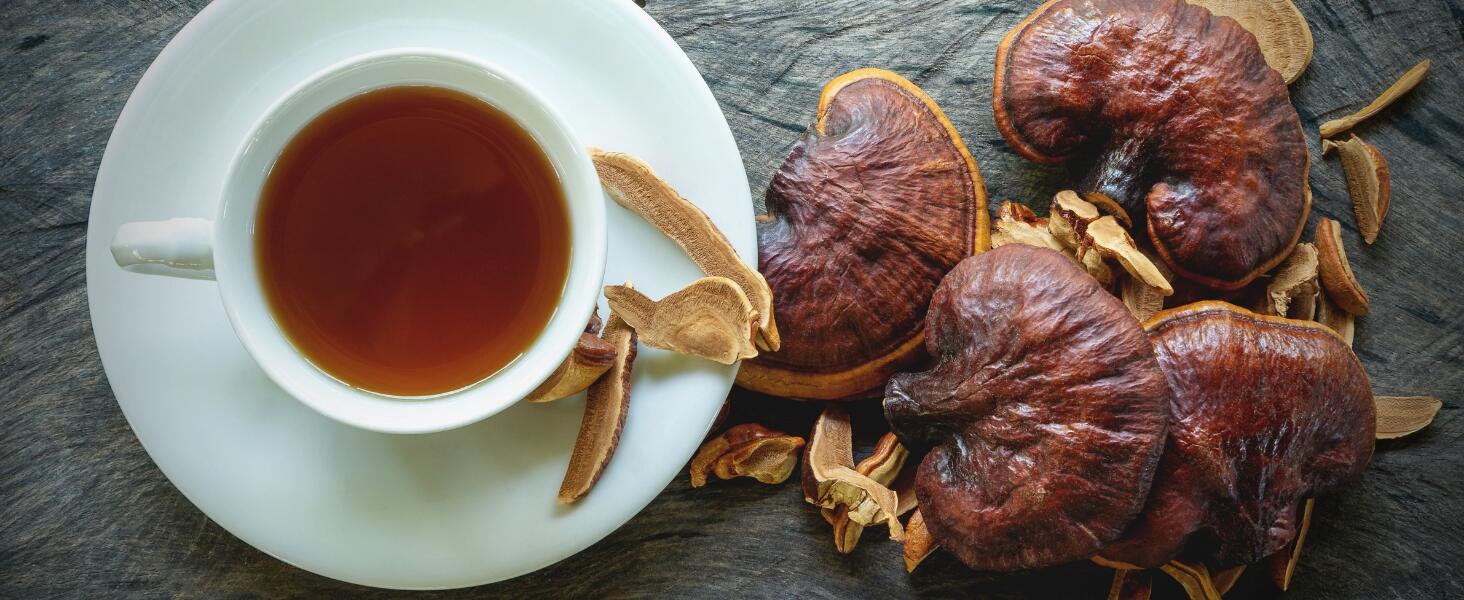
If you prefer to make Reishi tea from scratch, dried Reishi slices or high-quality Reishi powder can be simmered in water for 30 to 45 minutes to extract the beneficial compounds. The taste is naturally bitter and earthy, so most people add honey, cinnamon, lemon or ginger to make it more enjoyable. The long simmering time is important because Reishi's active compounds, particularly the triterpenes, need heat and time to release properly.
Timing tip: Because Reishi is most strongly associated with relaxation and sleep support, many people choose to take it in the evening rather than the morning. Our hot chocolate was designed with this in mind. If you drink mushroom coffee containing Lion's Mane during the day and mushroom hot chocolate containing Reishi in the evening, the two complement each other well across a full daily routine.
Growing Reishi at home
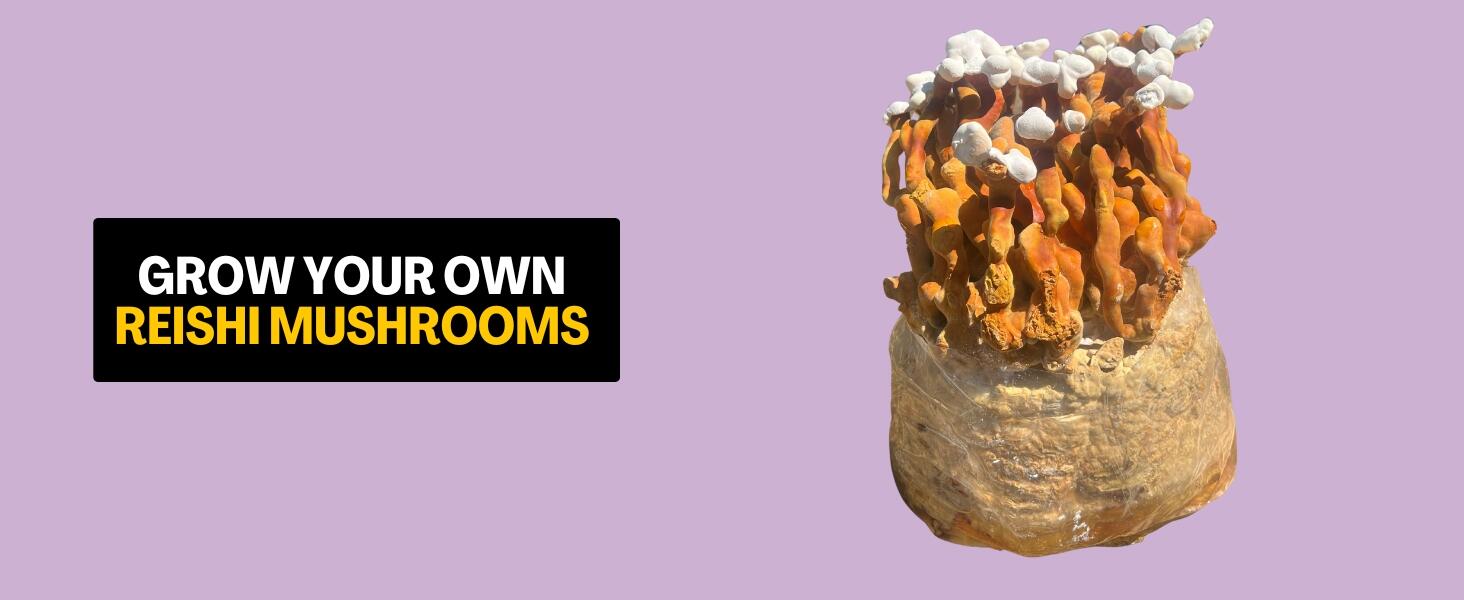
Reishi is one of the more unusual mushrooms you can grow from a kit, and it is surprisingly straightforward. Our Reishi mushroom growing kit produces striking antler-like growths that look nothing like a typical mushroom. The species we use is Ganoderma multipileum, chosen specifically for this dramatic growth pattern.
Reishi is a slow grower compared to varieties like Oyster or Shiitake, so patience is required. The trade-off is that the kit needs very little daily care. Reishi thrives in high CO2 environments, so it grows happily inside the bag with minimal intervention. Find a suitable spot away from direct sunlight and draughts, set it up, and let it do its thing. There is no daily misting routine like other kits.
The resulting mushroom is not something you would cook with in the traditional sense, but it makes a fascinating growing project and the dried fruiting body can be used for homemade Reishi tea. Many people also grow Reishi simply for the visual appeal. The antler formations are genuinely impressive and make for a great conversation piece while growing.
Reishi in our mushroom hot chocolate
Our mushroom hot chocolate was developed as an evening counterpart to our daytime mushroom coffees. The blend contains Lion's Mane, Cordyceps and Reishi in a rich chocolate base with a hint of cinnamon. Each 20g serving provides 200mg of Reishi extract alongside the other adaptogens.
The Reishi was included specifically for its calming, wind-down properties. Where our mushroom coffees are designed for focus and energy during the day, the hot chocolate is designed to help you relax in the evening. The chocolate flavour is the dominant taste, and there is no noticeable mushroom flavour coming through. It works well made with hot water, but is best with oat milk or your preferred milk for a creamier finish.

What to look for when buying Reishi products
The same quality markers that apply to other medicinal mushroom products apply to Reishi. Check for "extract" rather than "powder" on the label, as extracts contain the active compounds in a bioavailable form that your body can actually use. Look for products that use fruiting body extracts rather than mycelium grown on grain. And check the dosage per serving to ensure you are getting a meaningful amount rather than a token inclusion.
For Reishi specifically, the presence of triterpenes is an important quality indicator. These are the bitter-tasting compounds responsible for many of Reishi's traditional uses. Products that taste slightly bitter (or that state triterpene content on the label) are generally a good sign. If a Reishi product has no bitterness at all, it may contain very little actual Reishi extract.
Frequently asked questions
Is Reishi good for sleep?
Reishi has a long traditional association with sleep support and relaxation. Its adaptogenic properties are thought to help regulate cortisol, which can support the body's natural wind-down process in the evening. Several small studies have reported improvements in sleep quality among participants taking Reishi. It is not a sedative, but rather something that may help create the conditions for better sleep.
What does Reishi taste like?
On its own, Reishi has a distinctly bitter, woody flavour. This bitterness is actually a sign of the triterpene compounds that are central to its traditional uses. In a hot chocolate or drink blend, the bitterness is masked by the other ingredients. Our mushroom hot chocolate tastes like hot chocolate, not like mushrooms.
Can you eat Reishi mushrooms?
Not in the way you would eat a chestnut or shiitake mushroom. Reishi is far too tough and bitter to cook with directly. It needs to be dried and simmered as a tea, or processed into an extract for use in drinks and supplements. The growing kit produces a beautiful mushroom that can be dried and used for homemade tea, but it is not a culinary variety.
Is Reishi safe to take every day?
Reishi has been consumed daily as part of traditional diets for centuries and is generally considered safe in the amounts found in food products and drink blends. If you take blood-thinning medication, have low blood pressure, or are pregnant or breastfeeding, speak to your GP first. Reishi may interact with certain medications.
What is the difference between Reishi and Chaga?
Both are medicinal mushrooms with long histories of traditional use, but they have different strengths. Reishi is most associated with relaxation, sleep support and immune modulation. Chaga is known for its exceptionally high antioxidant content and is more commonly used in daytime coffee blends. The two work well together as part of a broader wellness routine.
Can you grow Reishi at home in the UK?
Yes. Our Reishi growing kit is designed for indoor use and produces striking antler-like formations. It is a slow grower but requires very little daily care. The kit grows inside the bag and thrives in high CO2 environments, making it one of the simplest kits to maintain.
Try Reishi for yourself
Grow your own with our Reishi mushroom kit, or enjoy it tonight in our Lion's Mane, Cordyceps and Reishi hot chocolate. Made in the UK, fast delivery nationwide.
Shop Reishi Growing KitShop Mushroom Hot ChocolatePublished by Merryhill Mushrooms / Sussex, UK