
How to Grow Enoki Mushrooms at Home
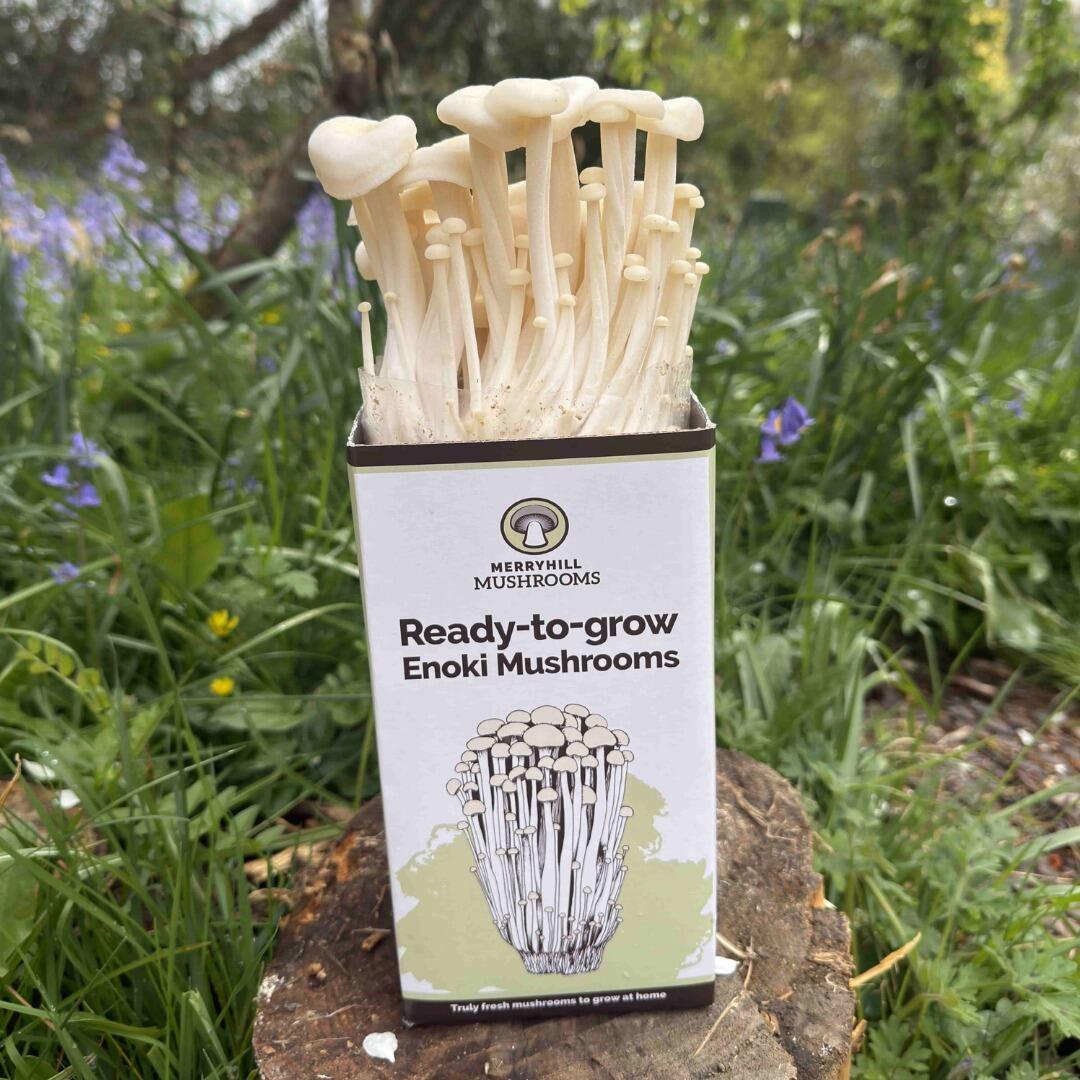
Two species grow under the Enoki name. White Enoki (Flammulina filiformis) is the variety most UK shoppers recognise from Asian supermarkets: long pale stems, tiny caps, mild and slightly fruity. Golden Enoki (Flammulina velutipes) is the amber-coloured UK native, rarely available fresh in British retail, and considerably richer in flavour. Merryhill Mushrooms offers both, and if you've only ever bought Enoki vacuum-packed from a supermarket, our guide on home-grown vs shop-bought Enoki covers why a fresh-harvested cluster looks, tastes, and cooks so differently.
Both kits arrive fully colonised and ready to fruit. Keep them in a cool room away from direct sunlight and each kit produces clusters of long, slender Enoki mushrooms ready for harvest in around two to three weeks.
Enoki is different from most Merryhill Mushrooms kits in one important way: the mushrooms grow upward through the top of the bag, not out of side holes. The outer wrapper stays in place throughout the growing cycle to hold humidity around the developing cluster. Opening just the top portion is the critical setup step.
White Enoki vs Golden Enoki: Which Kit Is Right for You?
Both varieties follow the same growing method, but they are genuinely different species with different flavours, appearances, and growing heritage. The Merryhill Mushrooms guide on White vs Golden Enoki covers the species split in detail, including a 2018 DNA reclassification that changed how both are understood. Use the tabs below for a quick comparison.
Classic White Enoki (Flammulina filiformis)
The Japanese staple. Pristine white stems with tiny pale caps, growing in tight clusters that lift away in one piece. The flavour is mild and slightly fruity, the texture crisp with a gentle crunch that holds up well in hot broths.
White Enoki is what UK shoppers find vacuum-packed in Asian supermarkets. Growing it at home gives you mushrooms picked minutes before cooking, not days or weeks after harvest. The difference in freshness is noticeable from the first bite.
Best for: hot pots, ramen, miso soup, tempura, salads.
Golden Enoki (Flammulina velutipes)
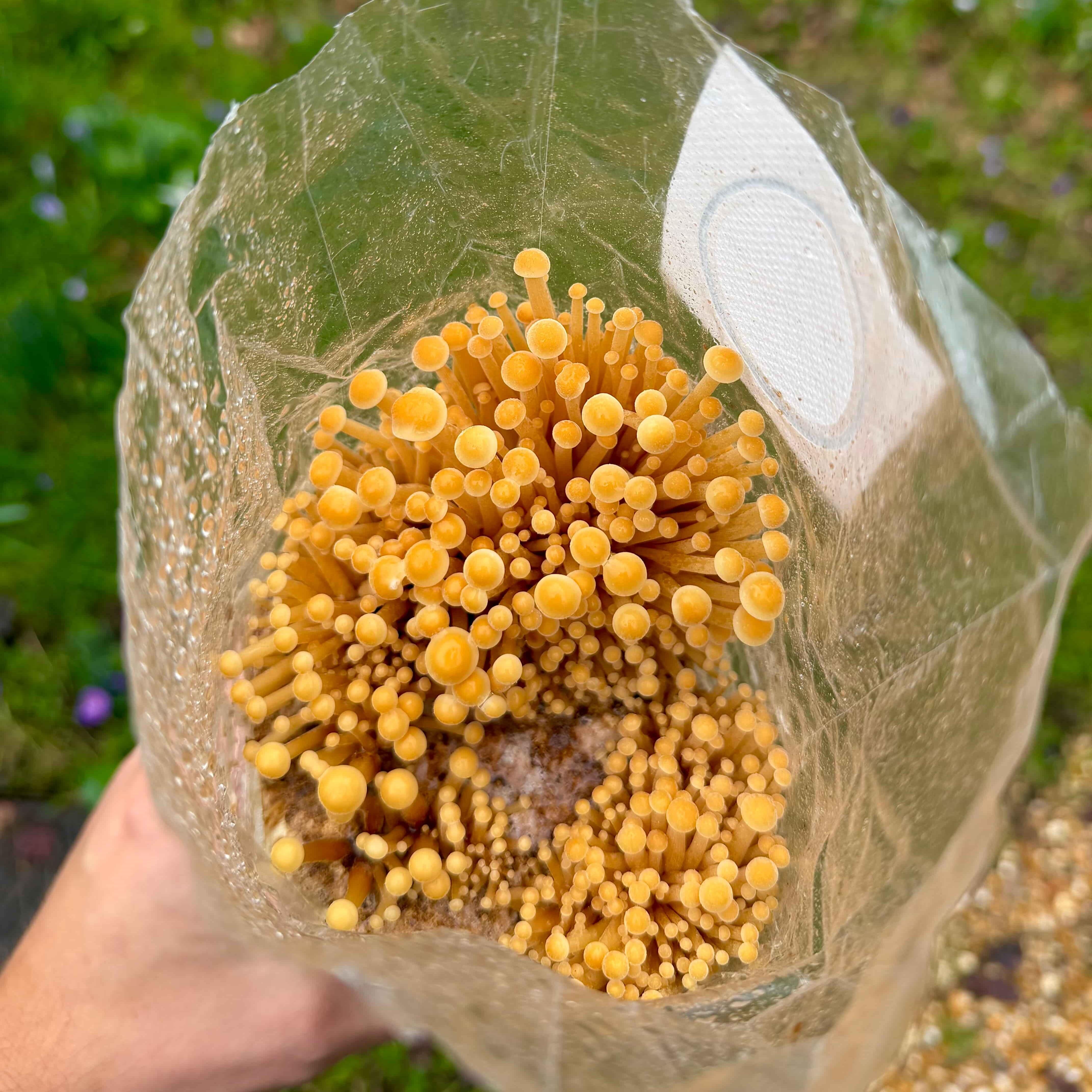
Warm amber stems with golden caps, growing in the same elegant cluster form. The flavour is slightly nuttier and richer than White Enoki, with the same crisp texture. Golden Enoki is the same species that fruits wild on British hardwood stumps in winter, where it's known as Velvet Shank.
Good luck finding it fresh elsewhere in the UK. As a native species, it's also available from Merryhill Mushrooms as an outdoor log inoculation kit alongside the indoor ready-growing version.
Best for: stir-fries where you want visible colour, roasted presentations, crispy pan-fried Enoki with egg (see our crispy Enoki and egg recipe), and any dish where a slightly richer mushroom flavour is wanted.
How to Grow Enoki Mushrooms
The fundamentals for growing Enoki are different from most other varieties in the Merryhill Mushrooms range. Enoki prefers the cooler end of the growing range, and the mushrooms grow upward through the top of the bag rather than out of side holes. That is the natural fruiting habit of Flammulina species. It is why Enoki kits look so different from an Oyster or Lion's Mane kit during growth.
Both White and Golden Enoki follow the same three-stage pattern. Pins form across the top surface. Stems extend upward as a tight cluster. Then the whole cluster twists away in one clean movement when the stems reach full length.
Three ways to grow Enoki
- An indoor ready-growing kit (fastest and most reliable, available in both White and Golden).
- An outdoor log inoculation kit (Golden Enoki only, as a UK-native species that thrives in our climate).
- From culture or grain spawn (advanced growers only).
Growing Environment and First Setup
Temperature is the single most important variable for Enoki. This is a cool-season mushroom. In the wild, Flammulina velutipes (Velvet Shank) fruits on British hardwood stumps through winter, which tells you what the species wants: cool, indirect light, and decent air circulation. The indoor kit replicates that environment without the wait.
⚠️ Important: Growing Environment
• Do not grow in view of direct sunlight
• Keep the room cool. Enoki prefers the cooler end of the range (around 10-18°C) and will stall or grow poorly in warm rooms above 20°C
• Do not suffocate the kit as it grows. Mushrooms require what's known as "fresh air exchange(FAE)"
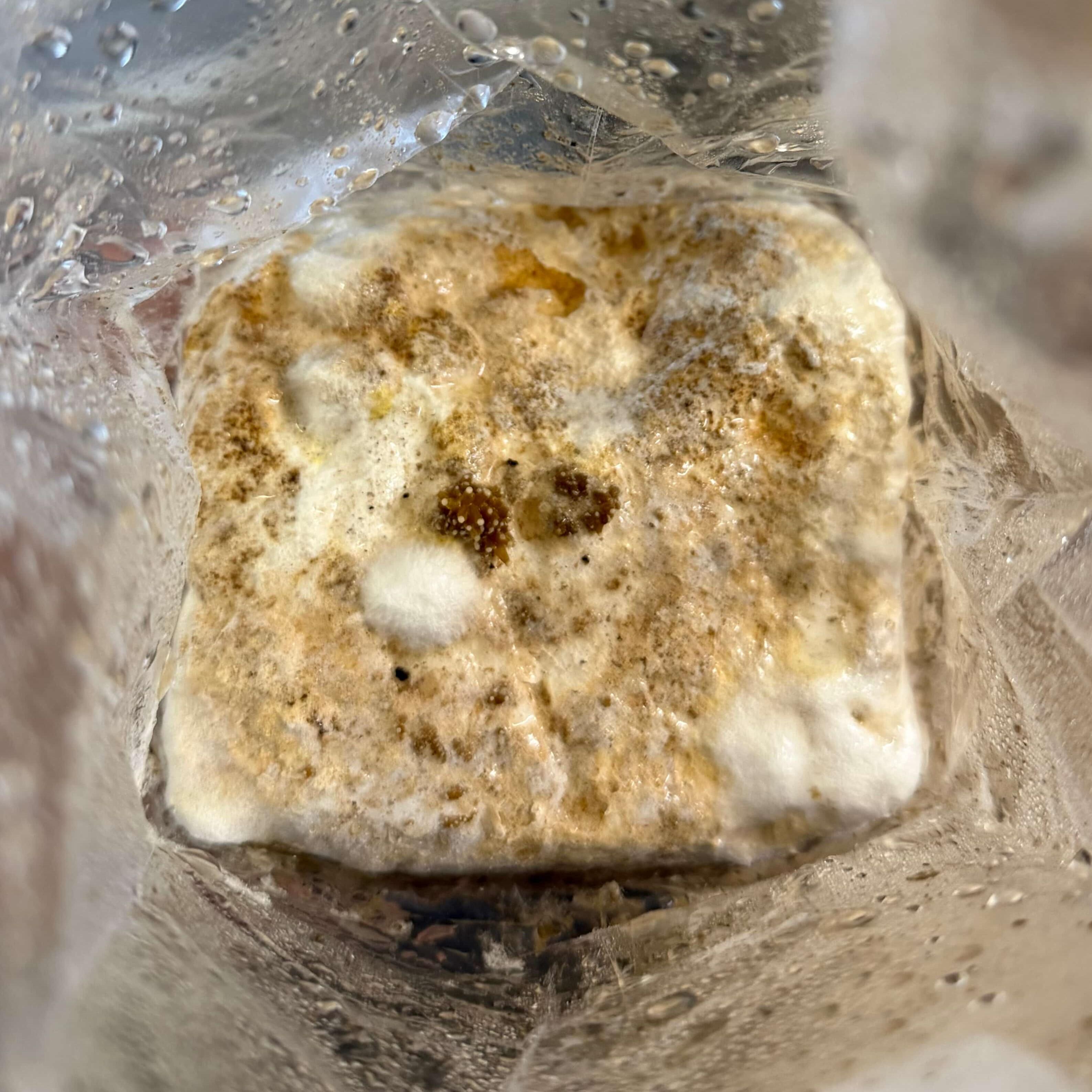
Inside the kit is a highly nutritious sawdust-based growing medium, fully spawn run and inoculated with Enoki before dispatch. The mycelium forms a fine white web of strands across the substrate surface, sometimes with a slight orange tint. That orange tint is normal for this variety. It is not contamination.
The mycelium works to break down the nutrients in the growing medium and converts that energy into the long, slender fruit bodies that push upward through the top of the kit. The riskiest part of mushroom cultivation is the colonisation stage, when contamination is most likely. Merryhill Mushrooms kits ship only once the mycelium is fully established, so that risk is already handled before the kit reaches you.
For general guidance across all varieties, the Merryhill Mushrooms growing instruction guides and product support page cover the most common questions.
What to Expect: Day by Day
Enoki crops more slowly than Pink Oyster or Shiitake. At 10-18°C with twice-daily misting, expect first pins around day 5 to 10 and first harvest around day 14 to 21. Cooler rooms within that range tend to produce cleaner, longer stems. Rooms above 16°C produce faster growth but sometimes shorter, stubbier clusters.
Day 1 - Setup
Open the box and check the block surface. White substrate with a slight orange tint is normal Enoki mycelium. Position the kit in a cool room between 10 and 18°C with indirect light, and begin misting twice daily into the open top of the wrapper.
Day 5-10 - Pins Appear
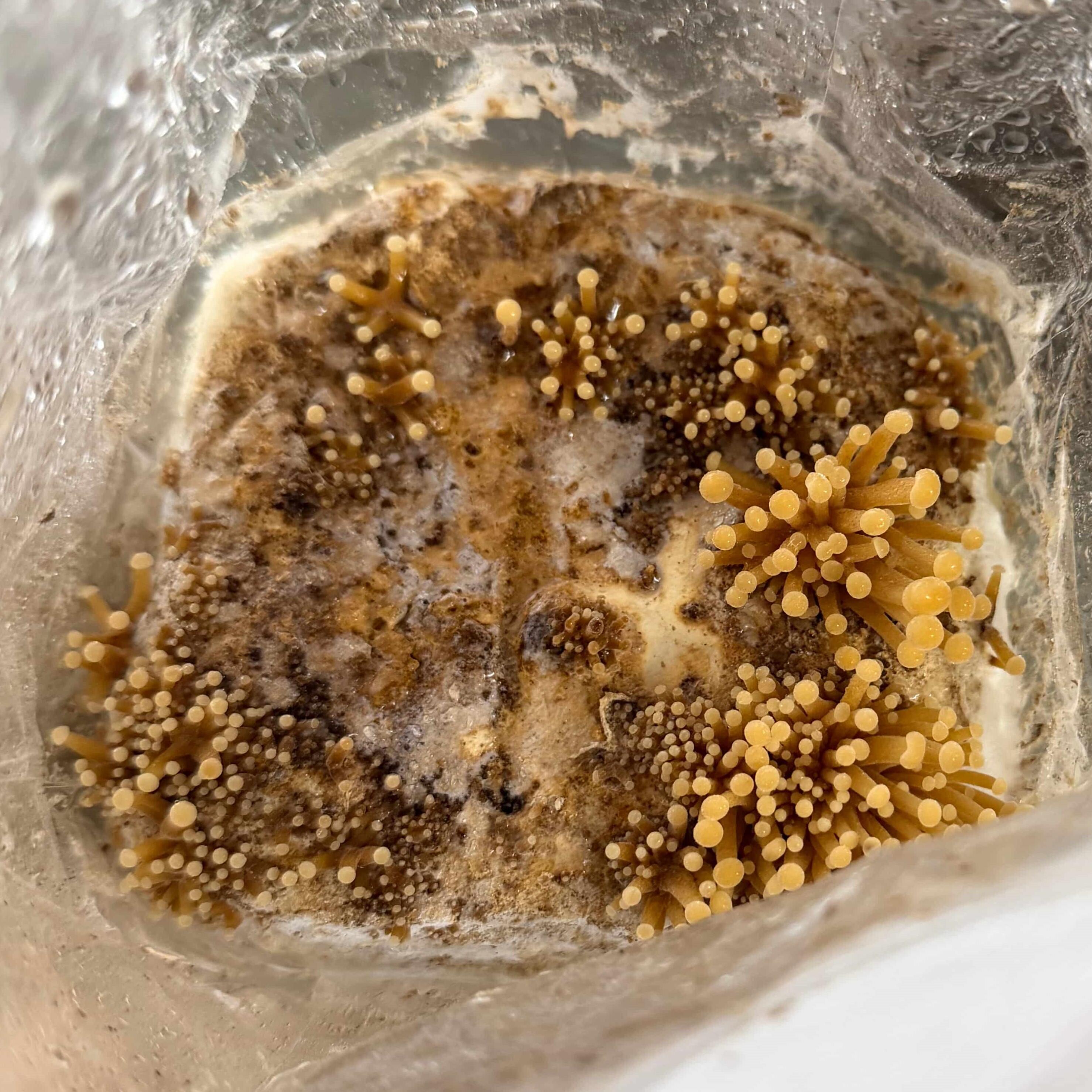
Pinning starts across the top surface once moisture levels are right. Small points emerge first and can look tightly packed before the stems lengthen. With twice-daily misting, pins form steadily. If nothing appears by day 10, check the temperature.
Day 11-12 - Stems Extend
Elongation becomes clear once the young mushrooms push upward. Tiny caps sit on top of thin stems and begin forming the familiar Enoki silhouette. Keep misting and resist the urge to harvest yet.
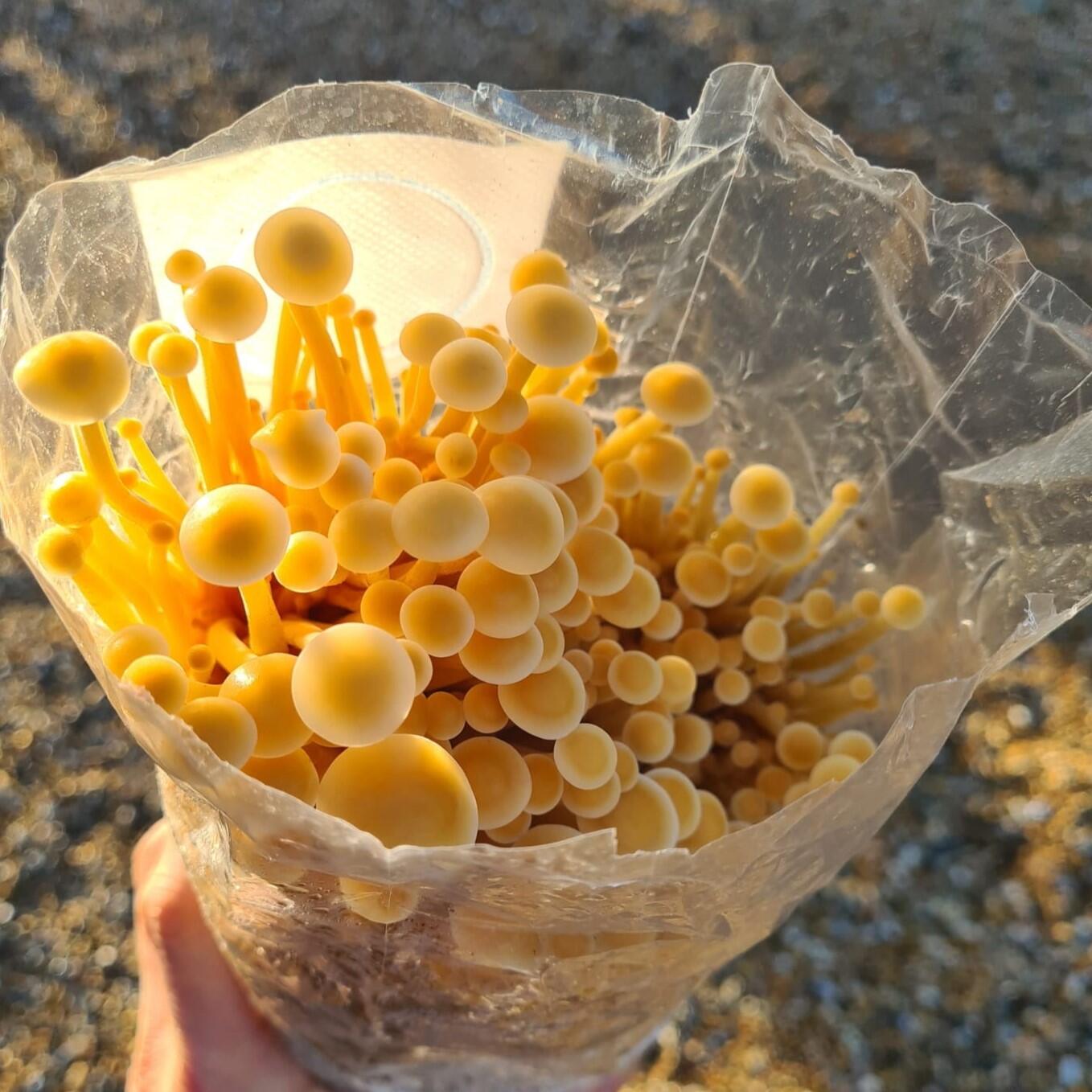
Day 12-13 - Rapid Growth
Stems grow visibly in size and the cluster pushes toward the top of the wrapper. Growth at this stage can be dramatic, with noticeable changes day to day.
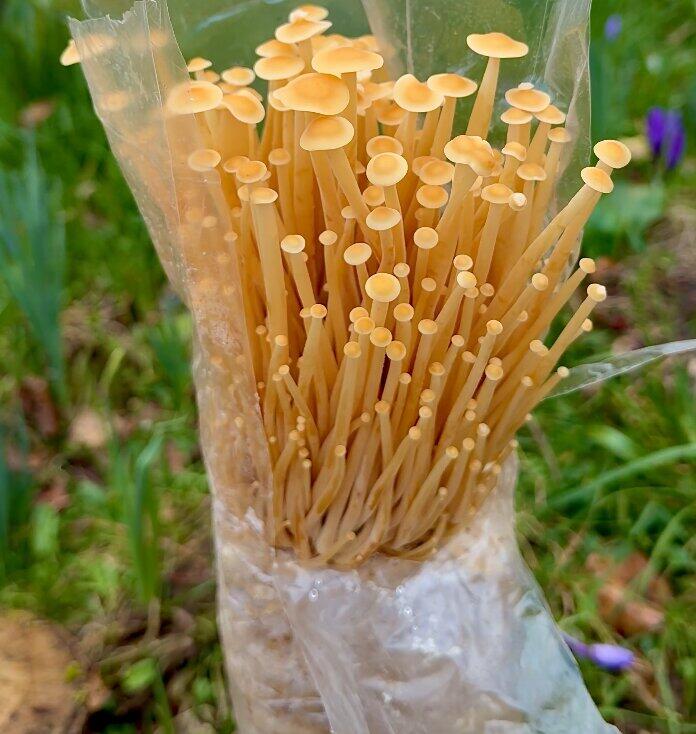
Day 14-21 - Harvest Time
Stems are formed, tidy, and still firm, with small caps on top. Harvest when stems reach 8 to 12cm and the caps are still closed or just beginning to open. The whole cluster twists away in one movement.
Timelines are typical results at 10-18°C with regular misting. View full growing timeline with all varieties
How to Set Up Your Enoki Mushroom Growing Kit
The kit arrives with its outer wrapper already in place. Open the top of the wrapper to expose the growing surface, following the instructions supplied with the kit. Do not remove the full wrapper. The wrapper stays in place throughout the growing cycle to support the cluster and hold humidity around the developing stems.
Position the kit upright in a cool room with indirect light. Enoki grows best between 10-18°C. The cooler the environment within that range, the better your stems will be. Rooms above 20°C stall fruiting or produce short, stubby clusters rather than the long slender stems Enoki is known for.
Enoki prefers humidity of 85-95%. Mist the inside of the wrapper and the top surface of the substrate twice daily. The wrapper traps that moisture around the developing cluster. Avoid soaking the substrate itself. If in doubt about technique, refer to the Enoki kit page for setup details specific to this variety.
Initiating Pinning
In nature, Enoki fruiting is triggered by cool temperatures and changes in airflow and ambient light. The mycelium grows toward light and fresh air, which is why opening the top of the outer wrapper is the single most important setup step.
Don't remove the full wrapper. Open only the top portion to expose the growing surface, and leave the rest of the wrapper in place to hold humidity around the emerging cluster. That tension between fresh air above and retained moisture around the sides is what drives clean stem development.
Enoki is a saprotrophic fungus, meaning it breaks down dead organic material. Wild Flammulina velutipes (known as Velvet Shank in British foraging circles and Winter Mushroom in Japan) fruits on hardwood stumps during the cooler months. The sawdust-based substrate in the Merryhill Mushrooms kit shortens that natural process from months to weeks.
First pins typically appear 5 to 10 days after setup, with the first harvest ready around day 14 to 21. Kits are dispatched ready growing, so start them as soon as they arrive. If you need to delay the start, the Merryhill Mushrooms kit storage guide explains safe storage conditions and timelines.
Handy Growing Guide - Stems Looking Short and Stubby?
Signs the room may be too warm: Enoki is a cool-season mushroom. A room above 20°C causes the cluster to stall, produce short stubby stems, or open its caps too early. If this happens, move the kit to a cooler spot. A pantry, utility room, north-facing bedroom, or unheated porch in winter all work well. Continue misting in the new location.
Signs of low fresh air exchange (FAE): Thin, leggy stems with overly small or malformed caps suggest restricted airflow. Check the top of the wrapper is fully open and the kit is not in a sealed cupboard or pressed against a wall. The fresh air exchange guide explains the biology and how to fix it.
When to Harvest Enoki Mushrooms
Harvest Enoki when the stems reach 8 to 12cm, the cluster is dense and tightly packed, and the tiny caps are still closed or just beginning to open. Pick before the caps flatten and spread. Fully opened Enoki loses its characteristic crunch and can turn slightly bitter at the tips.
If the caps start to flatten or spread, harvest immediately. The mushrooms are still perfectly edible at that stage, but the texture and flavour are best while the caps are tight. For a visual reference of what harvest-ready Enoki looks like alongside every other variety in the Merryhill Mushrooms range, the Merryhill Mushrooms harvest timing guide has photos at each stage.
Harvesting and Future Crops
Growing Tips
With one hand, grip the entire cluster near the base and twist to lift the whole bunch away from the substrate in one movement. Enoki grows as a tight, cohesive cluster. The whole bunch comes away cleanly rather than being picked mushroom by mushroom.
Trim the root end with a knife to remove any attached substrate. A very brief rinse under cold water is fine if needed, but pat dry thoroughly before cooking. Enoki bruises easily, so handle with care. Stored wrapped in paper towel in the fridge, a fresh cluster keeps for up to a week.
After the first flush, leave the kit in place and continue the same misting routine. The next crop grows from the same surface, so there is no need to reopen the wrapper differently. Most Merryhill Mushrooms Enoki kits produce 2 flushes across the kit's life, with the second being smaller than the first. The kit continues to yield until the nutrition in the substrate is exhausted.
Nutritional Profile of Enoki Mushrooms
Enoki is one of the lowest-calorie mushrooms in the Merryhill range. A 100g serving sits at around 37 kcal with approximately 2.7g of protein, negligible fat, and a meaningful amount of dietary fibre. That combination makes Enoki a genuinely practical ingredient for plant-forward cooking, not just an interesting garnish.
Cooking with Enoki Mushrooms
Enoki is prized in Japanese, Korean, and Chinese cooking for its delicate crunch and mild, slightly fruity flavour. It cooks in seconds. That speed makes it ideal for last-minute additions to soups, hot pots, ramen, and stir-fries where you want texture without changing the dish's flavour profile.
For recipes: try our tempura battered Enoki or Enoki with butter and soy sauce. Golden Enoki holds its warm amber colour better in quick-cooked dishes. White Enoki gives a cleaner visual contrast against darker ingredients like soy-based broths. Pan-fried, dropped into a hot pot, wrapped in bacon, or raw in a salad, both varieties work across a wide range of applications.
Before cooking, trim 1 to 2cm from the base where the stems are compressed together, then gently separate the strands above with your fingers. Skip soaking in water. Wet Enoki steams rather than sears, and waterlogged stems lose their signature crunch entirely. The Merryhill Enoki preparation guide covers trimming, portioning, and how to handle them before different cooking methods.
Growing Enoki Mushrooms Outdoors
Outdoor Growing Options (Golden Enoki only)
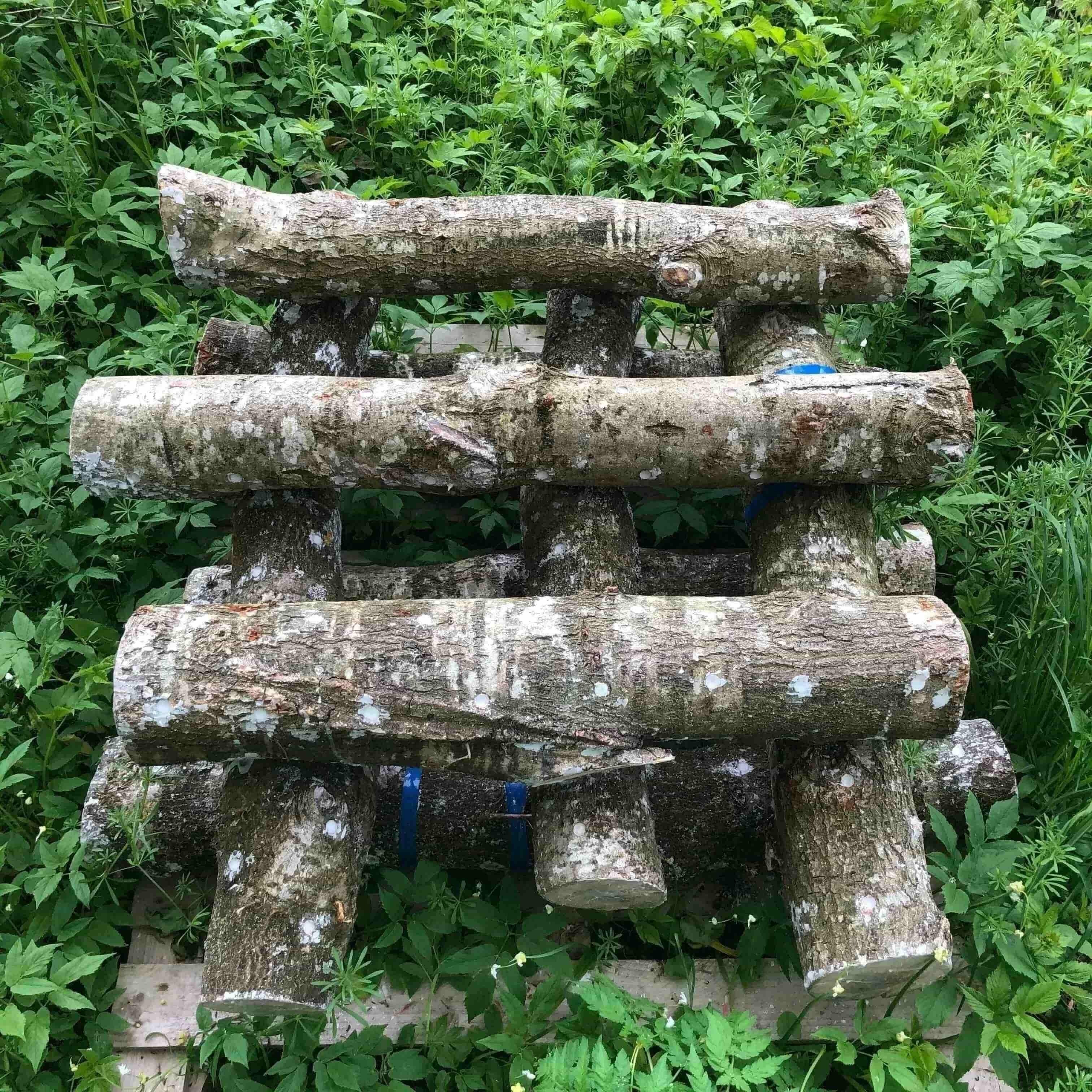
Golden Enoki can also be grown outdoors on hardwood logs, as Flammulina velutipes is a UK-native species that already grows wild in British woodland through winter. Merryhill offers outdoor log inoculation kits with Golden Enoki spawn plugs alongside Shiitake, Lion's Mane, White Oyster, and Tarragon Oyster.
Please note: we do not offer White Enoki as an outdoor log kit. White Enoki (Flammulina filiformis) is an East Asian cultivated species and an indoor-only variety in the Merryhill range.
Outdoor log kits take 12 to 18 months to fully colonise before the first flush, but then fruit reliably after rainfall for three to five years with almost no ongoing care. For full instructions, see the outdoor log growing guide.
Enoki Mushrooms: Frequently Asked Questions
Enoki are slender gourmet mushrooms grown in two distinct species: White Enoki (Flammulina filiformis), the Japanese variety familiar from Asian supermarkets, and Golden Enoki (Flammulina velutipes), the UK-native Velvet Shank. Both produce long slender stems and tiny caps in tight clusters. Both are staples in Japanese, Korean, and Chinese cooking.
Different species, not just different colours. White Enoki is Flammulina filiformis, native to East Asia, with pale stems and a mild fruity flavour. Golden Enoki is Flammulina velutipes, native to the UK, with amber stems and a slightly richer, nuttier flavour. Both grow identically indoors using the Merryhill ready-growing kits. The White vs Golden comparison guide covers the species history and flavour differences in full.
Warm rooms above 20°C, direct sunlight, dry air, and fully removing the outer wrapper. Enoki is a cool-season mushroom that produces its best clusters in rooms between 10 and 18°C. The wrapper stays in place throughout the growing cycle. Remove only the top portion to open the growing surface.
Enoki cooks quickly. Trim the base, separate the cluster into smaller bunches, and cook for 1 to 3 minutes. Hot pots, ramen, miso soup, tempura, and stir-fries all work well. Longer cooking makes the stems rubbery. Raw Enoki is traditionally avoided in Japanese cooking; even 60 seconds in hot broth is enough to cook them properly.
Enoki is traditionally cooked, and we'd recommend cooking for best flavour and food safety. Brief cooking of even a minute in hot broth improves digestibility and brings out the flavour compounds that make Enoki distinctive. Raw Enoki in a salad is possible but not the natural preparation.
Open the top of the wrapper to expose the growing surface, position the kit in a cool room between 10 and 18°C, and mist twice daily. First pins appear around day 5 to 10. First harvest arrives around day 14 to 21. The whole cluster twists away cleanly in one movement. Keep misting after harvest for the second flush.
Enoki can be dried, though it's most useful fresh because the crunch is what makes it distinctive. If you have excess from a flush, dehydrate at a low temperature and store in an airtight container. See the Merryhill guide on dehydrating mushrooms at home for step-by-step instructions.
Fresh White Enoki turns up in Asian supermarkets in vacuum-packed bunches. Golden Enoki is much harder to find. The freshest option of either variety is a home-grown kit, where you harvest the cluster at its peak and cook within minutes. No supply chain, no plastic wrap, no food miles.
Short, stubby stems nearly always mean the room is too warm. Enoki produces its signature long slender stems in cool conditions between 10 and 18°C. Move the kit to a cooler spot and the next flush should show noticeably longer, cleaner growth. A pantry, north-facing room, or unheated porch in winter all work well.