
Chaga Mushroom Benefits: What It Is, How People Use It, and What to Expect | Merryhill Mushrooms
Chaga Mushroom Benefits: What It Is, How People Use It, and What to Expect
Chaga is one of those mushrooms that keeps appearing in wellness conversations, usually alongside words like "adaptogen" and "superfood." If you have seen it mentioned on product labels or in health articles and wondered what it actually is, whether the claims hold up, and how people use it in practice, this guide covers the basics without overpromising.
We use Chaga extract in our Perform mushroom coffee, so we have spent time understanding what Chaga brings to a blend and why it has been used in traditional food cultures for so long. Here is what we have learned.
What is Chaga?
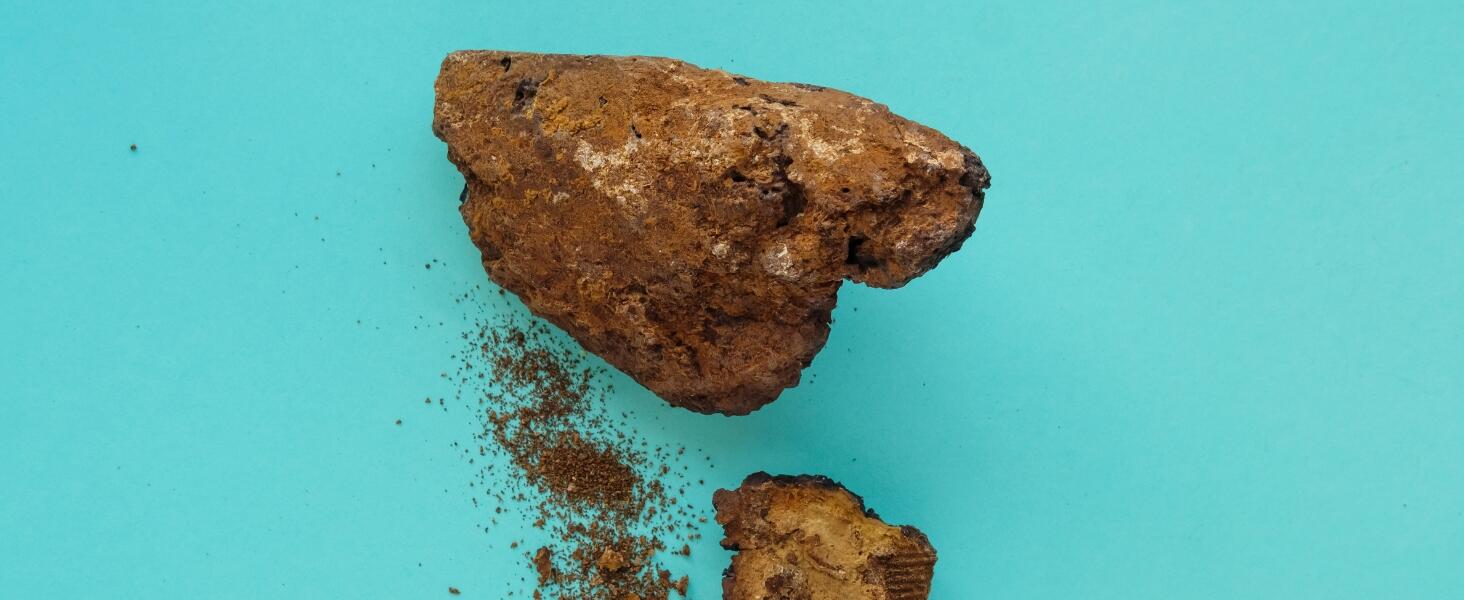
Chaga (Inonotus obliquus) is a fungus that grows on birch trees in cold climates, primarily across Siberia, Canada, Alaska and parts of Northern Europe. It does not look like a typical mushroom. There is no cap, no stem and no gills. Instead, Chaga forms as a hard, dark, irregular mass on the outside of the tree, almost like a piece of burnt charcoal. Break it open and the interior is a rich orange-brown colour.
Because of its tough, woody texture, Chaga is not a culinary mushroom in the way that shiitake or chestnut mushrooms are. You would not slice it into a stir-fry. Instead, it has traditionally been ground into powder and brewed as a tea, or more recently, added as an extract to coffee blends, hot chocolates and supplement formats. In parts of Russia and Finland, Chaga tea has been a household staple for centuries, often used as a coffee substitute during times when coffee was scarce or expensive.
What does the research say about Chaga?
Chaga has been the subject of a growing number of studies, though it is worth being upfront that much of the research so far has been conducted in laboratories or on animals rather than in large-scale human trials. That does not mean the findings are meaningless, but it does mean we should be honest about what we know and what we are still learning.
Here is a summary of the main areas where Chaga has shown promise.
Antioxidant content
Chaga is consistently found to contain very high levels of antioxidants, particularly a group of compounds called polyphenols. Antioxidants help neutralise free radicals in the body, which are unstable molecules that can damage cells over time. This is one of the most well-supported aspects of Chaga research and is the reason it appears so frequently in discussions about cell health and ageing.
Immune system support
Chaga contains beta-glucans, a type of polysaccharide found in several medicinal mushrooms. Beta-glucans are thought to help regulate immune function, potentially making the immune system more responsive when it needs to be and less overactive when it does not. This is why Chaga is often described as an "immune modulator" rather than simply an immune booster.
Anti-inflammatory properties
Several laboratory studies have found that Chaga extracts demonstrate anti-inflammatory effects. Chronic low-level inflammation is linked to a range of health conditions, so ingredients that may help manage inflammation are of interest to researchers. Again, most of this work has been done in controlled settings rather than clinical trials, but the direction of the findings is consistent.
Skin and cell health
The high antioxidant content of Chaga, particularly melanin and superoxide dismutase (SOD), has led to interest in its potential benefits for skin health. The thinking is straightforward: antioxidants that help protect cells from oxidative stress may also support skin condition over time. Some people use Chaga-based products specifically with skin health in mind, though robust clinical evidence for this particular application is still emerging.
A note on health claims: Chaga is a food ingredient, not a medicine. We are not making therapeutic claims about our products. The research summarised above reflects the current state of scientific interest in Chaga, and we have tried to represent it honestly. If you have specific health concerns, speak to your GP before making changes to your diet.
How Chaga differs from culinary mushrooms
If you are used to cooking with chestnut, shiitake or oyster mushrooms, Chaga is a completely different experience. You will not find it fresh in the supermarket, and you would not want to eat it whole. It is extremely hard, has no culinary flavour in the traditional sense, and needs to be processed (either ground into powder or extracted) before it can be consumed.
This is why Chaga almost always appears in drink formats rather than food. As a tea, it has a mild, slightly earthy flavour with vanilla-like undertones. In coffee blends, the Chaga extract sits in the background, adding depth without changing the overall coffee character. In our Perform mushroom coffee, Chaga is blended with Lion's Mane, Maitake, Tremella and Maca to create a broader adaptogenic profile, with each ingredient contributing something different.
The important distinction when shopping for Chaga products is the same as with any mushroom supplement: look for "extract" on the label rather than "powder." An extract means the beneficial compounds have been properly extracted and are bioavailable. A raw powder is less processed, harder for the body to break down (due to the chitin in mushroom cell walls), and often does not dissolve well in drinks.
How people use Chaga in their daily routine
Chaga is not typically used on its own in modern products. Because it does not have the same direct cognitive associations as Lion's Mane or the energy associations of Cordyceps, it tends to appear as part of a broader blend rather than a standalone ingredient.
The most common ways people include Chaga in their routine are through mushroom coffee blends (where it is combined with other adaptogens), mushroom hot chocolates, and dedicated Chaga tea. In each case, the format matters because people are far more likely to stick with a routine if the product tastes good and fits naturally into their day.
Our Perform mushroom coffee includes 250mg of Chaga extract per serving alongside Lion's Mane, Maitake, Tremella and Maca. It is designed as a daily coffee replacement, just add hot water, and the Chaga works alongside the other adaptogens rather than carrying the entire load on its own. For anyone who prefers a non-coffee option, our mushroom hot chocolate is an alternative that works well as an evening drink.
Taste note: Chaga on its own has a mild, slightly sweet and earthy flavour, often compared to vanilla or birch bark tea. In a coffee blend, you will not taste it as a distinct ingredient. It contributes to the overall smoothness and depth of the drink rather than adding any mushroom-like flavour.
Chaga vs Lion's Mane: what is the difference?
If you have been looking at mushroom wellness products, you will have seen both Chaga and Lion's Mane mentioned frequently. They are different mushrooms with different traditional uses, and understanding the distinction helps when choosing products.
Lion's Mane (Hericium erinaceus) is primarily associated with cognitive function. It contains compounds called hericenones and erinacines that are thought to stimulate nerve growth factor (NGF) production, which is why it appears so often in focus and mental clarity conversations. Lion's Mane is also a culinary mushroom with a seafood-like texture that can be cooked and eaten fresh, which makes it quite different from Chaga in both use and appeal.
Chaga, by contrast, is more commonly associated with immune support, antioxidant activity and general wellness. It is not a culinary mushroom and cannot be grown at home in the same way. The two mushrooms complement each other well in a blend, which is why many products (including ours) combine them.
Neither mushroom is "better" than the other. They serve different purposes, and many people choose products that include both. If your primary interest is focus and mental sharpness, Lion's Mane is the more relevant ingredient. If you are drawn to antioxidant support and immune health, Chaga is the one to look for. If you want both in one cup, our Perform coffee contains both Lion's Mane and Chaga alongside Maitake, Tremella and Maca.
What to check on labels before buying Chaga products
Not all Chaga products are created equal, and the label is the fastest way to tell a well-made product from a weak one. Here are the three things worth checking.
Extract vs powder. As mentioned above, "extract" means the active compounds have been properly extracted and are bioavailable. "Powder" means the raw Chaga has been ground up but not extracted, which reduces both effectiveness and solubility. Always choose extract-based products where possible.
Fruit body vs mycelium. Chaga's beneficial compounds are concentrated in the fruiting body (the hard mass that grows on the tree). Some cheaper products use mycelium grown on grain, which contains less of the target compounds and more starch from the growing substrate. Look for "fruit body" or "fruiting body" on the label. All of our mushroom coffees use fruit body extracts only.
Dosage per serving. Check how much Chaga extract is actually in each serving. Some products list it as part of a "proprietary blend" without stating the individual amounts, which makes it impossible to know whether you are getting a meaningful dose. Our Perform coffee states the exact amount: 250mg of Chaga extract per serving alongside the other adaptogens.
Frequently asked questions
What does Chaga taste like?
On its own as a tea, Chaga has a mild, slightly sweet and earthy flavour with vanilla-like undertones. In a coffee blend, you will not taste it as a distinct ingredient. It blends into the background and contributes to a smoother, deeper cup.
Can you grow Chaga at home?
Not practically. Chaga requires a living birch tree in a cold climate and takes years to develop. It is not something that can be grown from a kit. The most accessible way to consume Chaga in the UK is through extract-based products like mushroom coffee or Chaga tea.
Is Chaga good for skin?
Chaga's high antioxidant content, including melanin and superoxide dismutase, has generated interest in potential skin benefits. The theory is that antioxidants that protect cells from oxidative stress may also support skin health over time. Research in this specific area is still developing, but the antioxidant profile is well documented.
Is Chaga safe to consume daily?
Chaga has been consumed daily as a tea in Russia and Northern Europe for centuries. As a food ingredient in the amounts found in mushroom coffees and teas, it is generally considered safe for daily use. If you take blood-thinning medication, have an autoimmune condition, or are pregnant, speak to your GP first, as Chaga may interact with certain medications.
What is the difference between Chaga and Reishi?
Both are medicinal mushrooms used in traditional medicine, but they have different profiles. Chaga is particularly high in antioxidants and is associated with immune modulation. Reishi is more commonly associated with relaxation, sleep quality and stress reduction. Our mushroom hot chocolate includes Reishi for this reason, making it a good evening complement to a morning Chaga-containing coffee.
Where can I buy Chaga products in the UK?
Our Perform mushroom coffee contains Chaga alongside Lion's Mane, Maitake, Tremella and Maca. It is available directly from our website with fast UK delivery, and also through Amazon UK.
Try Chaga in our Perform mushroom coffee
Lion's Mane, Chaga, Maitake, Tremella and Maca in one cup. Made in the UK using fruit body extracts only, with fast delivery nationwide.
Shop Perform Mushroom CoffeePublished by Merryhill Mushrooms / Sussex, UK