What are "Ready Growing" Mushroom Kits
What is a "Ready Growing" Mushroom Kit? Why do they crop faster than other kits?
A ready growing mushroom kit is not a marketing label. It describes a real difference in how the kit is prepared before it reaches you, Merryhill Mushrooms Limited started out with that vision in mind, making mushroom growing easier and more accessible and most importantly, successful. With all of our "ready growing" kits the mycelium has already fully colonised the substrate, which means the slow, uncertain stage of mushroom cultivation is finished before the box arrives at your door.
Most mushroom growing kits ask the customer to wait while the mycelium establishes itself. A ready growing kit from Merryhill Mushrooms skips that stage entirely. The growing process is already underway when the kit is dispatched, so the first harvest can appear in as little as 7 to 10 days.
What "pre-spawned" means in plain English
Every mushroom starts as mycelium. Mycelium is a network of fine white threads that spreads through a growing material called substrate, or compost. You can think of substrate as the food source, this growing medium it provides the energy and nutrients the mushroom needs to grow and produce their fruit bodies.
When mycelium is introduced to fresh substrate, it needs time to spread through the entire block. This stage is called colonisation, and in commercial growing it happens in carefully controlled rooms over several weeks. Temperature, humidity, and cleanliness all need to be right, because contamination during colonisation is the most common reason mushroom grows fail.
"Pre-spawned" simply means that colonisation has already happened. The mycelium has fully established itself throughout the substrate block before the kit is packed and posted. When you open the box, the white material you see covering the block is healthy mycelium, sometimes customers will query this, thinking it is mould, but it is just the perfectly normal mycelium. The kit is ready to produce mushrooms.
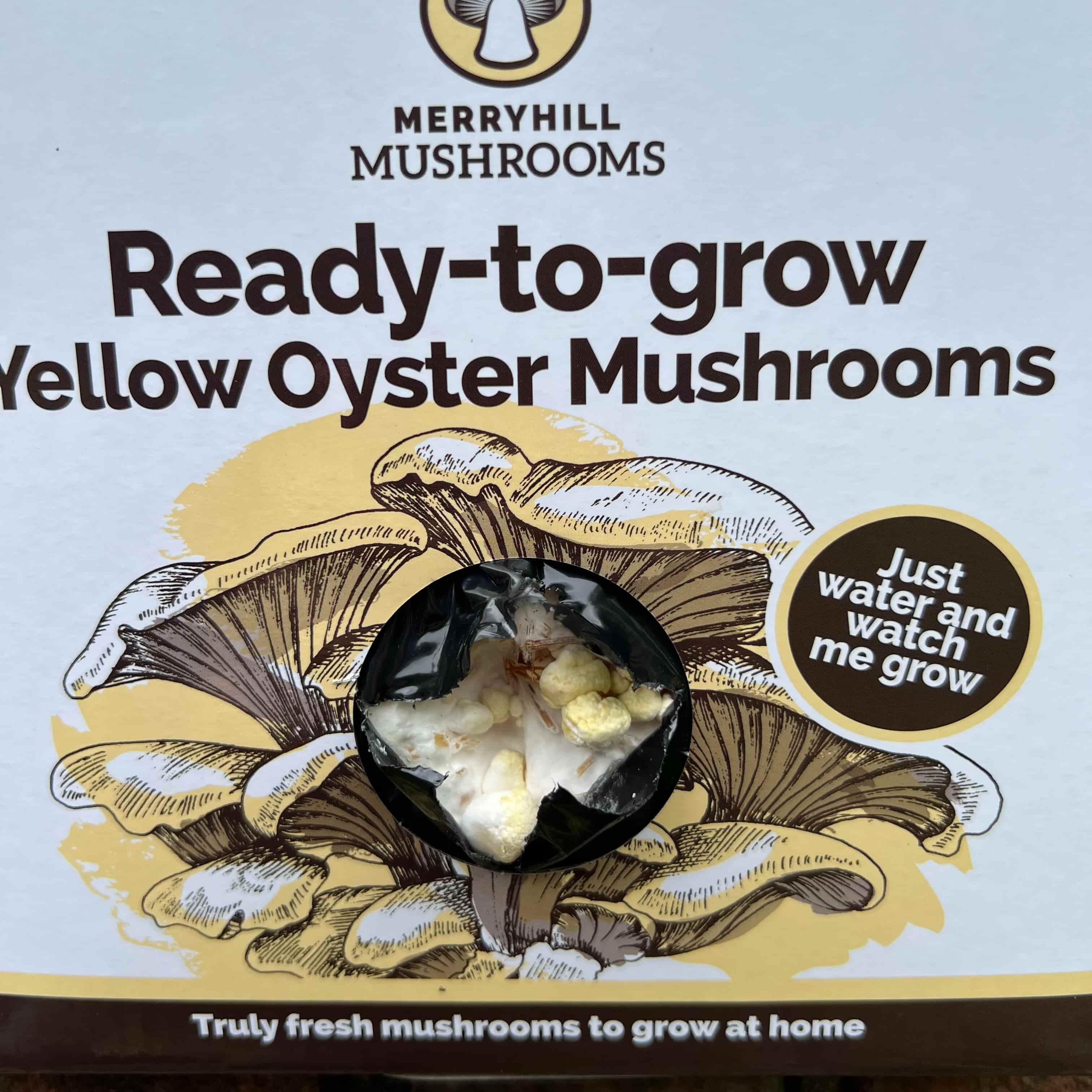
The white covering on a ready growing Oyster Mushroom kit is healthy mycelium — colonisation is already complete
Why cropping can start in 7 to 10 days
The timeline from opening a kit to picking your first mushrooms depends almost entirely on one thing: how far along the colonisation process is when the kit arrives.
With a typical kit, the customer receives a block that is only partially colonised or not colonised at all. The mycelium still needs to spread through the substrate, which can take two to four weeks depending on conditions at home. Only after colonisation is complete can the kit begin to fruit and even then, it needs the right trigger of humidity, temperature, and fresh air to start producing mushrooms.
A ready growing kit removes that entire waiting period. The colonisation happened at the Merryhill Mushrooms farm in Sussex under controlled conditions. By the time the kit reaches your kitchen, utility room, or spare bedroom, it only needs the environmental trigger to begin fruiting. That is why the first pins can appear within days rather than weeks.
The 7 to 10 day range exists because different mushroom varieties grow at different speeds. Oyster mushrooms, Lion's Mane and Shiitake tend to fruit fastest. Nameco and Reishi mushrooms may take a longer but all will significantly faster and safer than starting from an uncolonized block.
What a typical kit timeline looks like compared to ready growing
The difference becomes clear when you compare the two timelines side by side. A typical kit has an extra stage that the customer must manage at home, while a ready growing kit arrives at the point where fruiting can begin immediately.
Typical mushroom kit timeline
Week 1 to 3 — Colonisation at home
The customer waits for mycelium to spread through the substrate. Temperature and cleanliness are critical. Contamination risk is highest during this stage.
Week 3 to 4 — Fruiting conditions introduced
Once colonisation looks complete, the customer adjusts humidity, airflow, and light to trigger fruiting. Pins may begin to form if conditions are right.
Week 4 to 6+ — First harvest
Mushrooms develop to harvestable size. Total time from opening to first pick is typically four to six weeks or longer.
Ready growing kit timeline
Day 1 — Open, position, and mist
Colonisation is already done. The kit goes straight into fruiting conditions. Start misting, place in a room with indirect light and good airflow, and the growing process begins immediately.
Days 3 to 6 — Pins form and develop
Small bumps (primordia) appear on the surface and develop into recognisable mushroom shapes. Growth can be rapid — some varieties double in size overnight during this stage.
Days 7 to 10 — First harvest
Mushrooms reach full size and are ready to pick. Total time from opening to first harvest is typically one to three weeks, depending on variety and room conditions.
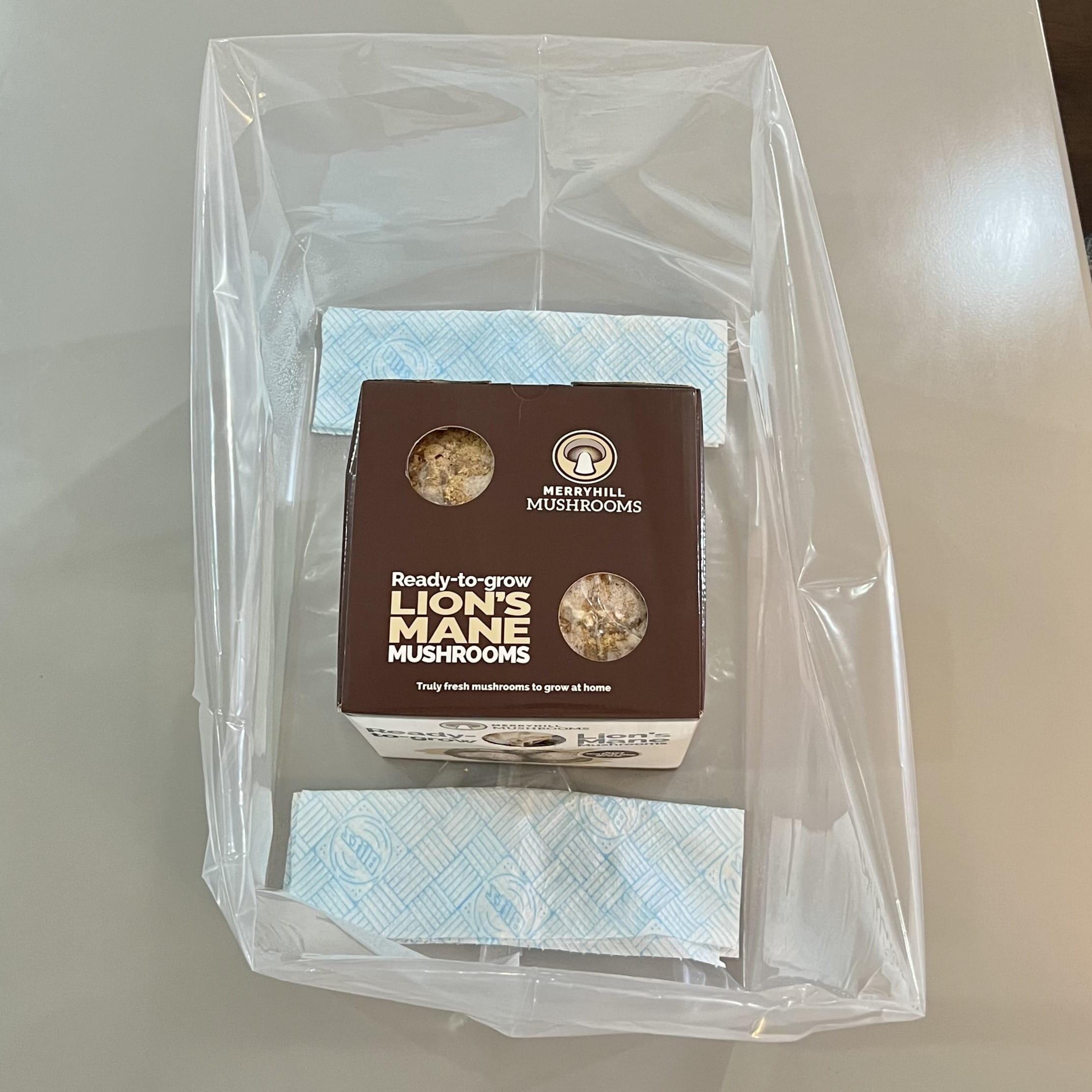
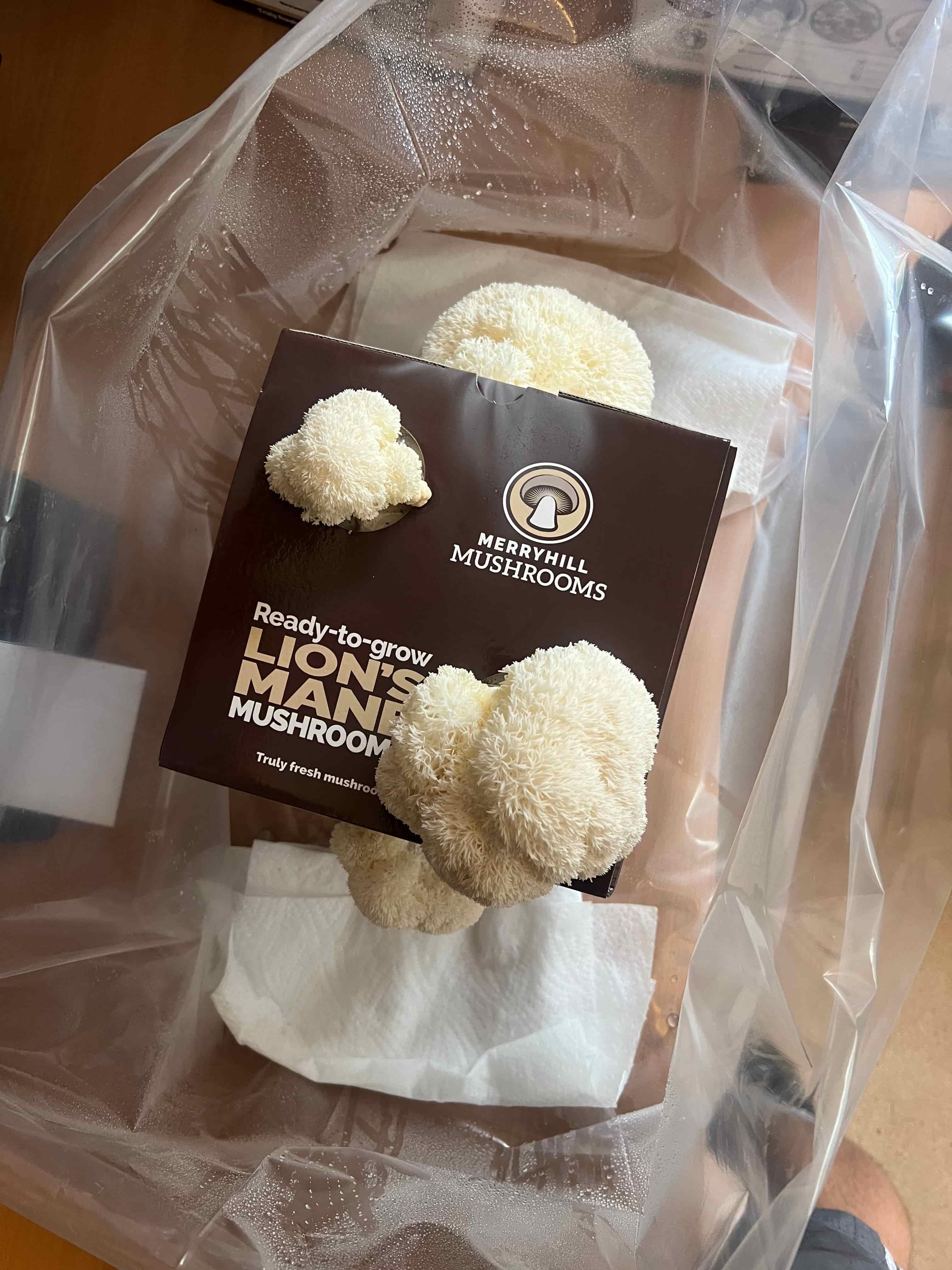
Left: a ready growing kit on day one — Right: mushrooms at harvest size within 7-10 days
What conditions still matter after opening
A ready growing kit removes the hardest part of mushroom cultivation, but it does not remove all responsibility. The kit still needs the right environment to fruit well. Three factors have the biggest impact on speed and quality of growth.
Humidity
Mushrooms are mostly water, so they need moisture in the air around them to develop properly. The most common reason a ready growing kit stalls is dry air. A fine mist from a clean spray bottle, applied two to three times a day, keeps the surface and / or environment damp (Lion's mane it is best to provide humidity ambiently, but apart from that kit, we advise on spraying the substrate typically, twice daily, without waterlogging the block. In dry rooms, placing a tray of water nearby or placing the kit within an open (Very important) bag can help maintain humidity between misting.
Temperature
Most Merryhill Mushrooms ready growing kits fruit best between 14 and 21 degrees Celsius. That suits most UK homes for much of the year, kitchens, utility rooms, and spare bedrooms usually fall within this range. The key is consistency. A room that stays at a steady 17-18 degrees will usually produce better results than one that swings between 12 and 22 degrees throughout the day. Avoid placing kits near radiators, on sunny windowsills, or in rooms that get very hot during summer afternoons.
Airflow
Mushrooms need fresh air (FAE) to develop proper shape and texture. A room with some natural air movement is ideal. a kitchen with a window cracked open or a utility room with ventilation. Sealed spaces like cupboards, wardrobes, or airing cupboards restrict air exchange, which can cause mushrooms to grow tall and thin with small caps instead of developing their natural form. Equally heavy draughts are to be avoided, so you can have too much airflow which can cause drying, especially in Lion's Mane, (What to avoid when growing Lion's Mane).
Light matters too, but less than people expect. Mushrooms do not photosynthesise. Indirect daylight is enough to guide growth direction. A bright room is fine — direct sunlight is not, because it dries the kit and raises the temperature around the block.
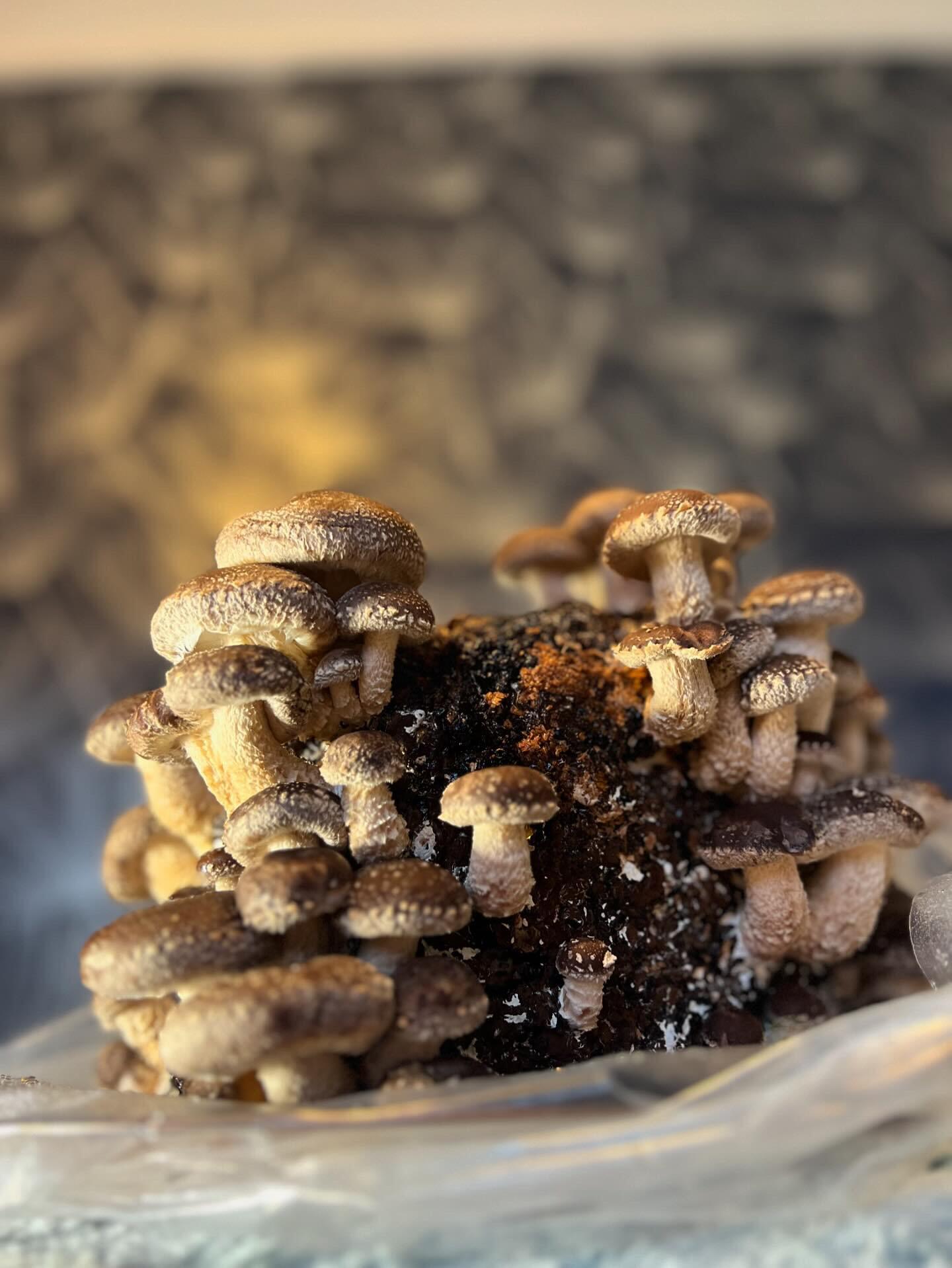
A bright room with indirect daylight, steady temperature, and some airflow gives the best results
Who ready growing kits suit best
The ready growing format was designed to lower the barrier to entry. Not everyone who wants to grow mushrooms at home has the patience or confidence to manage a colonisation stage, and that is exactly the point they should not have to.
Beginners who have never grown anything before
Ready growing kits remove the most technical and failure-prone stage. The instructions are straightforward: Typically - open, position, mist, and wait. There is no need to understand colonisation, sterilisation, or spawn rates. If you can spray a bottle of water twice a day, you can grow mushrooms.
Gift buyers who want the recipient to succeed
A mushroom growing kit that takes six weeks to produce results and might fail during colonisation is a risky gift. A ready growing kit that shows visible progress within days feels rewarding and builds confidence. That is why mushroom kits are increasingly popular as birthday, Christmas, and housewarming gifts.
Home cooks who want fresh mushrooms on demand
Fresh home-grown mushrooms have a firmer texture and cleaner flavour than most shop-bought options. Varieties like Lion's Mane and Oyster are difficult to find fresh in supermarkets, which makes growing them at home even more worthwhile for cooks who want to experiment.
Families looking for a fast, visible growing project
Children respond to speed. A seed that takes eight weeks to sprout may lose their attention, but a mushroom kit that shows pins within days and doubles in size overnight holds it. Ready growing kits make a practical, low-mess indoor activity that produces something the whole family can eat.
Why some mushroom kits take weeks to start and ready growing kits do not
The difference comes down to where colonisation happens. With a typical kit, colonisation and possibly pasteurisation happens in the customer's home. That introduces variables that are hard to control: room temperature may not be stable, humidity may be too low, and contamination from mould or bacteria is more likely in a domestic environment than in a farm's controlled growing room.
With a ready growing kit, colonisation happens at the Merryhill Mushrooms farm in Sussex under conditions that are optimised for clean, consistent mycelium growth. The temperature is controlled, the air is filtered, and the substrate is prepared to a standard that would be difficult to replicate at home. By the time the kit is packed and dispatched, the risk of failed colonisation is essentially zero, we ensure every mushroom growing kit shipped, is ready and raring to go.
That is the core trade-off: a typical kit gives the customer the full growing experience from the earliest stage, which appeals to hobbyists and enthusiasts who are looking for a more hands on experience. To cater for this demand and scratch that particular itch, we do offer two varieties of mushroom growing kits, specifically our chestnut and white mushroom growing kits that are more DIY based. Whilst the compost is still "pre spawned" and fully colonised this variety requires the use of a casing topsoil layer to be spread onto the compost layer, this is what activates the kit and signals it too fruit, due to this these will crop slightly slower than the typical "ready growing" varieties, taking 16-24 days to crop instead of 7-10.
A ready growing kit gives the customer the most rewarding part of the experience, watching mushrooms form and harvesting them, without the technical risk of the early stage.
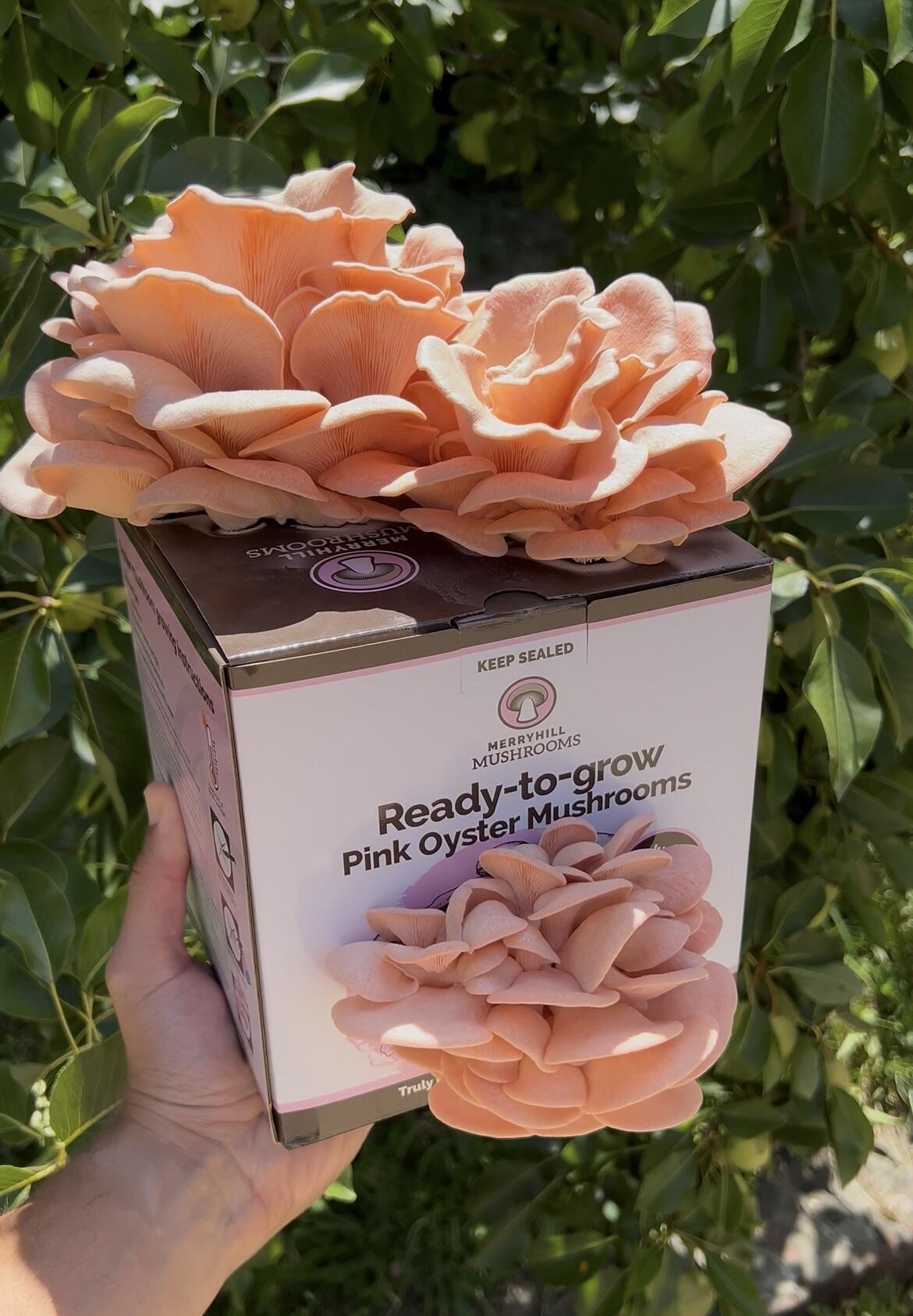
A ready growing kit in full fruit — the rewarding stage that begins within days of opening
What to do when your ready growing kit arrives
Getting started is straightforward. The kit comes with instructions specific to the mushroom variety, but the general process is the same across all ready growing kits.
Open the box and read the instructions
Each kit variety has slightly different care requirements. Read the included mushroom growing guides before setting up. If you are starting the kit straight away, follow the setup steps. If you need to delay, you can for up to a week in the fridge, starting ASAP is always best for freshness, but our gifting storage guidelines will help you how to store if you need to, or for gifting etc.
Choose the right spot
Find a room that stays between 10 and 21 degrees Celsius, gets indirect daylight, and has some natural airflow. Kitchens, utility rooms, and spare bedrooms work well in most UK homes. Avoid windowsills with direct sun, spots near radiators, and sealed cupboards. We always say the kitchen side or within the lounge is a good location.
Start misting and be consistent
Use a clean spray bottle to mist the kit two to three times a day. The surface should look damp but not waterlogged. Consistency matters more than precision, a regular routine of morning and evening misting is usually enough to keep conditions right.
Watch, wait, and harvest
Pins will appear, develop into full mushrooms, and reach harvestable size within the first couple of weeks. Pick them when they look full but before the caps flatten out or drop spores. A gentle twist-and-pull or a clean cut at the base works best. Most kits produce multiple flushes, so do not discard the block after the first harvest.
If something does not look right or growth has not appeared after 10 days, check the troubleshooting support form or contact the Merryhill Mushrooms support team with a photo and description of your setup. Most issues are simple to fix once the cause is identified.
Try a Ready Growing Kit
Every kit arrives fully colonised and ready to fruit. Choose from Lion's Mane, Oyster, King Oyster, Reishi, Nameco, Enoki and Shiitake, no experience needed.
Shop Ready Growing KitsFrequently asked questions
What does "ready growing" mean on a mushroom kit?
Ready growing means the mycelium has fully colonised the substrate before the kit is dispatched. The kit arrives ready to fruit and will crop within 7-10 days, which is important to know if ordering for a gift etc. The customer does not need to manage a colonisation stage at home. This reduces the time to first harvest and lowers the risk of failure.
Is a ready growing kit better than a normal mushroom kit?
It depends on what you want from the experience. A ready growing kit is better for beginners, gift buyers, and anyone who wants fast results with minimal effort. A typical kit suits hobbyists who enjoy managing every stage of the growing process. Neither is better in absolute terms, they serve different goals.
Why do different mushroom varieties take different amounts of time?
Each species has its own natural growth rate. Oyster mushrooms and Shiitake tend to fruit fastest because they are aggressive colonisers that respond quickly to fruiting conditions.
Reishi, Nameco and Chestnut varieties have slightly slower development cycles. Temperature and humidity also affect speed, so two identical kits in different rooms may produce at different rates.
Can I get more than one harvest from a ready growing kit?
Yes. Most ready growing kits produce at least two flushes, and some varieties can manage three or four. After each harvest, rest the block for a few days without misting, then resume your normal routine. The second flush is usually smaller than the first. When the block stops producing, it can be composted in the garden. You can see our guide on crop rates per species here
Related reading
Published by Merryhill Mushrooms Limited
Sussex, UK | Six generations of mushroom growing excellence