
How to Freeze Mushrooms
How to Freeze Mushrooms So They Keep Their Flavour and Texture
A simple, reliable method for home-grown and shop-bought mushrooms, from a six-generation Sussex grower.
Freezing is a great way to stretch a good mushroom harvest or shop haul from one week to twelve months. The trick is to cook them first, cool them properly, and freeze them in flat portions so they thaw fast and keep their bite.
Fresh mushrooms are mostly water, and that is exactly why they freeze poorly when they go in raw. Ice crystals burst the cell walls, water leaks out on thawing, and what comes out of the bag is soft, grey and a little sad. A quick sauté or steam before freezing solves that problem almost entirely. It drives off excess water, locks in flavour, and gives you something that reheats cleanly in a sauce, stew, risotto or stir-fry.
This guide walks through cleaning, prepping, cooking and freezing mushrooms at home, including what works best for the varieties we grow at Merryhill, and the reheating habits that protect texture once they come back out.
Quick Takeaways
- Cook mushrooms before freezing. Raw freezing turns them watery and soft.
- Sauté in butter or oil, or steam for three to five minutes depending on size.
- Cool fully before bagging, then freeze flat in labelled portions.
- Use within twelve months for best flavour and texture.
- Cook from frozen for most dishes. No need to thaw for sauces, stews, pasta bakes or stir-fries.
- If you have no freezer space, dried mushrooms are a strong alternative.
Can you freeze mushrooms raw?
Raw freezing is possible, but the result is rarely worth it. Mushrooms hold a lot of water inside their fruiting bodies, and freezing that water expands the cells until they rupture. Thawed raw mushrooms go limp, release liquid into the pan, and never regain a firm bite.
The one exception is if you plan to use them inside a long, wet cook such as a slow-cooked ragù or a soup. In those dishes, texture is less critical and the lost liquid blends back into the sauce. For everything else, a short cook before freezing is the step that separates disappointing frozen mushrooms from genuinely useful ones.
How to clean and prep mushrooms before freezing
Cleaning is the first decision, and mushrooms do not love a long soak. Wipe them with a damp cloth or give them a very quick rinse under a cold tap, then pat them dry straight away. Soaking adds water you will only have to cook off again, and that slows the whole process down.
Slicing and trimming
Trim any dry stem ends. For most varieties, slice or tear anything larger than about an inch across so they cook evenly. Oyster clusters can be torn by hand into bite-size strips, which preserves the natural shape. White Oyster and Black Pearl Oyster respond particularly well to tearing.
Which mushrooms freeze best?
Firm, meaty varieties freeze best. Shiitake, chestnut, King Oyster and the oyster family all hold up well once cooked. Softer varieties such as Enoki keep flavour but will come back quite delicate, which is fine for soups and broths but less suited to stir-fries. Lion's Mane freezes well if you pan-fry it first to drive off water and develop colour.
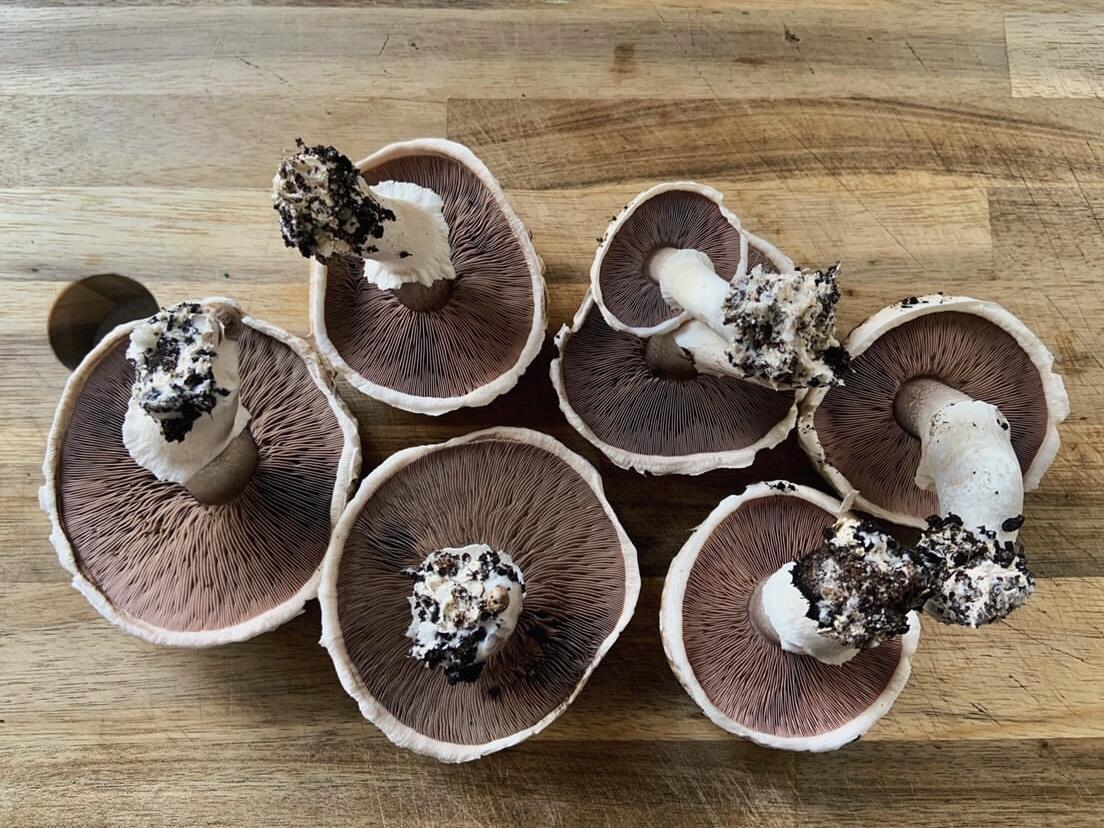
Firm, freshly harvested mushrooms freeze best. Cook, cool, then bag.
The sauté method: best for short-term freezing
Sautéing is the method most home cooks reach for, and for good reason. It develops flavour, drives off water faster than steaming, and produces mushrooms that reheat beautifully in a pan or oven.
Heat a knob of butter or a splash of oil in a wide frying pan over a medium-high heat. Add the sliced mushrooms in a single layer so they brown rather than stew. Let them release their water, keep cooking until the pan goes dry again, then pull them off the heat just as they start to colour. You want them cooked through but still firm, not fully caramelised.
Tip them onto a cold plate or tray to stop the cooking and help them cool quickly. Do not skip this stage. Warm mushrooms going into a bag will steam and stick together in one solid brick.
The steaming method: best for long-term freezing
Steaming is the better choice if you plan to keep mushrooms in the freezer for longer than a few months. It inactivates the enzymes that slowly degrade flavour and colour in storage, which is why steamed mushrooms hold up so well at the six to twelve month mark.
Bring a small amount of water to a simmer in a lidded pan with a steamer basket. Steam sliced mushrooms for around three minutes, or whole small mushrooms for around five. They should look slightly translucent but still hold their shape. Lift them out, spread them on a tray, and let them cool fully before bagging.
A quick note on blanching
Some guides suggest blanching mushrooms in boiling water before freezing. It works, but it waterlogs the mushrooms and tends to dilute their flavour. Steaming gives you the same enzyme-stopping benefit with a cleaner result.
How to bag, label and freeze
Once the mushrooms are fully cool, portion them into freezer bags or vacuum bags in quantities you will actually use. Around 150g per bag suits most weeknight dishes for two people, and it keeps you from thawing more than you need.
Press each bag flat, push out as much air as possible, and seal tightly. Flat bags freeze faster, stack neatly and thaw in minutes when you need them. Write the variety and date on the outside, because a bag of sautéed mushrooms nine months later is not always obvious at a glance.
A useful extra step
If you want individual pieces that do not stick together, freeze the cooked mushrooms in a single layer on a tray for an hour first, then tip them into a bag. You can pull out a handful at a time straight from frozen, which is ideal for weeknight cooking.
How long do frozen mushrooms keep?
Cooked and properly frozen mushrooms stay at their best for around twelve months. They remain safe to eat for longer than that if the freezer has stayed at a steady minus eighteen degrees, but flavour and texture slowly drop off.
Steamed mushrooms tend to outlast sautéed mushrooms in storage, which is why steaming suits larger batches. Sautéed mushrooms are best used within six months while the flavour is still bright.
How to cook mushrooms from frozen
Most of the time you should cook frozen mushrooms straight from the freezer. Thawing lets them release water slowly and go limp, whereas adding them straight into a hot pan or a bubbling sauce preserves more texture.
For stir-fries, pasta bakes, risottos, soups, pies and stews, tip the mushrooms straight in during the final few minutes of cooking. They only need reheating, not a fresh cook. If you are using them in something drier such as an omelette or a topping, slide them into a dry pan over a medium heat and let the surface water evaporate before you add seasoning.
If a recipe genuinely needs thawed mushrooms, move the bag to the fridge the night before. Never thaw at room temperature.
Freezing by variety: what to expect
Each variety reacts slightly differently to the freezer. The broad rules above apply across the board, but a few notes help you get the best out of each one.
White Oyster and Black Pearl Oyster
Tear into strips, sauté in butter until the pan dries out, and cool fully. Oysters freeze particularly well and reheat cleanly into pasta, ramen and creamy sauces. Avoid boiling them from frozen, as they can go a little soft.
Shiitake and chestnut
Both hold texture beautifully once cooked. Slice the caps, sauté with a little oil, and freeze flat. They shine in stir-fries, pies and slow braises straight from the freezer.
Lion's Mane
Tear into chunks, pan-fry in butter until golden and firm, then cool and freeze. Do not steam Lion's Mane, as it holds more water than other varieties and benefits from a proper sear to drive that off.
Enoki and Golden Enoki
Freeze best after a brief sauté in oil, and use within a few months for soups and broths. Enoki is delicate and will not return to the firm bite of fresh, but the flavour stays clean.
When drying might suit you better than freezing
Freezers are not always the right answer. If you grow several kits in a short window and run out of space, or if you want a shelf-stable ingredient that lasts well over a year, drying is often the better route. Dried mushrooms rehydrate in warm water in around twenty minutes, and the soaking liquid itself is a genuinely good addition to stocks and risottos.
Some people use both. Freeze the first flush fresh for weeknight cooking, dry the second flush for longer-term pantry use. The two methods complement each other and make it much easier to use a whole crop without waste.
Common freezing mistakes to avoid
A handful of small errors account for most disappointing frozen mushrooms. Bagging them while still warm causes them to stick together and go soggy. Skipping the cook step and freezing raw gives watery, grey mushrooms on thaw. Leaving too much air in the bag invites freezer burn, which shows up as dry grey patches and a slightly stale smell.
Refreezing previously frozen mushrooms is the final one to avoid. Once thawed, they should go into a dish and be eaten, not returned to the freezer.
Frequently asked questions
Can you freeze mushrooms whole?
Small button and chestnut mushrooms can be frozen whole after a quick steam. Anything larger than an inch across is better sliced or torn first, so the centre cooks properly and they freeze at an even rate.
Do frozen mushrooms lose nutrients?
Freezing retains most nutrients well. A little vitamin B is lost during the initial cook, but the core profile including fibre, protein and minerals holds up. Frozen home-grown mushrooms are still a much better option than letting a harvest go off in the fridge.
Can you freeze mushrooms in a sauce?
Yes, and it is one of the most practical ways to store a large harvest. A creamy mushroom sauce, a tomato and mushroom ragù or a garlic butter base all freeze very well in flat bags. They reheat gently in a pan straight from frozen.
Should you wash mushrooms before freezing?
A quick rinse or damp wipe is fine, as long as you pat them dry immediately. Avoid long soaks, because the mushrooms will absorb water that you then have to cook off.
How do you stop frozen mushrooms from going watery?
Cook them properly before freezing, cool them fully on a tray, remove as much air from the bag as you can, and cook them from frozen rather than thawing. Those four steps fix almost every texture issue.
Grow your own mushrooms to freeze at home
Our ready-growing kits arrive already colonised and give you your first fresh harvest in days. Grow, cook, and freeze the surplus for up to a year of home-cooked meals.
Shop Mushroom Growing KitsRelevant reading
If freezing is part of a broader plan to get more out of your harvest, these guides go deeper on the steps either side of the freezer.
Mushroom growing kit yields compared: expected harvests by variety
Realistic harvest weights by variety so you can plan how much you will need to freeze, dry or eat fresh.
Our range of dried mushrooms
If freezer space is tight, dried mushrooms keep for well over a year on the shelf and rehydrate in twenty minutes.
Mushroom growing glossary and information
Plain-English definitions for flushes, pins, mycelium and the other terms that come up across our growing guides.
Shop our ready-growing mushroom kits
Kits arrive already colonised, so you get your first fresh harvest in days. The quickest route to a freezer full of home-grown mushrooms.
Final thoughts
Freezing mushrooms is one of the most useful habits a home cook or home grower can build. A short cook, a proper cool-down, a flat bag and a clear label are all it really takes to turn a surplus into twelve months of easy cooking. Pair that with a ready-growing kit and you can realistically harvest, cook and freeze home-grown mushrooms throughout the year.
Got a question about freezing or cooking your harvest? Contact our team, follow us on Instagram, or explore our blog for more growing and cooking tips.
Published by Merryhill Mushrooms, a six-generation family grower based in Storrington, West Sussex.