How to tell if your mushroom growing kit is contaminated
How to Tell if Your Kit is Contaminated and What is Normal "Fuzzy" Growth
Seeing unexpected growth on your mushroom kit can be worrying, especially if you are growing for the first time. The good news is that most of the time, what looks concerning is actually healthy mycelium doing exactly what it should. This guide shows you the difference between normal growth and real contamination, what causes problems, and what to do if something does go wrong.
Contamination on ready growing kits is rare. Every Merryhill Mushrooms kit is produced in controlled conditions at our farm in Sussex, with the substrate sterilised and the mycelium fully colonised before dispatch. A fully colonised block is naturally resistant to contamination because the established mycelium outcompetes most invaders. However, we are working with a natural, living product, so it is important to know what to look for.
What healthy and unhealthy mycelium looks like
Healthy mycelium is white. It can appear as fine threads spreading across the surface, as a thick fluffy mat covering the block, or as dense white patches around the areas where mushrooms are about to form. All of these are completely normal and are signs that the kit is working.
The texture can vary. Some varieties produce wispy, cotton-like mycelium. Others produce a thicker, denser growth that can look almost like a white skin on the surface. On shiitake kits, the block may have brown patches mixed with white mycelium, which is characteristic of the species and not contamination.
If the white growth on your kit is thick and covering the surface but no pins are forming, the kit probably needs more fresh air rather than less. This is overgrown mycelium, which is healthy growth that has not received the environmental trigger it needs to start producing mushrooms. Moving the kit to a more ventilated space usually solves this within a few days.
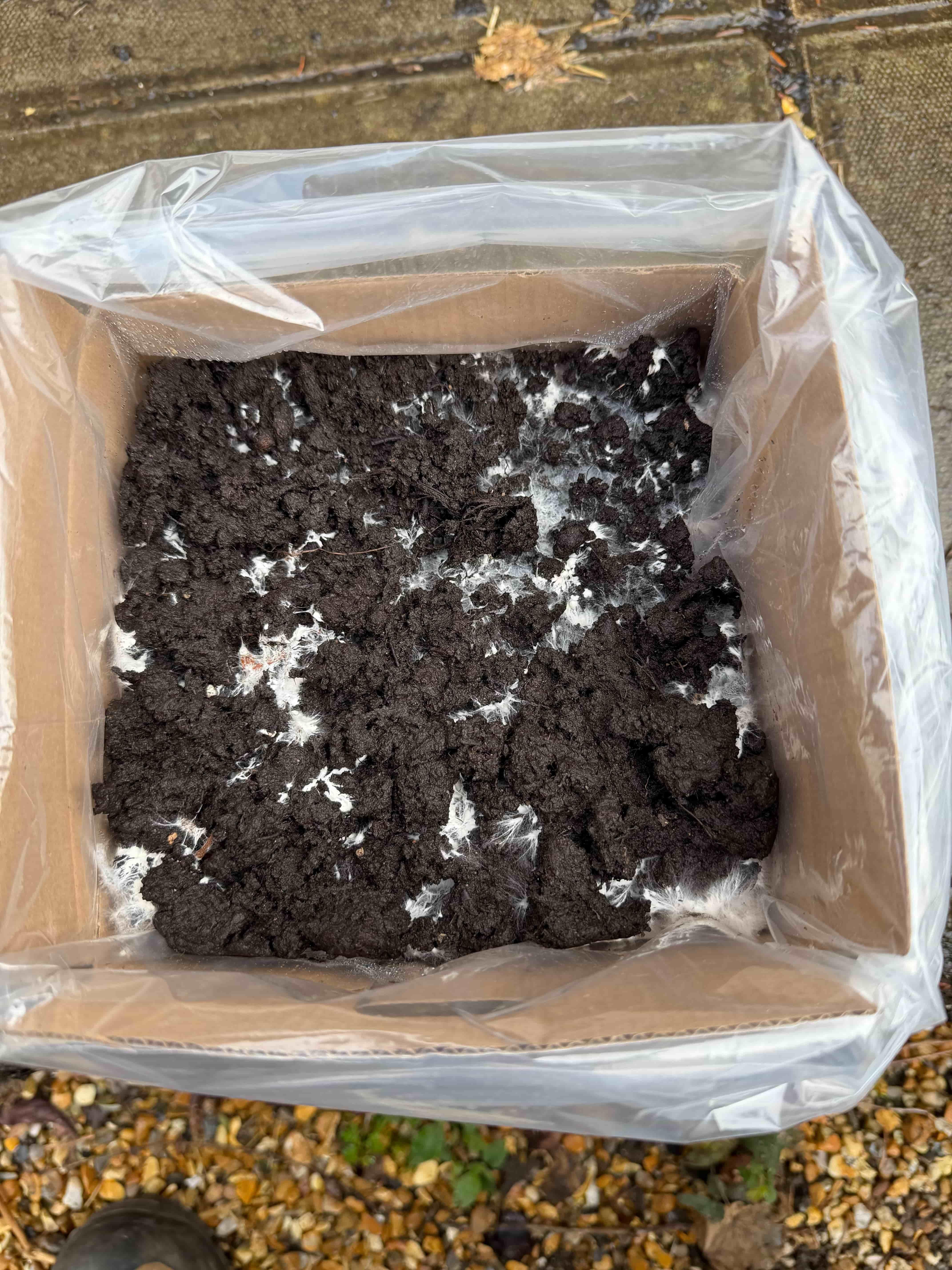
Healthy: white mycelium
White, fluffy or thread-like growth, partially covering the topsoil. This is exactly what you want to see.
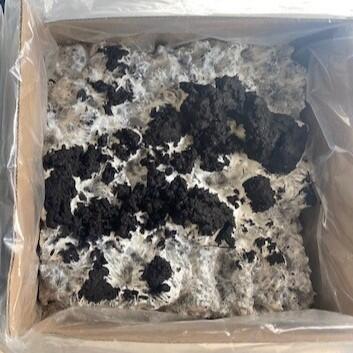
Overgrown: thick mycelium mat
Dense white growth without pins. Too much mycelium which stalls growth.
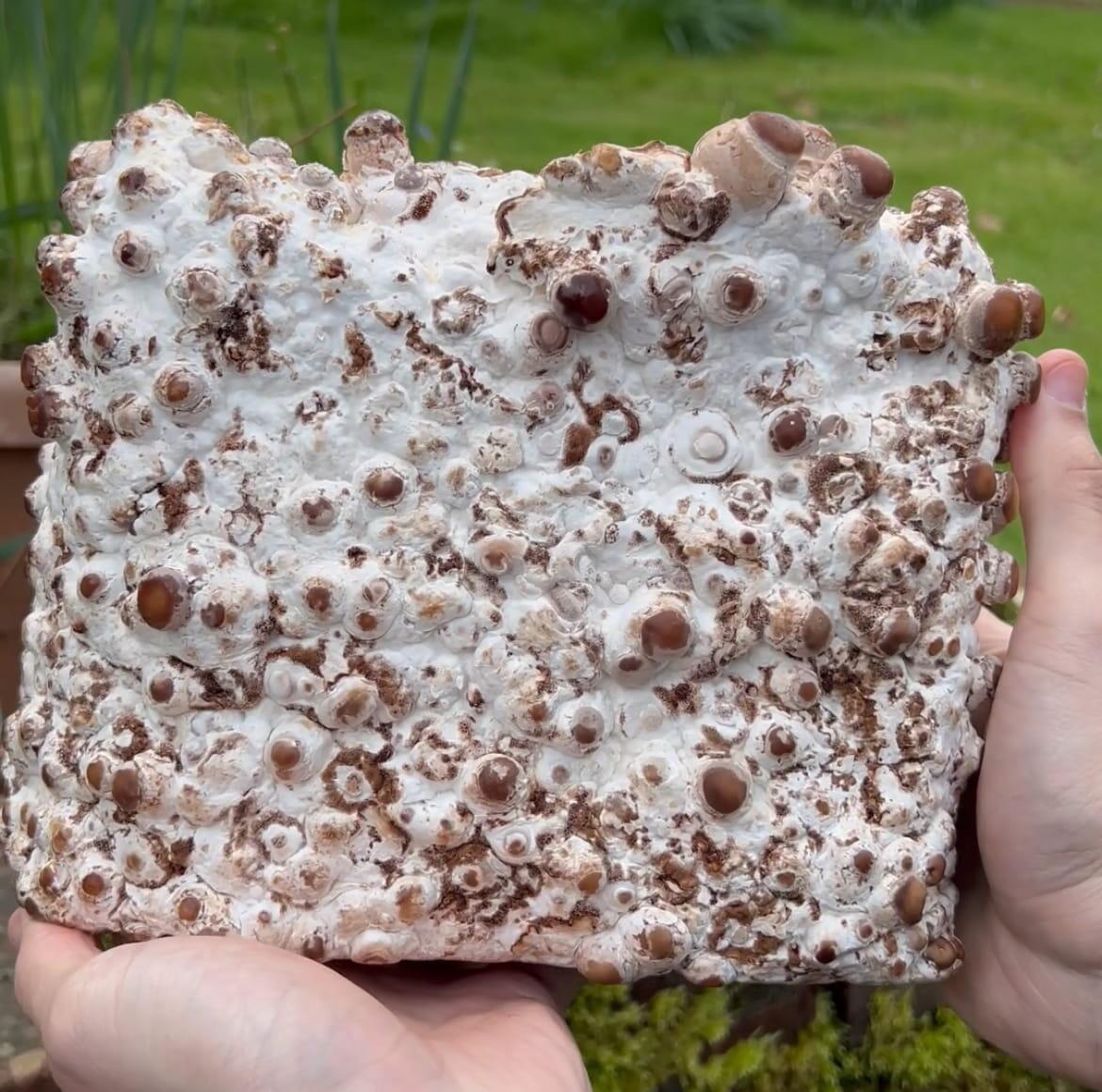
Healthy: shiitake brown patches
Both brown and white colouring on shiitake blocks is normal for the species and not a sign of contamination.
What contamination looks like
Contamination is unwanted mould or bacteria growing on or in the substrate. The most common contaminant on mushroom growing kits is Trichoderma, a green mould that is present in most environments. It appears as bright green or dark green patches on the surface of the block, often starting small and spreading outward if conditions favour it.
The key difference between healthy growth and contamination is colour and smell.
| Healthy mycelium | Contamination | |
|---|---|---|
| Colour | White (or brown patches on shiitake) | Green, black, blue, orange, or pink |
| Smell | Earthy, fresh, mushroom-like | Sour, sharp, chemical, or unpleasant |
| Texture | Fluffy, thread-like, cotton-like | Slimy, powdery, or dusty-looking patches |
| Spread pattern | Even, covering the block uniformly | Localised patches that stand out from surrounding growth |
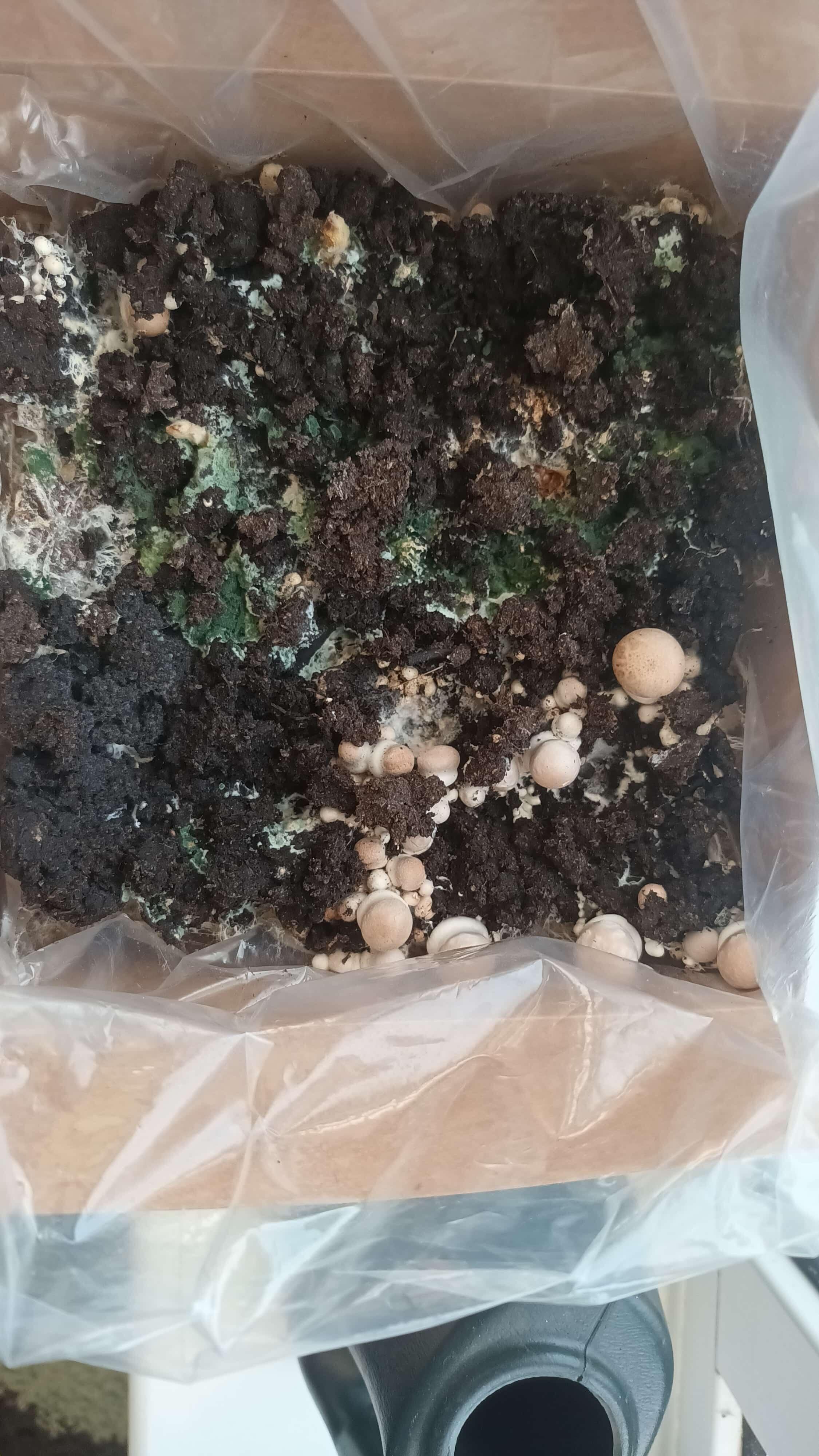
Contaminated: green mould
Bright or dark green patches are Trichoderma mould. The most common contaminant on mushroom kits.

Contaminated: spreading patches
Green patches that grow outward over days, often with a sharp or sour smell. Distinct from surrounding white mycelium.
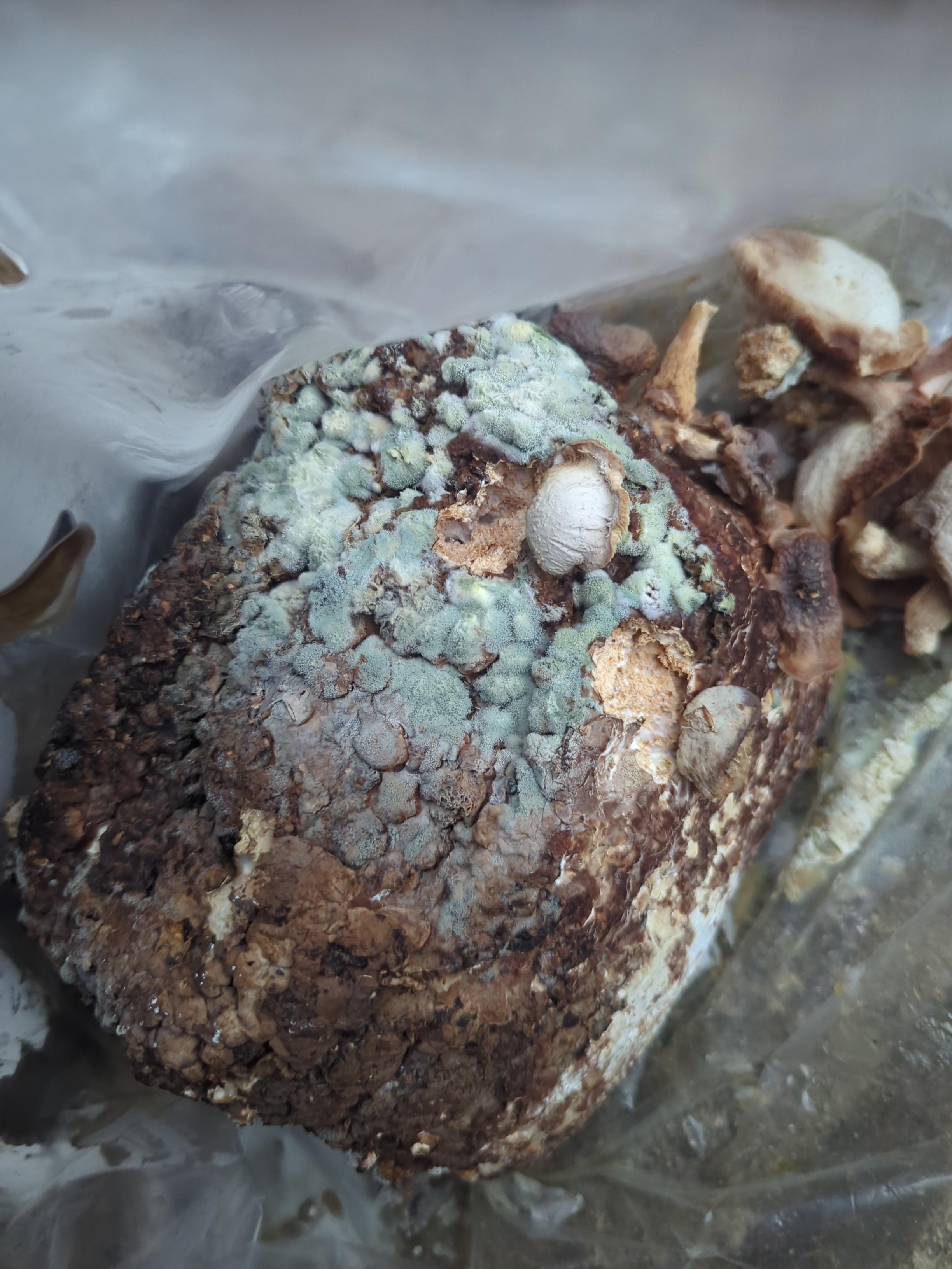
Mould which has grown on dropped spores.
Typically lighter in colour, more blue than green, usually seen from growth on spores.

Contaminated: green mould
another example of Bright or dark green patches are Trichoderma mould.
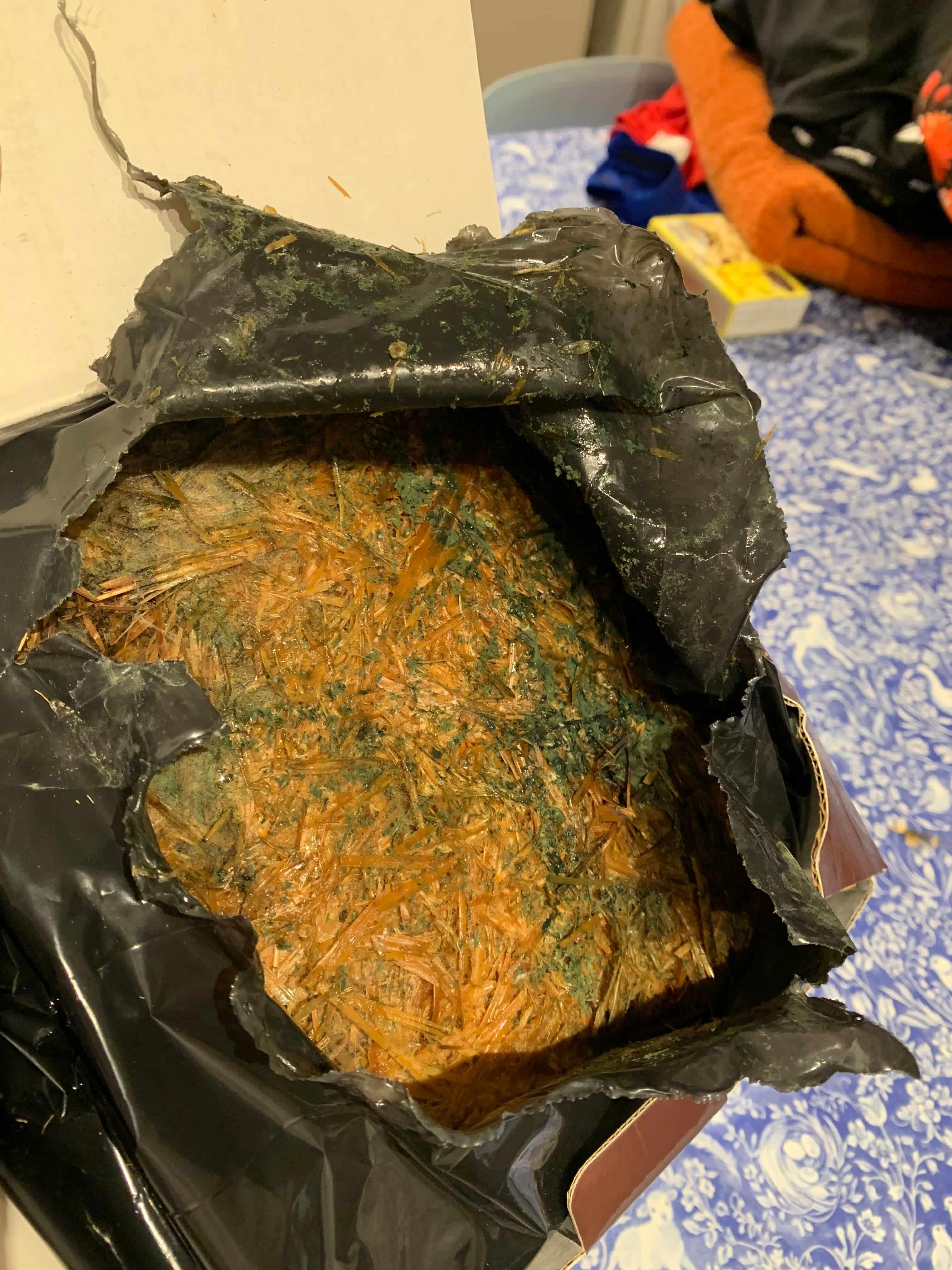
Contaminated: spreading patches
Substantial Green growth, often with a sharp or sour smell. May replace entirely the intended mycelium, it has lost the battle against the contamination.
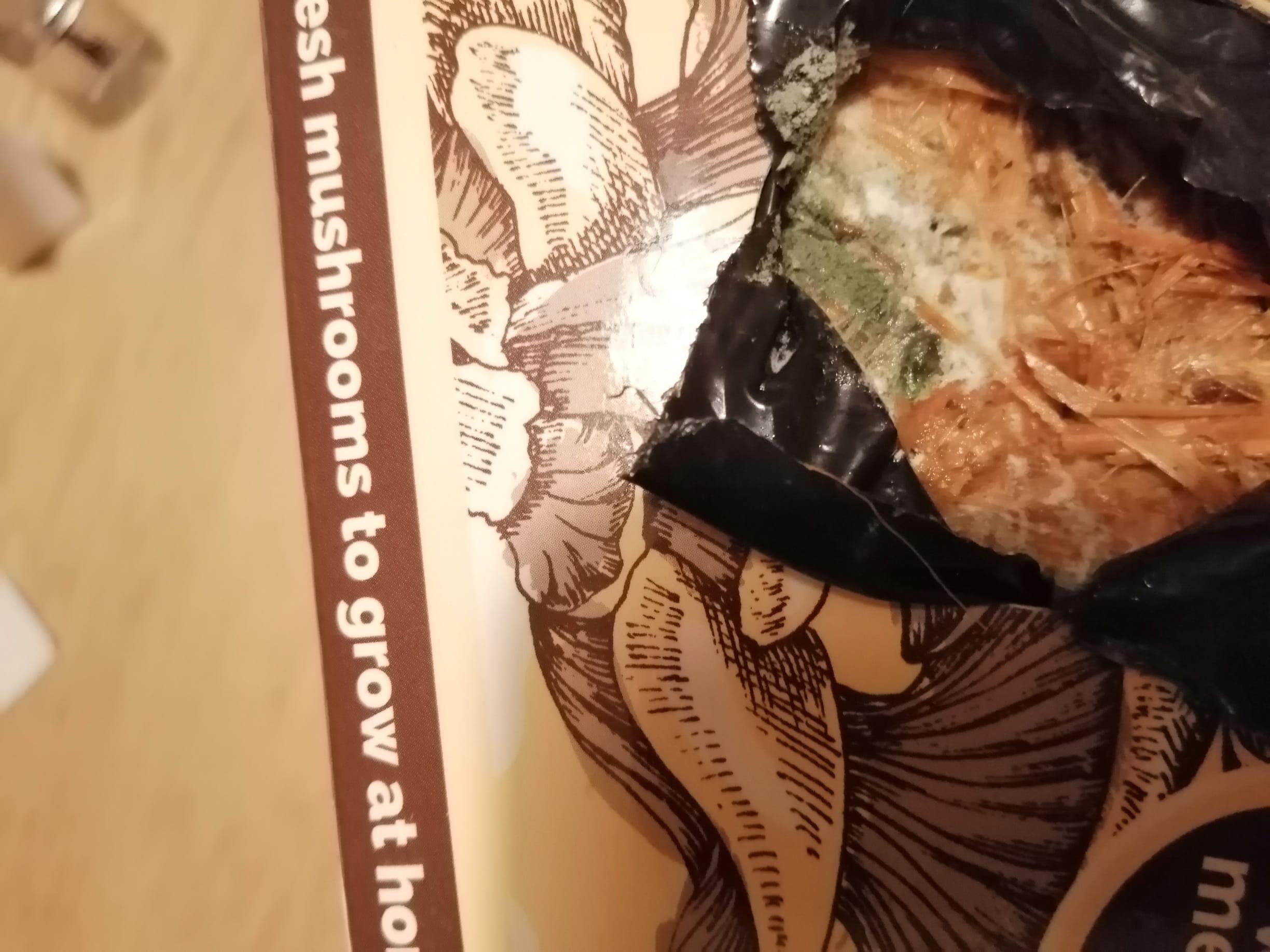
Mould which is actively competing with healthy mycelium.
You can see the green mould growing right up to the intended healthy mycelium.
What causes contamination on a growing kit
Contamination is rare on ready growing kits because the fully colonised mycelium acts as a natural barrier against invaders. When it does occur, it is usually introduced from the growing environment rather than arriving with the kit. Here are the most common causes.
Dirty spray bottles
The spray bottle is the most common source of introduced contamination. If the bottle has been used for other purposes, or if stale water has been sitting in it for days, bacteria and mould spores can be sprayed directly onto the kit. Use a dedicated spray bottle for your kit, wash it with soap and rinse thoroughly before first use, and change the water daily rather than topping up old water.
Spore drop from overripe mushrooms
If mushrooms are not picked on time, they release spores from the underside of their caps. These spores land on the substrate surface below and, if conditions are damp, can become a food source for mould. The spores themselves are not harmful, but the moist organic layer they create can attract Trichoderma and other contaminants. Harvesting on time prevents this entirely.
Touching the substrate with dirty hands or knives
It is always good practise to wash your hands and knives before doing anything with the kit to ensure cleanliness, that being said the kits are usually able to outcompete any introduced mould or contamination
Growing environment
Kitchens and utility rooms contain airborne mould spores, which is completely normal in any home. In most cases, the established mycelium on a ready growing kit outcompetes these. Problems only arise if the kit is weakened by poor conditions (too dry, too hot, too enclosed) or if the surface is damaged, giving contaminants an entry point.
A Faulty Kit
On the rare occasion a kit has gone out without being fully colonised by our desired and intended mycelium, a kit can be far more prone to contamination taking hold as the kits "immune system" is not able to fight this off in the same way.
What to do if you see green, black, or blue patches
If you spot coloured patches that are clearly not white mycelium, here is what to do.
Do not panic
A small patch of green mould does not always mean the kit is ruined. If the contamination is localised and the rest of the block looks healthy with white mycelium, the kit may still produce mushrooms from the unaffected areas. Taking a clean knife and removing this is usually the best thing to do.
Move the kit away from other kits
If you are running more than one kit, move the affected kit to a different room to prevent cross-contamination. Mould spores are airborne and can transfer between kits if they are close together.
Take a clear photo
Take a close-up photo of the affected area in natural daylight. Also take a wider shot showing the full kit. Good photos help the support team identify what you are dealing with quickly.
Contact support
Contact the Merryhill Mushrooms team with your photos, the kit variety, what day you are on, and a description of the room conditions. The team can usually confirm whether it is contamination or normal growth and advise on next steps.
On the rare chance that a kit arrives with contamination already present, please get in touch. We can arrange a refund or replacement. Every kit is produced under controlled conditions and inspected before dispatch, but we are working with a natural product and occasionally one does not perform as expected. We always want to make it right.
How to prevent contamination
Most contamination on home-grown kits is preventable with a few simple habits.
Clean spray bottle
Use a dedicated bottle washed with soap and rinsed before first use. Change the water daily. Never reuse a bottle that held cleaning products.
Harvest on time
Pick mushrooms before caps flatten and spores drop. Spores landing on damp substrate create conditions that attract mould.
Clean hands
Wash your hands before handling the substrate, especially during setup. Avoid touching the growing surface unnecessarily during the fruiting stage.
Good conditions
A kit in good conditions (14-21 degrees, regular misting, good airflow) is naturally resistant. A stressed kit is more vulnerable. Keep conditions stable.
Need Help With Your Kit?
If something does not look right, send us a photo and we will help you work out what is happening. We are always happy to help.
Contact SupportFrequently asked questions
Is the white stuff on my mushroom kit mould?
Almost certainly not. White growth on a mushroom kit is healthy mycelium. It is the living organism that produces your mushrooms. Mould contamination is typically green, black, blue, or pink, and often has a sour or unpleasant smell. White and fluffy is healthy. Coloured and smelly is not.
What is the green stuff on my mushroom kit?
Green patches are most likely Trichoderma mould, the most common contaminant on mushroom growing kits. It often appears as bright or dark green spots that spread outward over days. If the patch is small and localised, the kit may still produce from unaffected areas. If it is widespread, contact support with a photo for advice.
Can I still eat mushrooms from a kit that has some contamination?
Mushrooms growing from healthy, unaffected areas of the block are generally fine to eat. Avoid harvesting mushrooms growing directly on or immediately next to contaminated patches. If you are unsure, send a photo to the support team for guidance before consuming.
My kit arrived with green mould already on it. What do I do?
On the rare occasion a kit arrives with contamination, contact us straight away with a photo. We will arrange a refund or replacement. Every kit is inspected before dispatch, but as a natural product, occasional issues can occur and we always want to put it right.
Why does my chestnut or white kit have loads of white fuzz but no mushrooms?
This is most likely overgrown mycelium, not contamination. The mycelium is healthy but the growing environment is too enclosed, so it keeps growing vegetatively instead of forming pins. Move the kit to a room with better airflow and the mycelium should begin to fruit within a few days.
How do I keep my spray bottle clean?
Wash the bottle and nozzle with warm soapy water before first use and rinse thoroughly. Use fresh tap water each day rather than topping up old water that has been sitting in the bottle. If the inside of the bottle starts to look discoloured or develops a film, give it a proper clean with soap and hot water. A dedicated bottle kept with the kit is the simplest way to avoid problems.
Related reading
Published by Merryhill Mushrooms
Sussex, UK | Six generations of mushroom growing excellence