
Where Not to Place Your Mushroom Growing Kit - Locations to avoid
Where Not to Place Your Mushroom Growing Kit: The Spots That Ruin Kits and How to Spot the Damage
Most mushroom kit failures come from the spot the kit was placed in, not from the kit itself. Eight specific locations cause the vast majority of problems, and each one leaves its own visible signature on the mushrooms. This guide explains what goes wrong in each bad spot, what the damage looks like on the kit, and how to recover once you have moved it somewhere better.
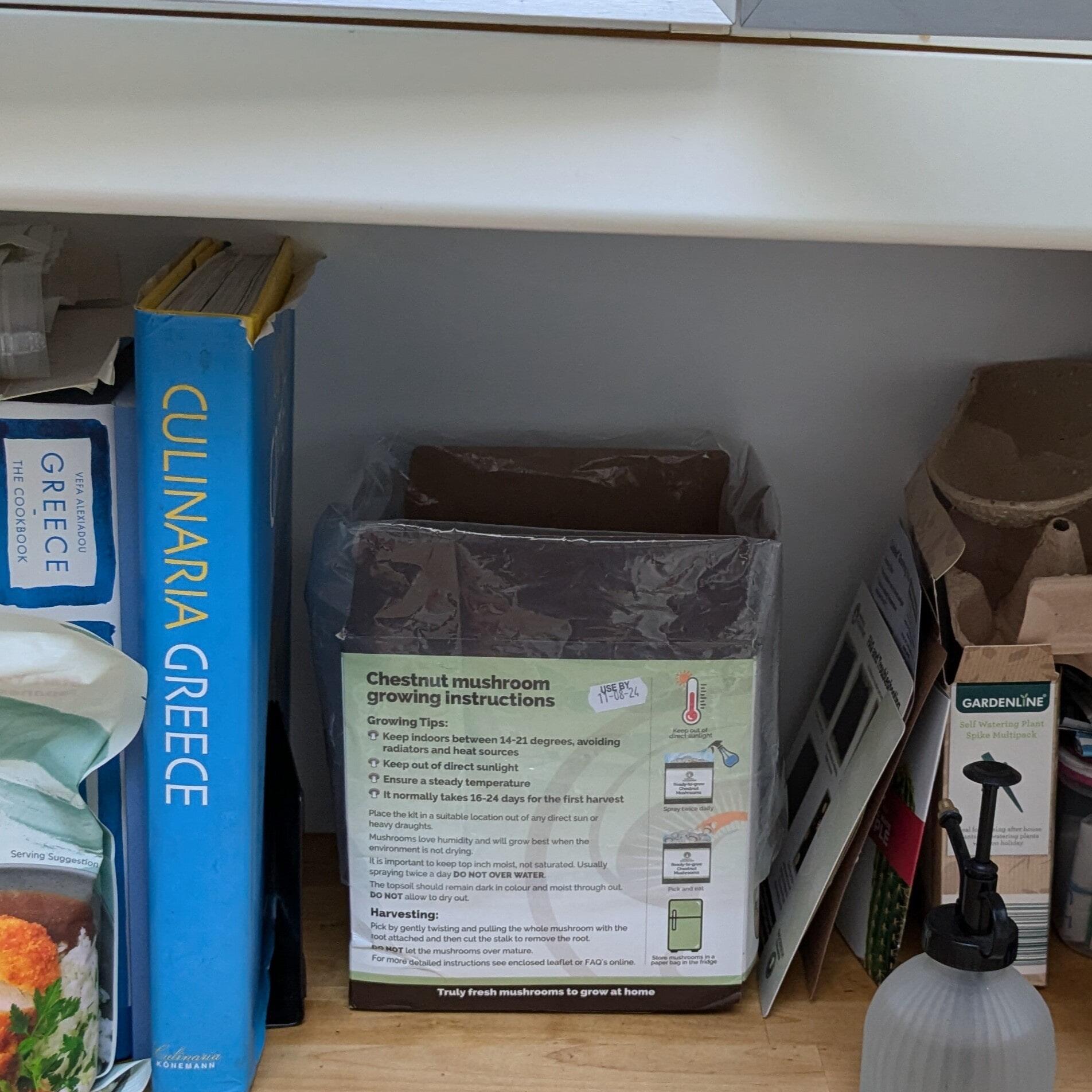
An enclosed placement like this one stops air from exchanging around the kit and causes stretched, deformed mushrooms.
Key takeaways
- Each bad placement leaves a different signature on the mushrooms, so the damage tells you what went wrong.
- Airflow problems cause leggy stretched mushrooms, heat problems cause dry cracked surfaces, and draught problems cause aborted pins.
- Most kits recover within two to three days of being moved, as long as the block itself is still healthy.
- Mushrooms already damaged will not reshape, but they are safe to eat and the next flush usually grows normally.
- The full rules for ideal placement are covered in the separate best places to grow mushrooms at home guide.
How do you know if placement is the problem?
Placement problems show up in three main ways: stretched leggy mushrooms, dried out surfaces, and pins that form and then die. Each symptom points at a different placement mistake, which makes diagnosis straightforward once you know what to look for. A healthy kit in a good spot looks visibly alive, with steady growth and firm fruiting bodies. A kit in a bad spot often looks like it is struggling even when you are doing everything else right.
Before blaming the kit, work through the eight problem spots below. If your kit is in any of them, move it first and see what happens. Most kits recover surprisingly fast once conditions improve, and the next flush usually grows normally.
1. Cupboards, wardrobes, and under-bed storage
What the damage looks like
Mushrooms with stems two or three times their normal length. Caps stay tiny and never open properly. Clusters can take on strange coral-like or antler-like shapes rather than the familiar mushroom form. In severe cases, the mushrooms grow sideways or downwards.
Why it happens
Enclosed spaces trap the carbon dioxide that mushrooms produce as they grow. CO2 builds up fast, the mushrooms suffocate, and they stretch upwards searching for fresh oxygen. This is the single most common placement mistake, often made because growers assume a dark enclosed space feels more "natural" for a fungus.
How to recover
Move the kit into an open room immediately. New pins should start forming properly within two to three days. Harvest any already-stretched mushrooms as normal, they are still safe to eat.
2. Sunny windowsills and bright window positions
What the damage looks like
Dry, cracked substrate surface. The white mycelium visible near the holes or openings looks brittle and brown-tinged. Pins form and then dry up before they can grow. On hot days, the kit can feel warm to the touch.
Why it happens
Direct sunlight dries the kit surface faster than misting can replace the moisture. UV exposure also weakens mycelium near the surface. Even a south-facing windowsill on a grey day can climb 10 degrees above the rest of the room when clouds clear.
How to recover
Move the kit off the windowsill and onto a shelf or table further into the room. Mist more frequently for the next 24 hours to help the surface rehydrate. New pins often form within a week once the block recovers.
3. Close to radiators, heaters, or hot appliances
What the damage looks like
Similar drying patterns to sunny windowsills, but often combined with pin abortion. Pins form, start to develop, and then shrivel back into the block surface. The side of the kit nearest the heat source usually shows the worst damage.
Why it happens
Radiators and heaters produce dry, moving air directly at the kit. The temperature also cycles on and off throughout the day, which means mushrooms are exposed to repeated stress rather than one steady condition. Even placement on a worktop next to a toaster or kettle causes the same issue on a smaller scale.
How to recover
Move the kit at least two metres from the heat source. A different room works better than trying to shield it with furniture, because the ambient dryness spreads across the whole room when heating is on.
4. Sealed plastic bags, lidded boxes, and airtight containers
What the damage looks like
Severely deformed mushrooms with strange cap shapes, mushrooms growing together into single masses, and sometimes condensation pooling inside the container. The block surface can look soggy rather than dry, which confuses people into thinking the problem is too much water.
Why it happens
Sealed containers trap CO2 faster than any room ever could. Growers often do this thinking it will hold humidity in, but the trade-off is severe: carbon dioxide levels rise to levels that deform the mushrooms within hours, and the humidity has nowhere to escape, which can cause bacterial problems on the block. Lion's Mane is the main exception because it grows inside its own humidity bag, but that bag should stay vented as instructed in the Lion's Mane growing guide, not sealed shut.
How to recover
Remove the kit from the container, wipe away any condensation, and follow the original setup instructions that came with your specific kit. Most oyster, shiitake, and chestnut/white kits should have their lid or bag loose rather than sealed.
5. Bathrooms with the door kept shut
What the damage looks like
Leggy mushrooms similar to the cupboard pattern, sometimes combined with patchy drying on the kit surface. Pins can form in waves, some developing and others aborting, which looks inconsistent and confusing.
Why it happens
Bathrooms are often suggested because of the natural humidity, and the humidity itself is fine. The problem is the door. A closed bathroom door stops air from exchanging, so CO2 builds up just like in a cupboard. Temperature also swings significantly with showers and baths, which stresses the kit.
How to recover
A bathroom can still work if the door stays open most of the day, which lets air circulate. If that is not practical, a utility room or spare bedroom usually gives better results overall.
6. Unheated garages, sheds, and outbuildings
What the damage looks like
No visible growth at all, or extremely slow progress. The kit looks dormant rather than damaged. In severe cases, the block can feel cold to the touch. Lion's Mane and Enoki can tolerate cooler conditions than most, but even they have a lower limit.
Why it happens
Most kits fruit best between 14 and 21 degrees Celsius. A UK garage in winter sits at 4 to 8 degrees for weeks. Fruiting stalls completely below about 10 degrees, and prolonged cold can weaken the mycelium permanently.
How to recover
Bring the kit indoors. Let it warm up gradually at room temperature for 24 hours before starting or resuming the normal misting routine. Most kits pick up again once they are warm.
7. Conservatories, sunrooms, and glazed extensions
What the damage looks like
Combination of damage patterns. Dry cracked surfaces from direct sunlight, aborted pins from temperature swings, and sometimes complete drying of the block. Conservatories produce the worst damage of any placement because multiple problems happen at once.
Why it happens
Conservatories swing between 28 degrees at midday and 8 degrees overnight, especially in spring and autumn. Direct sun, heat buildup, cold nights, and often poor airflow when doors are closed combine into conditions no mushroom variety tolerates.
How to recover
Move the kit into a normal indoor room with steady background heating. If the block is already badly dried out, the kit may not recover fully, but it is worth trying for one more flush cycle before composting it.
8. Directly in front of fans, air vents, or extractors
What the damage looks like
Aborted pins, dried patches on the kit surface, and in Lion's Mane specifically, the spines turning brown and falling away before the mushroom matures. The pattern is usually one-sided, with damage concentrated on the side of the kit facing the airflow.
Why it happens
Fresh air matters, but moving air is different from a direct draught. A fan, extractor, or vent blowing straight at the kit strips surface moisture and stresses the forming pins. The mushroom has evolved to expect gentle natural air movement, not a wind tunnel.
How to recover
Move the kit out of the direct airflow path. A spot in the same room, just not on the airflow line, is usually enough. Natural air movement in a normal room is plenty for healthy fruiting.
What if multiple things look wrong at once?
Damage often overlaps when a kit has been in a bad spot for more than a few days. Leggy stems plus dry surface plus aborted pins all at once usually means the placement had two or more problems, most commonly a conservatory or a windowsill near a radiator. The fix is the same either way: move the kit to a stable indoor room with indirect light, steady warmth, and open air. The best places to grow mushrooms at home guide covers the specific rooms that work well in a typical UK home.
Can damaged mushrooms be eaten?
Yes. Mushrooms grown in poor conditions still cook and taste the same, they just look different. Leggy stems, oddly shaped caps, and deformed clusters are all fine to eat. Pick them at the normal harvest point, cook them as you would normally, and focus on getting the next flush right. A disappointing first crop is often a learning flush, and the second crop usually grows beautifully once the kit is in the right spot.
When is it time to ask for support?
If your kit has been moved to a good spot for more than a week and still shows no new pin activity, something else may be going on. Contact the Merryhill Mushrooms support team with a photo of the kit, the room it is in now, and how long it has been in the new spot. The team can usually identify the issue quickly once they can see the setup.
Ready to Grow Mushrooms at Home?
Every Merryhill Mushrooms growing kit arrives fully colonised and ready to fruit. Pick your variety and start growing.
Shop Mushroom Growing KitsRelated reading
Published by Merryhill Mushrooms
Sussex, UK | Six generations of mushroom growing excellence