Where to Place Your Mushroom Kit at Home for the Best Results | Merryhill Mushrooms
Where to place your mushroom kit at home for the best results.
Place your mushroom kit indoors, in a room between 14 and 21 degrees, out of direct sunlight, and away from radiators or other heat sources. Most kitchens, utility rooms, bathrooms, and spare bedrooms work well.
That is the quick version. In practice, each variety has a slightly different ideal temperature, and UK homes have quirks (radiators, draughty windows, warm loft rooms) that can make the difference between a big harvest and a disappointing one. This guide covers the best spots in a typical UK home, the temperatures each variety prefers, and how to manage the seasonal challenges that come with growing mushrooms indoors.
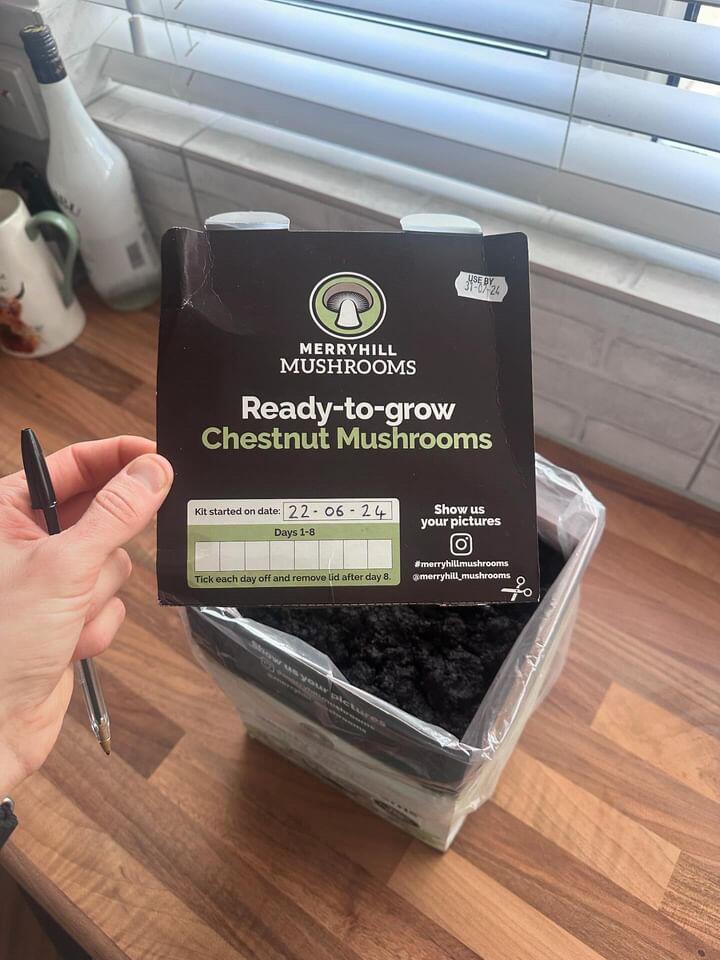
A kitchen worktop away from the hob and window is one of the most popular spots for a mushroom kit.
The three things your kit needs from its location
Mushroom kits are not fussy, but they do have three basic requirements from wherever you put them.
Stable temperature. All of our indoor kits grow between 14 and 21 degrees, with most varieties having an optimum around 17 to 18 degrees. Mushrooms respond to temperature changes, so a steady temperature means more than hitting the exact ideal number. Fluctuations (warm during the day, cold at night) can stall growth or cause pins to abort.
Indirect light. Mushrooms need some light to develop properly shaped and coloured caps, but not direct sunlight. A room with a window is fine as long as the kit is not sitting on the windowsill in the sun. Daylight from across the room, or even artificial room lighting, is enough. Complete darkness is not ideal either, as it can cause elongated stems and small caps.
Some airflow. Mushrooms produce carbon dioxide as they grow. Without fresh air, CO2 builds up around the kit, which leads to long, leggy stems with tiny caps. You do not need a fan. Just make sure the kit is not sealed in a cupboard, wardrobe, or enclosed space. A normal room with a door that opens occasionally is plenty.
Best rooms in a UK home for growing mushrooms
Kitchen. The most popular choice. Kitchens tend to have good light, reasonable airflow, and you will remember to mist your kit because you see it every day. Place it on a worktop or shelf away from the hob, oven, and any sunny windows. Avoid putting it directly next to the kettle or toaster where steam and heat spikes are common.
Utility room. Often the ideal spot. Utility rooms tend to be cooler and more stable in temperature than kitchens, with reasonable humidity from the washing machine. They are usually out of direct sunlight and away from radiators.
Bathroom. Good natural humidity makes bathrooms a strong option, especially for varieties that need higher moisture levels like Lion's Mane. The main thing to check is temperature. If your bathroom gets very warm during showers and then cools down significantly, the fluctuations could be an issue. An unheated or lightly heated bathroom is often perfect.
Spare bedroom. A room that is not heavily used and does not have the heating on constantly can work very well. The temperature tends to be stable and cooler than the main living spaces, which most mushroom varieties prefer.
Hallway or landing. Often overlooked, but hallways and landings frequently sit at a moderate, stable temperature and have indirect light from nearby rooms. Not ideal if the area is draughty, but worth considering if other rooms are too warm.
Locations to avoid
The three worst spots are cupboards or wardrobes (no airflow, CO2 builds up fast), sunny windowsills (direct heat dries the kit out), and anywhere within a metre of a radiator or other heat source. Greenhouses, conservatories, sheds, and airing cupboards should also be avoided because temperature swings are too extreme.
For the full breakdown of every bad spot, what the damage looks like on the kit, and how to recover once you have moved it, see our guide to where not to place your mushroom growing kit.
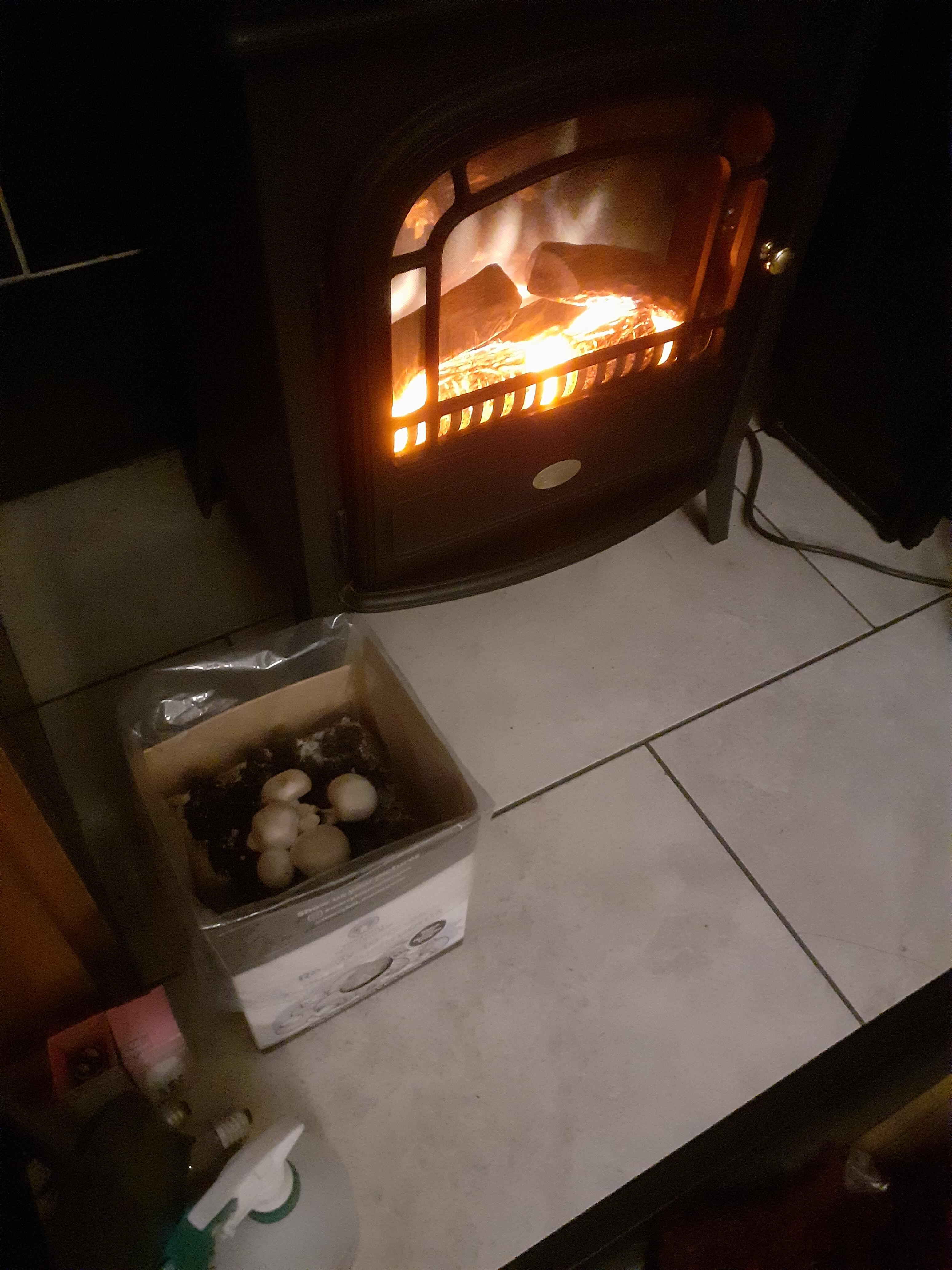
It is very important to locate your kit away from heat sources such as this.
Ideal temperature for each mushroom kit variety
All of our indoor kits grow within the 14 to 21 degree range, but each variety has its own sweet spot. Growing at the optimum temperature produces faster, healthier growth and bigger yields. Growing within the wider range still works, just more slowly.
A few varieties sit outside the standard range. Reishi can handle warmer temperatures up to 25 degrees. Enoki prefers cooler conditions, between 10 and 18 degrees. Lion's Mane is particularly heat sensitive and must be kept between 10 and 20 degrees.
| Variety | Growing range | Optimum | Notes |
|---|---|---|---|
| Chestnut | 14 to 21°C | 17 to 18°C | Uses topsoil casing layer. First harvest 16 to 24 days. |
| White | 14 to 21°C | 17 to 18°C | Uses topsoil casing layer. First harvest 16 to 24 days. |
| Shiitake | 12 to 20°C | 17 to 19°C | Crops heavily on first flush. Ready in 7 to 10 days. |
| Lion's Mane | 10 to 20°C | 15 to 17°C | Heat sensitive. Must stay under 20°C. |
| Pink Oyster | 14 to 21°C | 18 to 19°C | Fast growing. First harvest in 7 to 10 days. |
| White Oyster | 14 to 21°C | 17 to 18°C | New seasonal variety. |
| Grey Oyster | 14 to 21°C | 17 to 18°C | New seasonal variety. |
| Tarragon Oyster | 14 to 21°C | 17 to 18°C | New seasonal variety. |
| Black Pearl Oyster | 10 to 20°C | 15 to 18°C | King Oyster / Oyster Hybrid. Log format. |
| King Oyster | 10 to 20°C | 15 to 18°C | Cooler temps produce thicker stems. |
| Nameko | 10 to 20°C | 15 to 17°C | Japanese variety. Naturally gelatinous texture. |
| Reishi | 18 to 27°C | 22 to 23°C | Grows in the bag. Minimal care needed. Tolerates warmer rooms. |
| Enoki | 10 to 20°C | 16 to 17°C | Prefers cool conditions. Best in unheated rooms. |
| Summer Oyster | 14 to 22°C | 19 to 12°C | Tolerates warmth well, speckled caps |
If you are unsure about the temperature in a particular room, a simple room thermometer (available for a few pounds) placed next to the kit for a day or two will give you a clear picture. Check it in the morning and evening to see how much the temperature swings.
Managing temperature through UK seasons
Winter. The biggest challenge in winter is central heating. Many UK homes run radiators that push room temperatures above 21 degrees during the day, then drop to 14 or 15 degrees overnight when the heating switches off. This swing can stress mushroom growth. The fix is to place your kit in a room where the heating is either off or set low. Utility rooms, spare bedrooms with the radiator valve turned down, and unheated hallways are often ideal. Avoid placing the kit in the main living room where the heating runs all evening.
Summer. Heatwaves can push indoor temperatures above the safe range for many varieties, especially Lion's Mane (which must stay below 20 degrees) and Enoki (below 18 degrees). During hot spells, move your kit to the coolest room in the house, typically a ground floor room on the north side of the building. Bathrooms with tiled floors tend to stay cooler. You can also keep windows open at night to help reduce core temperatures. If your home regularly exceeds 25 degrees in summer, consider waiting until autumn to start a new kit, or choose Reishi which tolerates warmer conditions.
Spring and autumn. These are the easiest seasons for growing mushrooms in the UK. Indoor temperatures naturally sit in the 15 to 19 degree range without much intervention, and humidity tends to be reasonable. If you are starting your first kit, spring or autumn gives you the best chance of success.
Light: how much do mushroom kits actually need?
Mushrooms are not plants. They do not photosynthesise and do not need sunlight to grow. However, they do use light as a signal for how to develop. Without any light, mushrooms tend to grow elongated stems with undersized caps as they "search" for a light source.
The amount of light needed is minimal. Normal room lighting or indirect daylight from a nearby window is more than enough. You do not need a grow light, a lamp, or any special setup. If you can comfortably read a book in the room without turning on a light, the mushrooms have enough.
What to avoid is direct sunlight hitting the kit. This dries out the surface, raises the temperature of the growing block, and can cause rapid dehydration between misting sessions. If the kit is near a window, make sure the sun does not fall directly on it at any point during the day.
Airflow: why mushroom kits should not be sealed away
As mushrooms grow, they produce carbon dioxide. In the wild, this disperses naturally. In your home, it can build up if the kit is in an enclosed or poorly ventilated space. High CO2 levels cause mushrooms to develop long, thin stems with tiny caps as they stretch upward searching for fresh air.
The solution is simple: place your kit in an open room where air moves naturally. You do not need a fan. Opening a door or window briefly each day is usually enough. If you notice your mushrooms developing unusually long stems with small caps, it is almost certainly an airflow issue rather than a light or temperature problem.
Some varieties are more sensitive to CO2 than others. King Oyster in particular needs more fresh air than standard oyster varieties. If you are growing King Oyster, make sure the bag opening is generous and consider gently fanning the kit once or twice a day after misting.
For a full guide on balancing humidity and airflow during misting, see our misting guide.
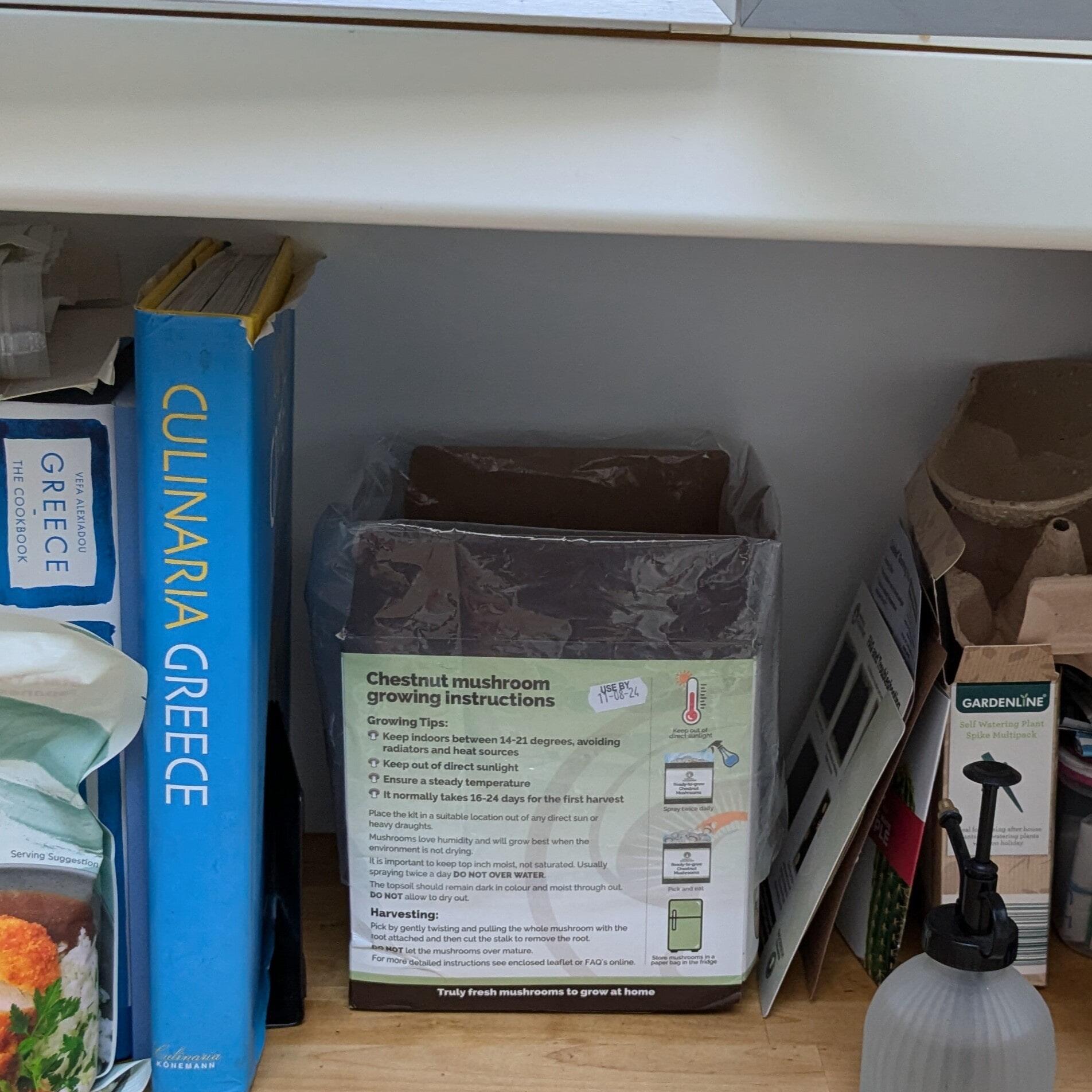
Avoid locating your kits in an area which is too enclosed.
Placement with pets and children in the house
All of our kit varieties are food-safe, commercially grown species. The mushrooms are not toxic to children, cats, or dogs. If someone (or something) nibbles a mushroom from the kit, there is no danger. The growing substrate is also non-toxic, though it is not designed to be eaten.
The main concern is keeping the kit undisturbed. Cats are particularly good at knocking things over, scratching at interesting textures, and investigating anything new in the house. Dogs may be attracted to the earthy smell of the substrate.
Place the kit on a high shelf, a worktop, or behind a closed door if your pets are especially curious. A bathroom or utility room with the door kept shut works well for both temperature stability and pet-proofing.
For more detail on mushroom safety around pets, including what to do if a pet eats a wild mushroom found in the garden, see our guide on whether cats and dogs can eat mushrooms.
A note on outdoor log inoculation kits
Everything in this guide applies to indoor growing kits. Our outdoor log inoculation kits (Shiitake, Lion's Mane, White Oyster) are the only kits in our range designed to be grown outside. These are inoculated into real logs and placed in a shaded outdoor spot. For guidance on outdoor log growing, see our outdoor log growing guide.
Ready to start growing?
Every Merryhill Mushrooms kit arrives ready growing with clear instructions. Pick a cool spot, mist regularly, and you will have your first harvest in days or weeks depending on the variety. Our product support team is on hand if you need help choosing the right location.
Frequently asked questions
Can I grow mushrooms in a cupboard?
No. Cupboards and wardrobes do not provide enough light or airflow. Mushrooms grown in enclosed spaces develop long, thin stems with tiny caps due to CO2 build-up, and the lack of light prevents proper cap development. Place your kit in an open room instead.
Do mushroom kits need direct sunlight?
No. Mushrooms need indirect light, not direct sunlight. Normal room lighting or daylight from across the room is plenty. Direct sunlight dries out the kit and raises its temperature, both of which harm growth.
My house is quite warm. Which kit should I choose?
If your home regularly sits above 21 degrees, Reishi is the most tolerant variety and can handle temperatures up to 25 degrees. It also grows in the bag with minimal misting, making it the lowest-maintenance option. Avoid Lion's Mane and Enoki in warm homes, as these need cooler conditions to fruit properly.
Can I move my kit to a different room once it has started growing?
Ideally not, especially once pins have formed. Mushrooms are sensitive to changes in their environment, and moving the kit can cause temperature and humidity shifts that trigger pin abortion. That being said, if your room has got too hot for example, it would be best to move it to a cooler location immediately. If you must move it, try to choose a room with similar conditions and avoid doing so during active pinning.
Is the bathroom too humid for a mushroom kit?
Mushrooms love humidity, so a bathroom is often a great choice. The only concern is temperature fluctuations from hot showers heating the room and then it cooling down again. If the bathroom stays within the 14 to 21 degree range most of the time, it is a strong option, especially for Lion's Mane which benefits from higher ambient humidity.
Can I grow mushrooms in a greenhouse or shed?
No. Greenhouses and sheds experience extreme temperature swings that are unsuitable for mushroom growing. A greenhouse can exceed 35 degrees on a sunny day, which will kill most mushroom species. All of our indoor kits are designed to be grown inside your home.
How do I check the temperature where my kit is?
A simple room thermometer placed next to the kit for a day or two will tell you everything you need to know. Check it in the morning and evening to see how much the temperature varies. If the swing is more than 5 or 6 degrees between day and night, consider a more stable location.
My mushrooms have long thin stems and tiny caps. What is wrong?
This is almost always caused by insufficient airflow (CO2 build-up) rather than a light or temperature problem. Mushrooms need Fresh Air Exchange (FAE) to fruit properly. Move the kit to a more open location, ensure nothing is restricting air movement around it, and for King Oyster varieties, increase the size of the bag opening and fan gently after misting. For the full breakdown of placement spots that cause this problem, see our guide to where not to place your mushroom growing kit.
Published by Merryhill Mushrooms / Sussex, UK