
Lion's Mane for Food and Everyday Use: Taste, Texture, and How to Cook It at Home
Lion's Mane for Food and Everyday Use: Taste, Texture, and How to Cook It at Home
Lion's Mane (Hericium erinaceus) is an edible mushroom with a shaggy, white appearance and a texture that pulls apart like shredded meat. It has a mild, slightly sweet flavour with a bite often compared to lobster or crab. This guide covers what Lion's Mane tastes like, how to prepare it, the best cooking methods, and why it has become one of the most popular mushrooms for home cooks in the UK.
Lion's Mane is not a niche ingredient any more. It appears on restaurant menus as a meat alternative, in home kitchens as a weeknight protein swap, and in food content across social media. What makes it different from other mushrooms is the texture. It does not have a cap and stem like a button mushroom. Instead, it grows in a single shaggy cluster of soft spines that, when cooked properly, crisp on the outside and stay tender inside. Growing Lion's Mane at home means you can cook with it at peak freshness, which makes a noticeable difference to both texture and flavour.
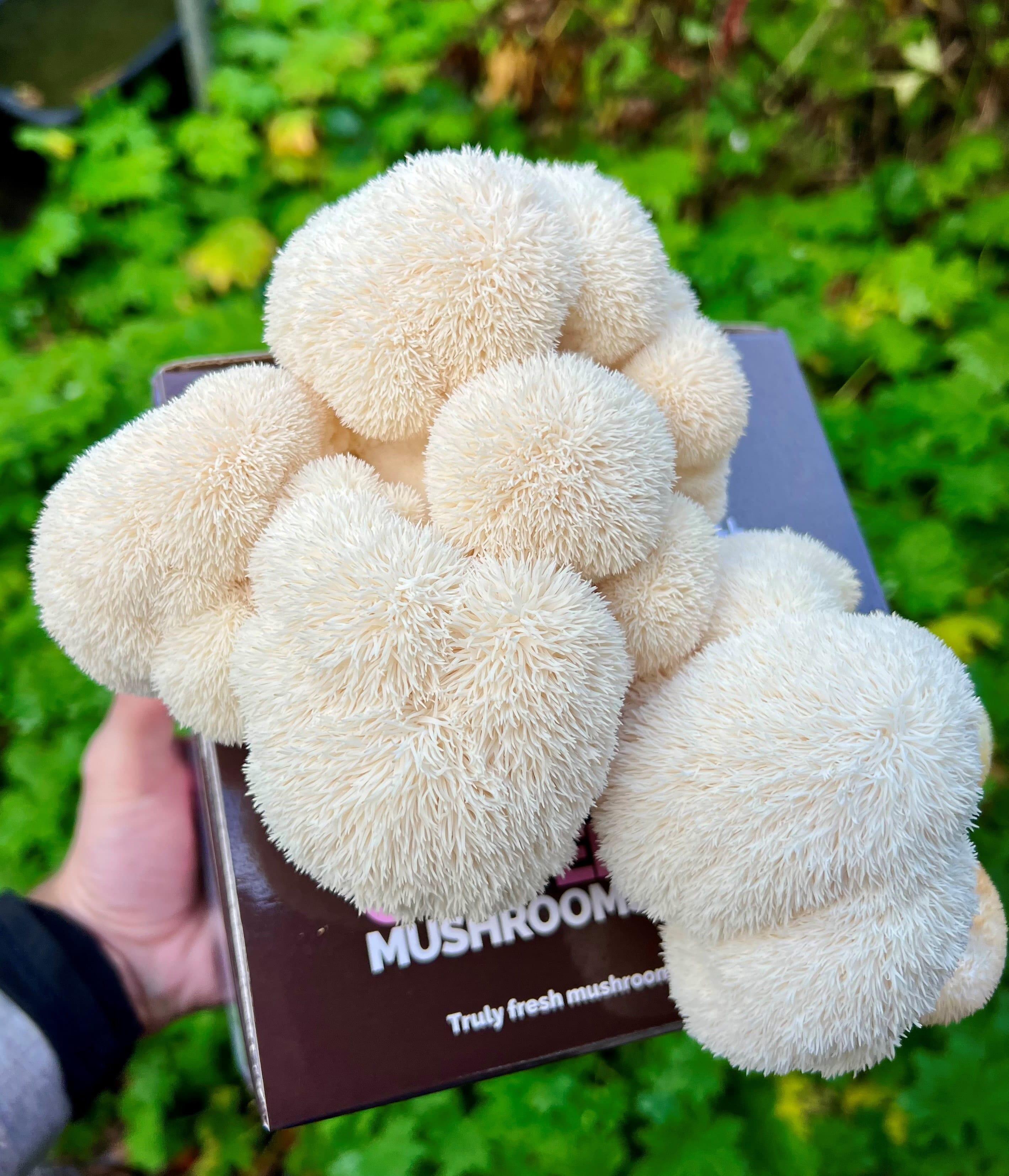
Fresh Lion's Mane has a distinctive shaggy appearance with soft white spines
What does Lion's Mane taste like?
Lion's Mane has a mild, slightly sweet flavour that is less earthy than most mushrooms. People often describe it as having a seafood quality, somewhere between lobster and crab, especially when seared in butter. The flavour is subtle rather than strong, which makes it versatile in the kitchen. It absorbs seasoning well and takes on the character of whatever it is cooked with.
The texture is where Lion's Mane really stands out. The fibrous structure pulls apart like shredded chicken or pork, giving it a satisfying, meaty bite that most other mushrooms cannot match. When seared at high heat, the outside becomes crisp and golden while the inside stays soft and juicy. This combination of crisp exterior and tender interior is what makes it so popular for nuggets, steaks, and stir-fries.
Freshness matters. Shop-bought Lion's Mane can sometimes taste bland or feel spongy because it has been sitting in packaging for days. Home-grown Lion's Mane, harvested just before cooking, has a firmer texture, a cleaner bite, and a more pronounced flavour. That difference is one of the main reasons people choose to grow Lion's Mane from a kit rather than buying it from a shop.
If you have tried Lion's Mane before and found it bland, the problem was probably freshness or cooking method, not the mushroom itself. Fresh Lion's Mane, torn by hand and seared hard in a hot pan, tastes completely different from a pre-packed piece that has been gently sauteed. Our Lion's Mane growing tips cover how to get the best results from your kit.
How to prepare Lion's Mane before cooking
Lion's Mane does not need peeling, and it does not need much trimming. The entire fruit body is edible apart from the very base where it was attached to the growing block. Preparation is simple, but how you break it down affects the final result.
Tear, do not cut
Tearing Lion's Mane by hand gives irregular edges that crisp better during cooking. Cutting with a knife creates smooth surfaces that do not brown as well. Pull the mushroom apart into pieces roughly the size you want to eat. For steaks, tear into thick slabs. For nuggets, tear into bite-sized chunks. For stir-fries, shred it into thin strips.
Do not wash it under running water
Lion's Mane absorbs water like a sponge. Washing it under the tap will make it soggy and difficult to sear. If it needs cleaning, brush off any loose debris with a dry cloth or pastry brush. Home-grown Lion's Mane from a kit is typically very clean and rarely needs anything beyond a quick brush. For more growing tips, see our guide on what to avoid when growing Lion's Mane.
Press out excess moisture before cooking
Even without washing, Lion's Mane holds moisture naturally. Gently pressing each piece between your hands or with a clean tea towel before cooking removes excess water and helps achieve a better sear. This step makes the biggest difference to crispness.
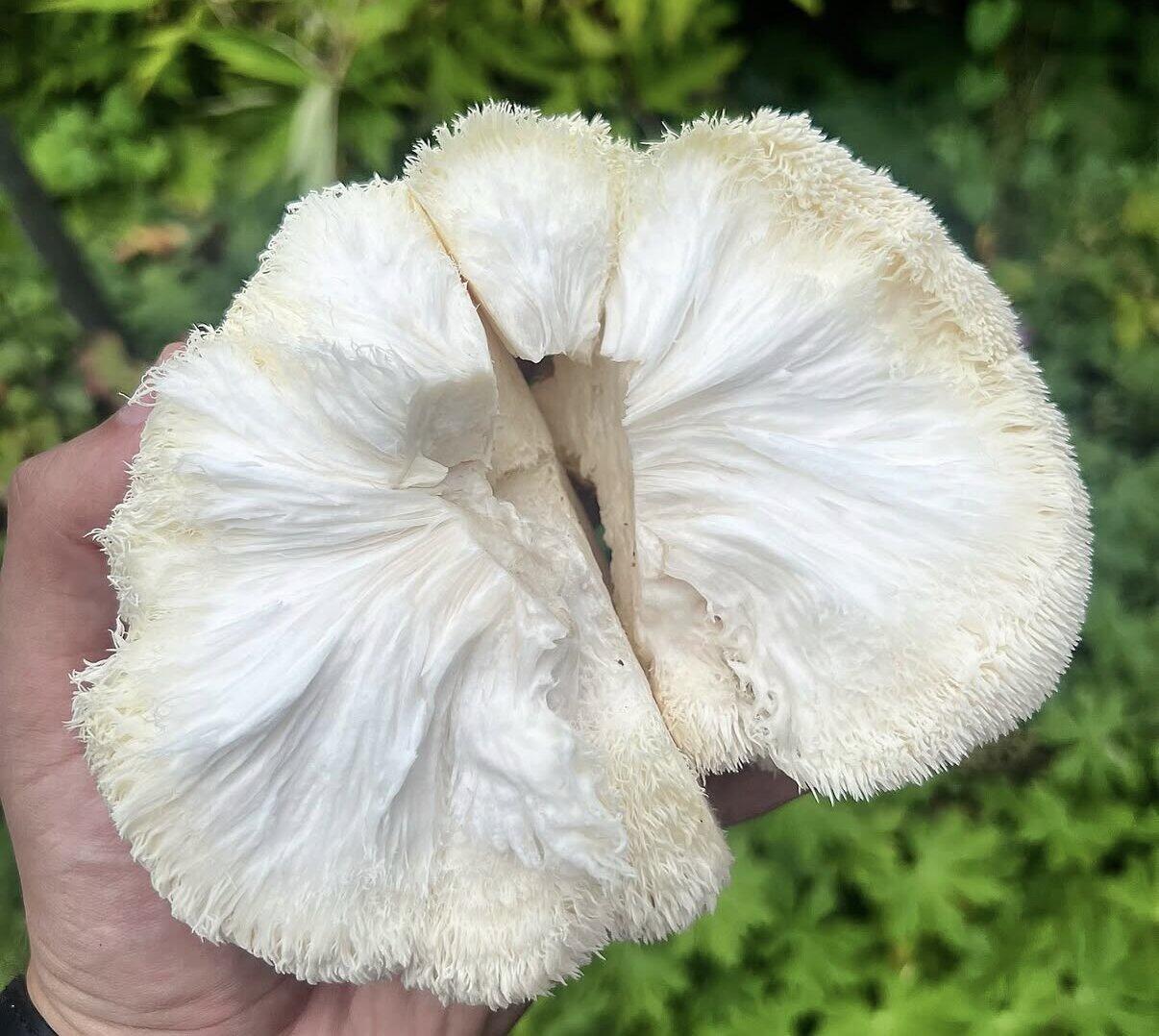
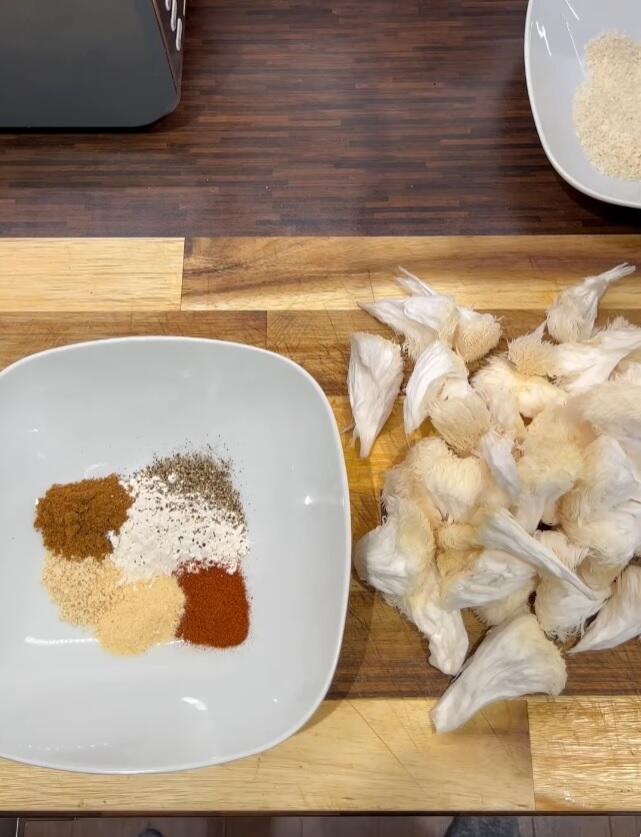
Left: tearing by hand gives irregular edges that crisp well -- Right: pieces prepared and ready for the pan
The best ways to cook Lion's Mane
Lion's Mane responds well to high heat. The goal with most cooking methods is to drive moisture out of the surface and create a golden, crisp exterior while keeping the inside tender. Low and slow cooking tends to make it soft and forgettable. High heat and good contact with the pan or air fryer basket is what brings out its best qualities.
Pan frying (steaks and slabs)
The most popular method. Tear the mushroom into thick steaks, press out moisture, and sear in a hot pan with oil or butter. Do not move the pieces for the first two to three minutes. Let them develop a golden crust before flipping. Season with salt, garlic, and a squeeze of lemon after cooking. The result is a crisp, golden exterior with a juicy, fibrous centre.
Air frying (nuggets and bites)
Lion's Mane makes excellent air fried nuggets. Tear into bite-sized pieces, dip in a seasoned batter, roll in panko breadcrumbs, and air fry at 190 degrees Celsius for around 10 minutes. The air fryer creates a crunchy coating with less oil than deep frying. The fibrous interior gives a satisfying, meaty bite that works as a snack, in wraps, or as part of a main meal.
Roasting
Tear into large pieces, toss in oil with seasoning, and roast at 200 degrees Celsius for 20 to 25 minutes. Roasting develops deep, caramelised flavour and a satisfying chew. It works well as a side dish, on top of grain bowls, or as part of a roasted vegetable tray. Turn the pieces halfway through for even browning.
Stir frying
Shred into thin strips and stir fry in a very hot wok with oil, garlic, soy sauce, and whatever vegetables you are using. Lion's Mane works well alongside noodles, pak choi, peppers, and spring onions. The strips crisp at the edges while staying tender in the centre. Cook in small batches to avoid steaming rather than frying.
Shredding for pulled "meat" dishes
Lion's Mane shreds naturally along its fibres, which makes it an excellent stand-in for pulled pork or shredded chicken in tacos, sandwiches, and wraps. Shred finely, sear hard in a pan to crisp the edges, then toss in your sauce of choice. Barbecue sauce, teriyaki, and buffalo sauce all work well. The texture holds up to heavy sauces without falling apart.
Pan fried Lion's Mane steaks with a golden crust and tender, fibrous centre
Simple seasoning that works with Lion's Mane
Because Lion's Mane has a mild flavour, it absorbs seasoning well and takes on the character of whatever it is cooked with. You do not need complicated ingredients. A few simple pairings bring out the best in it.
For a classic sear
Butter, garlic, salt, black pepper, and a squeeze of lemon. This is the simplest and most popular way to cook Lion's Mane, and it lets the natural flavour and texture do the work.
For Asian-inspired dishes
Soy sauce, sesame oil, ginger, chilli flakes, and a splash of rice vinegar. Works well in stir-fries and noodle dishes. The umami from soy sauce pairs naturally with the mild sweetness of Lion's Mane.
For crispy nuggets
Garlic powder, onion powder, smoked paprika, cumin, salt, and pepper mixed into the batter. Panko breadcrumbs for the coating. This is the seasoning base used in our air fried Lion's Mane nuggets recipe.
For pulled "meat" style
Barbecue sauce, smoked paprika, maple syrup, and a pinch of cayenne. Shred, sear, then toss in the sauce. Works in wraps, on buns, or piled on top of loaded fries.
Everyday meals that work with Lion's Mane
Lion's Mane does not have to be a special occasion ingredient. Once you know how to prepare and cook it, it fits into everyday meals as a protein element or a side. Here are some of the simplest ways to use it during the week.
Breakfast
Seared Lion's Mane slabs on toast with a poached egg. The crispy edges contrast with the runny yolk. Season with salt, pepper, and a drizzle of chilli oil.
Lunch
Shredded and seared in a wrap with avocado, salad, and sriracha mayo. Or torn into nugget-sized pieces, battered, air fried, and served with dipping sauce as a quick meal.
Dinner
Pan fried steaks as the centrepiece of a meal, served alongside roasted vegetables and mashed potato. Or stir fried strips in a noodle dish with pak choi, peppers, and soy sauce. It also works well torn into pasta sauces, where the fibrous texture adds body.
Snacks and sides
Air fried nuggets with barbecue or garlic mayo dip. Roasted chunks tossed with seasoning as a side dish. Crispy shreds piled on loaded fries or nachos.
Left: pan fried Lion's Mane steaks with garlic and butter -- Right: shredded Lion's Mane in a lunch wrap
Fresh vs powdered: which Lion's Mane format suits food use
Lion's Mane is available in two main formats for kitchen use: fresh (either shop-bought or home-grown) and powdered. They serve different purposes and are not interchangeable.
Fresh Lion's Mane is what you want for cooking. It gives you the texture, the sear, the bite, and the visual impact on the plate. It works as a main ingredient in its own right. Home-grown Lion's Mane from a Merryhill Mushrooms growing kit gives the freshest possible starting point because you harvest it minutes before cooking.
Powdered Lion's Mane is a different product. It is typically used as an addition to drinks like mushroom coffee and hot chocolate rather than as a cooking ingredient. If the wellness side interests you, our article on the power of Lion's Mane mushroom coffee explains how that format works. The powder dissolves into liquids and does not provide the texture or sear that makes fresh Lion's Mane appealing in food. If your goal is cooking, fresh is the format you want. If you are curious about the broader reasons people include Lion's Mane in their routine, our articles on 5 reasons to try Lion's Mane and which mushrooms are best for concentration cover the wellness side in more detail.
How to store Lion's Mane after harvest
Fresh Lion's Mane keeps well in the fridge for up to a week when stored correctly. Place it in a paper bag or loosely wrapped in a paper towel inside the fridge. The paper absorbs excess moisture and prevents the spongy texture that comes from storing mushrooms in sealed plastic.
Do not wash it before storing. Only clean and prepare it when you are ready to cook. If you have more than you can use within a week, Lion's Mane can be sliced and dried, frozen after cooking, or cooked into a sauce and stored for later use.
One of the advantages of growing Lion's Mane from a kit is that you can harvest only what you need and leave the rest growing. This reduces waste and means you always cook with the freshest mushroom possible. Most kits produce more than one flush, so you can spread your harvest across several meals over a few weeks.
If you want to see what growing Lion's Mane at home actually looks like, the Mummy Fever growing kit review and the Chatty Gardener kit review both cover the experience from unboxing to harvest.
Grow Your Own Lion's Mane at Home
Always have fresh Lion's Mane on hand for your cooking. Our growing kit arrives fully colonised and ready to fruit. Harvest in as little as 14 days, no experience needed.
Shop Lion's Mane Growing KitFrequently asked questions about cooking Lion's Mane
What does Lion's Mane mushroom taste like?
Lion's Mane has a mild, slightly sweet flavour that is often compared to lobster or crab. The taste is subtle and less earthy than most mushrooms. The texture is the standout quality. It pulls apart like shredded meat and crisps well when seared at high heat.
Can you eat Lion's Mane raw?
Lion's Mane can be eaten raw, but cooking brings out far more flavour and improves the texture significantly. Raw Lion's Mane is spongy and bland compared to the crisp, golden result you get from searing or air frying. Cooking is recommended for the best eating experience.
Is Lion's Mane a good meat substitute?
Yes. Lion's Mane is one of the most convincing plant-based meat alternatives because of its fibrous, pull-apart texture. It works well in place of chicken in nuggets and wraps, in place of pulled pork in tacos and sandwiches, and as a steak alternative when seared in thick slabs. It suits vegan, vegetarian, and flexitarian meals.
Why is my Lion's Mane bland or spongy?
The two most common causes are excess moisture and low cooking heat. Press out moisture before cooking, use a hot pan or air fryer, and do not overcrowd the cooking surface. Freshness also matters. Home-grown Lion's Mane harvested the same day has noticeably better flavour and texture than pre-packed mushrooms that have been stored for days.
How long does fresh Lion's Mane keep in the fridge?
Up to a week when stored in a paper bag or loosely wrapped in paper towel in the fridge. Do not store in sealed plastic, which causes sweating and speeds up spoilage. Do not wash before storing. Only clean and prepare it when you are ready to cook.
Can I grow Lion's Mane at home for cooking?
Yes. A Lion's Mane growing kit from Merryhill Mushrooms arrives fully colonised and ready to fruit indoors. Most kits produce their first harvest within 14 days and can produce multiple flushes. Growing at home means you harvest at peak freshness, which gives the best possible texture and flavour for cooking. The Lion's Mane growing instructions cover everything you need to get started.
Related reading
Published by Merryhill Mushrooms
Sussex, UK | Six generations of mushroom growing excellence