Where to place your mushroom kit at home for the best results
Where to Place Your Mushroom Kit at Home for the Best Results
Where you put your mushroom growing kit matters more than most people expect. The right spot gives steady temperature, enough humidity, limits harsh airflow, and provides indirect light. The wrong spot can stall growth, dry out the block, or cause the mycelium to overgrow before any mushrooms form. This guide covers the best and worst locations in a typical UK home.
All Merryhill Mushrooms growing kits are designed to be grown indoors. The ideal temperature range is 14 to 21 degrees Celsius, with 17 to 18 degrees being the optimum for steady, consistent growth. The kit needs to be out of direct sunlight, away from heat sources, and in a space with enough airflow to prevent the growing environment becoming too enclosed. You also need to avoid high airflow areas as draughts will dry out the mushrooms and compost.
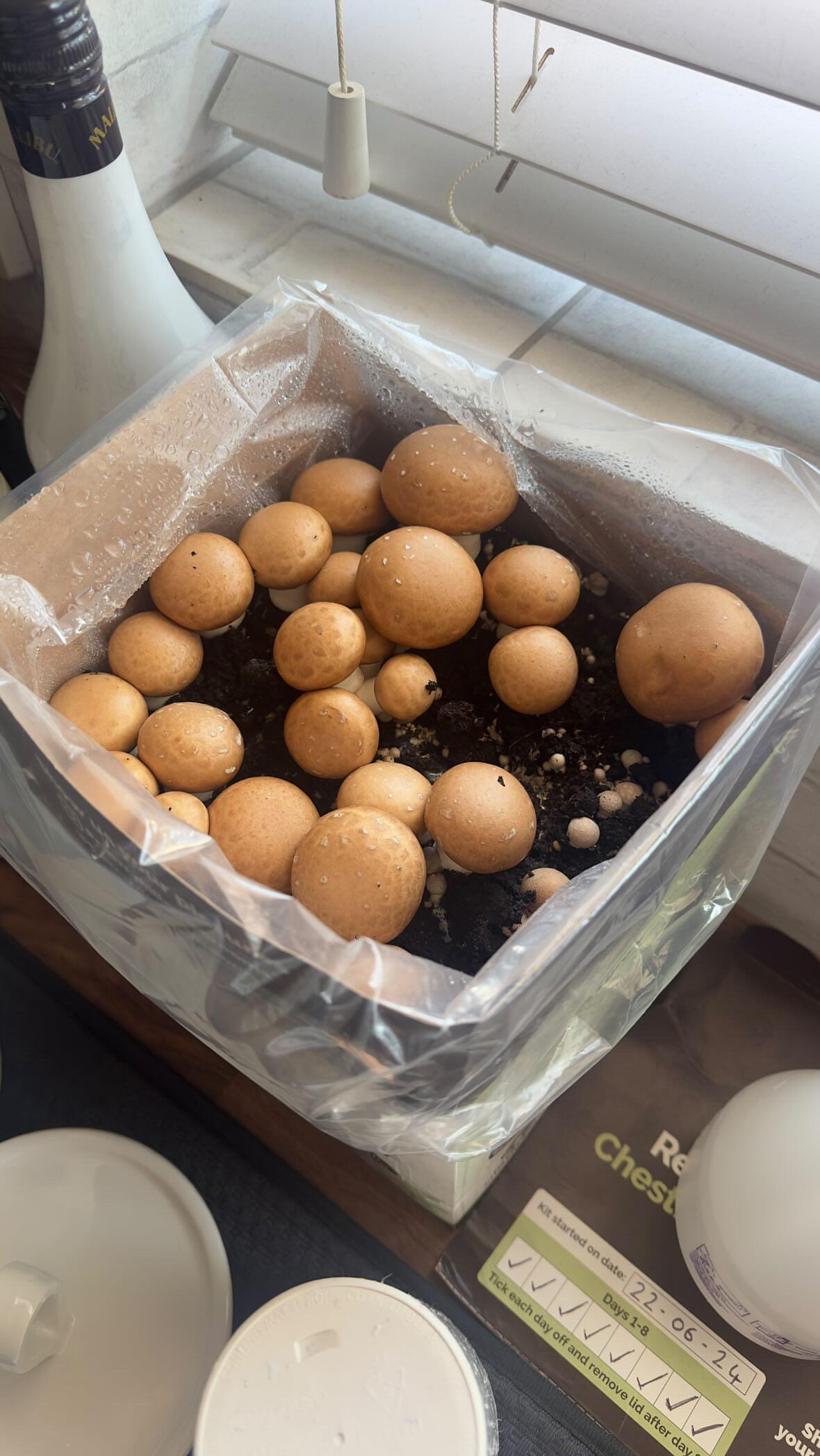
A kitchen worktop with indirect daylight and steady temperature is one of the best spots for a growing kit
What mushroom kits actually need from their environment
Mushrooms are not plants. They do not need direct sunlight, they do not photosynthesise, and they do not grow in soil. What they do need is a stable environment where four conditions stay reasonably consistent throughout the day.
Stable temperature
Between 14 and 21 degrees Celsius, with 17 to 18 degrees being optimum. Consistency matters more than hitting an exact number. A room that holds at a steady 17 degrees will produce better results than one that swings between 12 and 24 throughout the day.
Humidity
Mushrooms are roughly 90 percent water and are prone to drying out in harsh environments. Regular misting keeps the compost surface damp, but the room itself should not be so dry that moisture evaporates faster than you can replace it.
Airflow
Fresh air exchange is essential. Mushrooms release carbon dioxide as they grow and need fresh oxygen to develop properly. An enclosed space with no air movement causes problems, from leggy, thin growth to mycelium that overgrows the surface instead of producing mushrooms.
Indirect light
Mushrooms use light to sense direction rather than for energy. A bright room with natural daylight is ideal. Direct sunlight is not, because it raises the temperature around the block and dries out the surface faster than misting can keep up with.
The best rooms in a UK home for growing mushrooms
Most UK homes have at least one room that falls naturally within the right conditions. You do not need a dedicated growing space or any specialist equipment. The kit just needs a stable spot where it will not be knocked, forgotten, or exposed to extremes.
Kitchen
Kitchens tend to hold a steady temperature through the day, especially away from the hob and oven. A worktop away from the cooker and out of direct sunlight is one of the most popular spots. The natural humidity from cooking and boiling water also helps. Place the kit somewhere it will not get splashed, knocked, or moved during meal prep.
Utility room
Utility rooms are often cooler than the rest of the house and less affected by central heating. If your utility room has a window for light and is not sealed shut, it can be an excellent growing spot. The humidity from a washing machine or tumble dryer can also work in the kit's favour, provided the room does not overheat when appliances are running.
Spare bedroom
Spare bedrooms work well because they usually have a window for indirect light and tend to stay cooler than living areas, especially if the radiator is turned down or off. The kit can sit on a desk, shelf, or table without being disturbed. This is a particularly good option in summer when the rest of the house may get too warm.
Bathroom
Bathrooms can work if they have natural light and some ventilation. The humidity from showers helps, and the room is often a stable temperature. The main risk is a bathroom with no window and an extractor fan that runs constantly, which can dry the air too quickly. A bathroom with a window cracked open is better than one that relies entirely on mechanical ventilation.
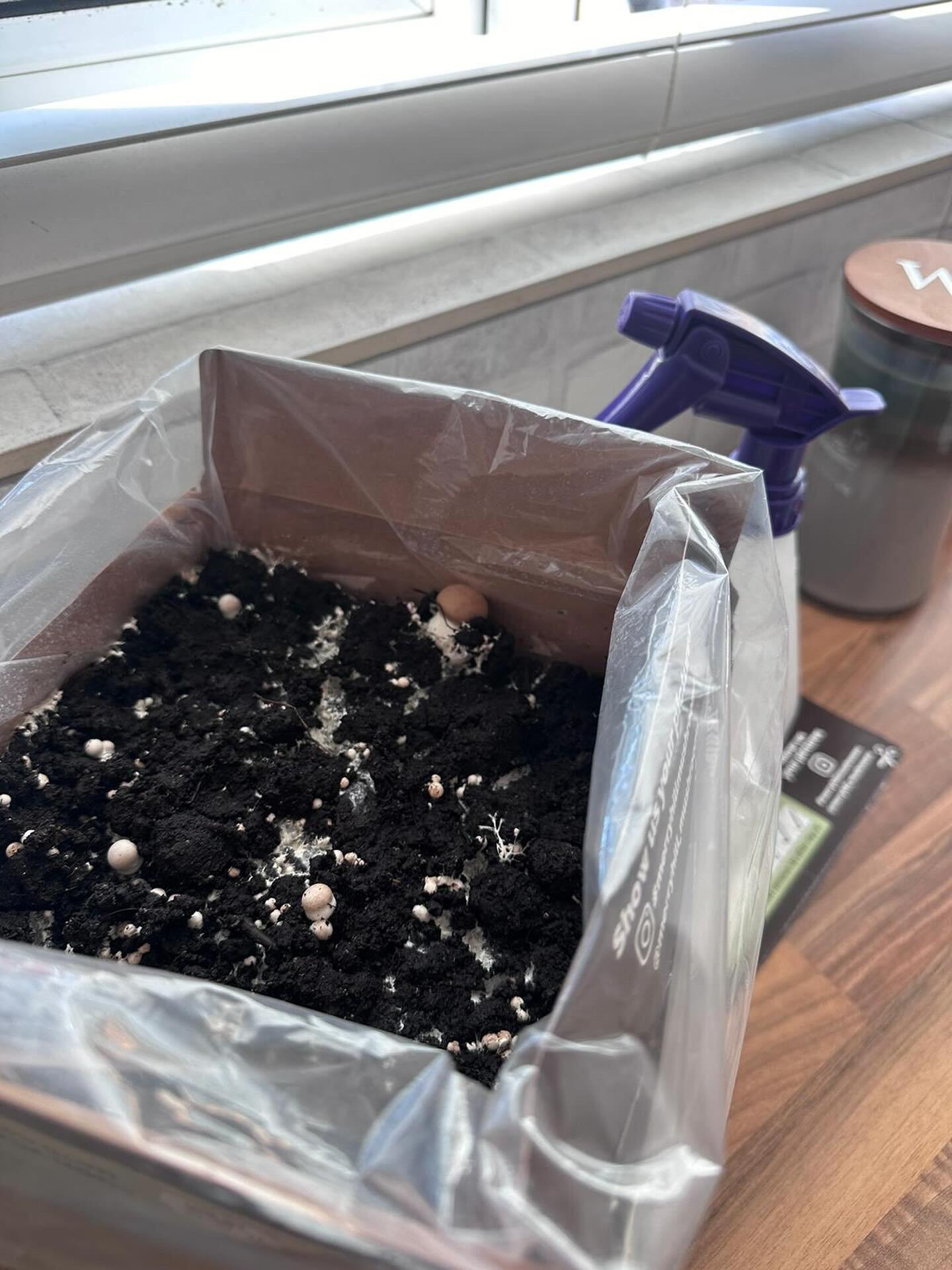

Left: a kitchen worktop away from the cooker -- Right: Grown on a chest of drawers with indirect daylight
Where NOT to place your mushroom kit
Some spots in the home feel like they should work but actually create conditions that stall growth, overheat the block, or cause the mycelium to behave in ways that prevent mushrooms from forming. These are the locations to avoid.
Windowsills
Windowsills seem logical because they get light, but they also get direct sunlight for part of the day. That heats the block, dries the surface, and creates temperature swings that stall growth. Even on a north-facing window, temperature drops at night can be too severe in winter. Place the kit in the room, not on the sill.
Near radiators or heat sources
Radiators create a zone of dry, warm air that pulls moisture away from the kit faster than misting can replace it. Even a kit placed a metre from a radiator can dry out if the heating runs frequently. The same applies to heated towel rails, fan heaters, and spots near ovens or hobs. Keep the kit well away from anything that produces direct heat.
Airing cupboards
Airing cupboards are warm and enclosed, which feels like it should suit mushrooms. In practice, the warmth is too high and too dry, and there is no airflow. Mushrooms need fresh air exchange to fruit. Without it, the mycelium continues to grow vegetatively instead of producing mushrooms, and the kit can overheat.
Small cupboards and enclosed shelves
Any space that is sealed or has very limited air movement will cause problems. When air does not circulate, carbon dioxide builds up around the kit and oxygen levels drop. This triggers the mycelium to keep growing across the surface instead of forming pins. If you notice thick white growth covering the block with no sign of mushrooms, the environment is likely too enclosed and the mycelium has overgrown.
Conservatories
Conservatories experience some of the most extreme temperature swings in any UK home. They overheat in summer, freeze in winter, and receive far too much direct sunlight. Even in spring and autumn the temperature range through a single day can swing well outside the 14 to 21 degree range that mushroom kits need.
Greenhouses and garden sheds
Merryhill Mushrooms growing kits are designed for indoor use. Greenhouses have the same problems as conservatories, with temperature extremes and direct sunlight. Garden sheds lack the temperature stability, light levels, and humidity control that indoor rooms provide. If you want to grow mushrooms outdoors, log inoculation kits are designed specifically for outdoor growing using inoculated dowels inserted into wood.
Garages
Unheated garages are typically too cold in winter and too variable the rest of the year. They also tend to lack natural light and can harbour dust, fumes, and contaminants that affect the growing block. If a garage is insulated, heated, and well-lit it might work in theory, but a room inside the house will almost always be a better option.
A simple test: if you are comfortable sitting in the room wearing a jumper, the temperature is probably right for a mushroom kit. If the room feels stuffy with no air movement, it is too enclosed. If you would not leave a chocolate bar there without it melting, it is too warm.
How placement affects the way your kit grows
Placement does not just affect whether mushrooms grow. It affects how they grow. The shape, size, and quality of your harvest are directly influenced by the conditions around the kit.
In a room with good airflow and indirect light, mushrooms tend to grow in compact, well-formed clusters with full caps and firm texture. In an enclosed space with stale air, they tend to grow tall and thin with small caps as the mushroom stretches towards any available fresh air. This elongated growth is a clear sign that the kit needs more ventilation.
Temperature also affects speed. A kit in a cooler room (closer to 14 degrees) will grow more slowly but often produces firmer, denser mushrooms. A kit in a warmer room (closer to 21 degrees) will grow faster but may produce softer, lighter fruit. Neither is wrong, but it helps to know what to expect depending on where the kit is placed.
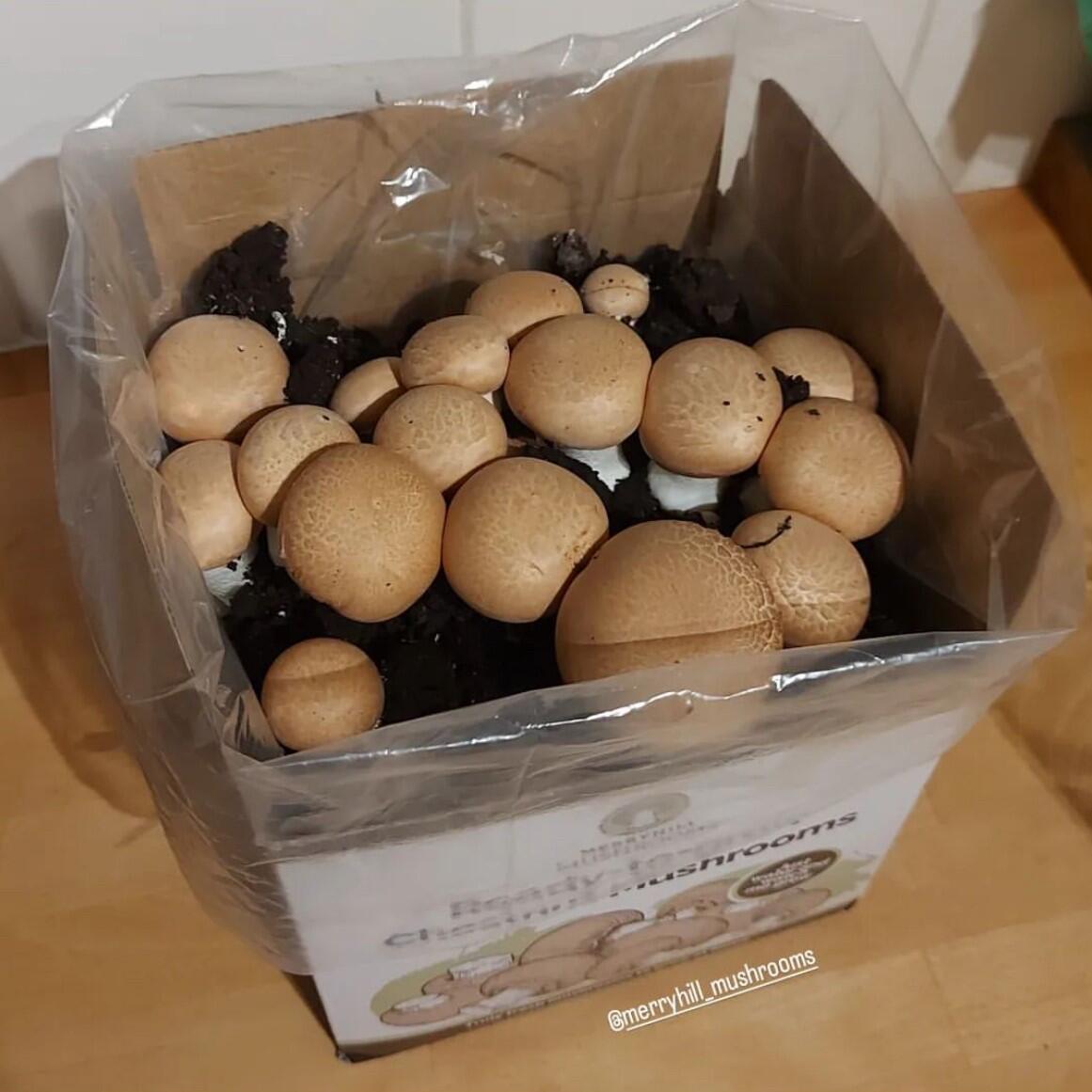
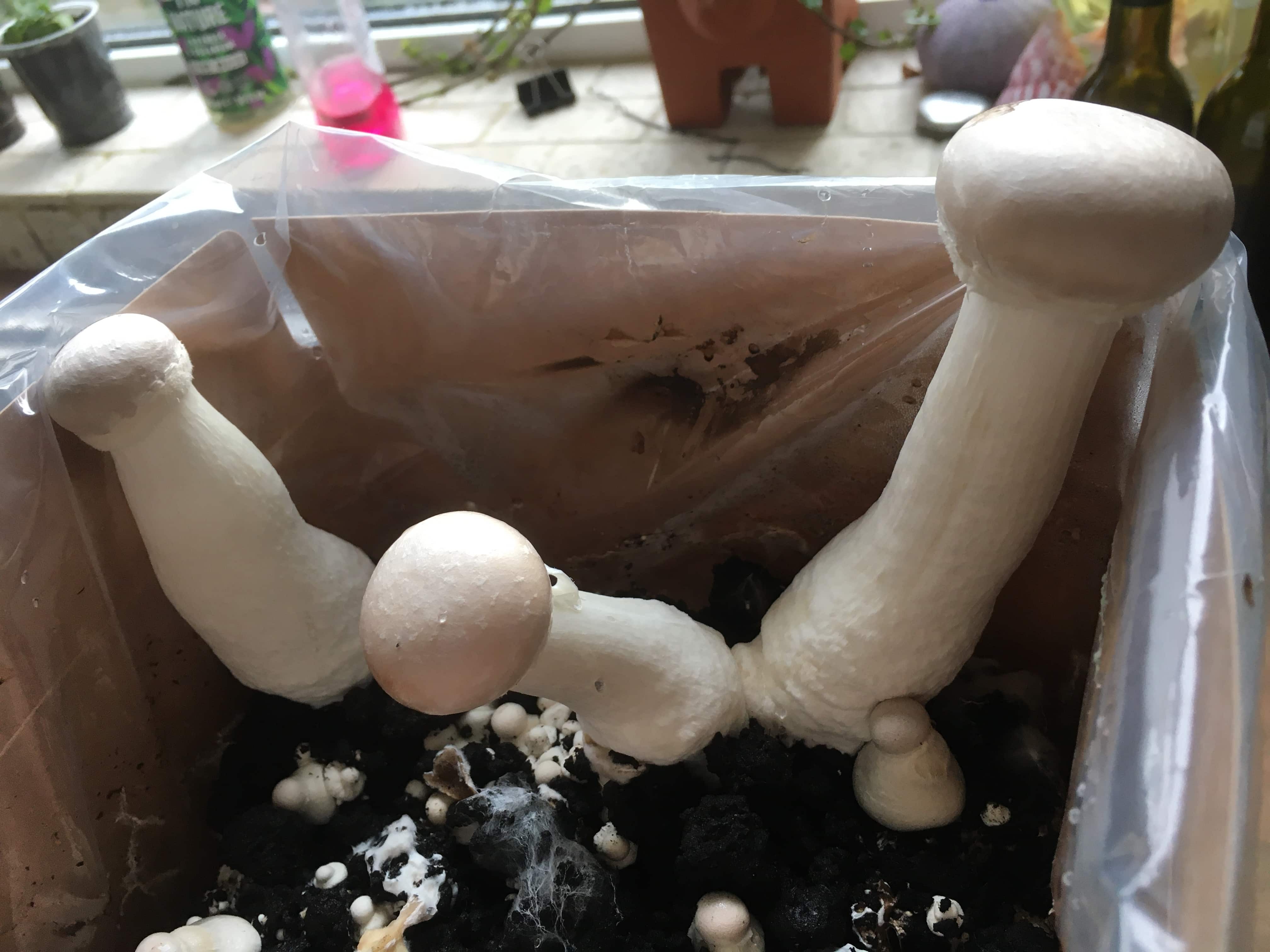
Left: compact, healthy growth from a well-ventilated room -- Right: elongated growth caused by poor airflow
What to do if your room is not ideal
Not every home has a room that ticks every box. That is normal, and small adjustments can make a significant difference.
If the room is too dry
Mist more frequently, or place a shallow tray of water near the kit to raise ambient humidity between sprays. Some growers loosely drape a plastic bag over the kit to trap moisture, leaving an opening at the bottom for airflow. This is not always necessary, but it helps in particularly dry rooms during winter when central heating is running.
If the room is too warm
Move the kit to the coolest room in the house. Spare bedrooms with the radiator turned off are often a good option in summer. Placing the kit lower down (on the floor rather than a high shelf) can also help, since heat rises and the lowest part of a room is usually the coolest. In a heatwave, the coolest room may still be above 21 degrees, in which case growth may slow down but will usually resume once temperatures drop.
If airflow is limited
Open the kit's environment more. If you have been keeping the kit in a partially enclosed space, move it out into the open room. Cracking a window for part of the day can help, as long as the kit is not in a direct draught. If the mycelium has overgrown the surface because of poor ventilation, improving airflow is the first step towards encouraging it to fruit.
If you cannot avoid temperature swings
Choose the room with the smallest range between day and night temperature. A room that drops to 13 degrees at night and rises to 19 during the day is fine. A room that drops to 8 degrees and climbs to 25 is not. If you use a programmable thermostat, keeping the heating consistent rather than boosting it in short bursts will help the kit as well as your energy bills.
Safe placement around pets and children
Mushroom growing kits are safe for homes with children and pets. The mushrooms are edible culinary varieties, the same species sold in supermarkets and used in restaurants. The substrate is organic material, not a chemical product.
The main concern is physical. Kits can be knocked over, poked, or interfered with by curious children or pets. Place the kit somewhere stable and out of easy reach. A high shelf, a worktop away from the edge, or a room that stays closed during the day are all practical options. If a pet does disturb the kit, brush off any loose substrate and resume normal care. The block is more resilient than it looks.
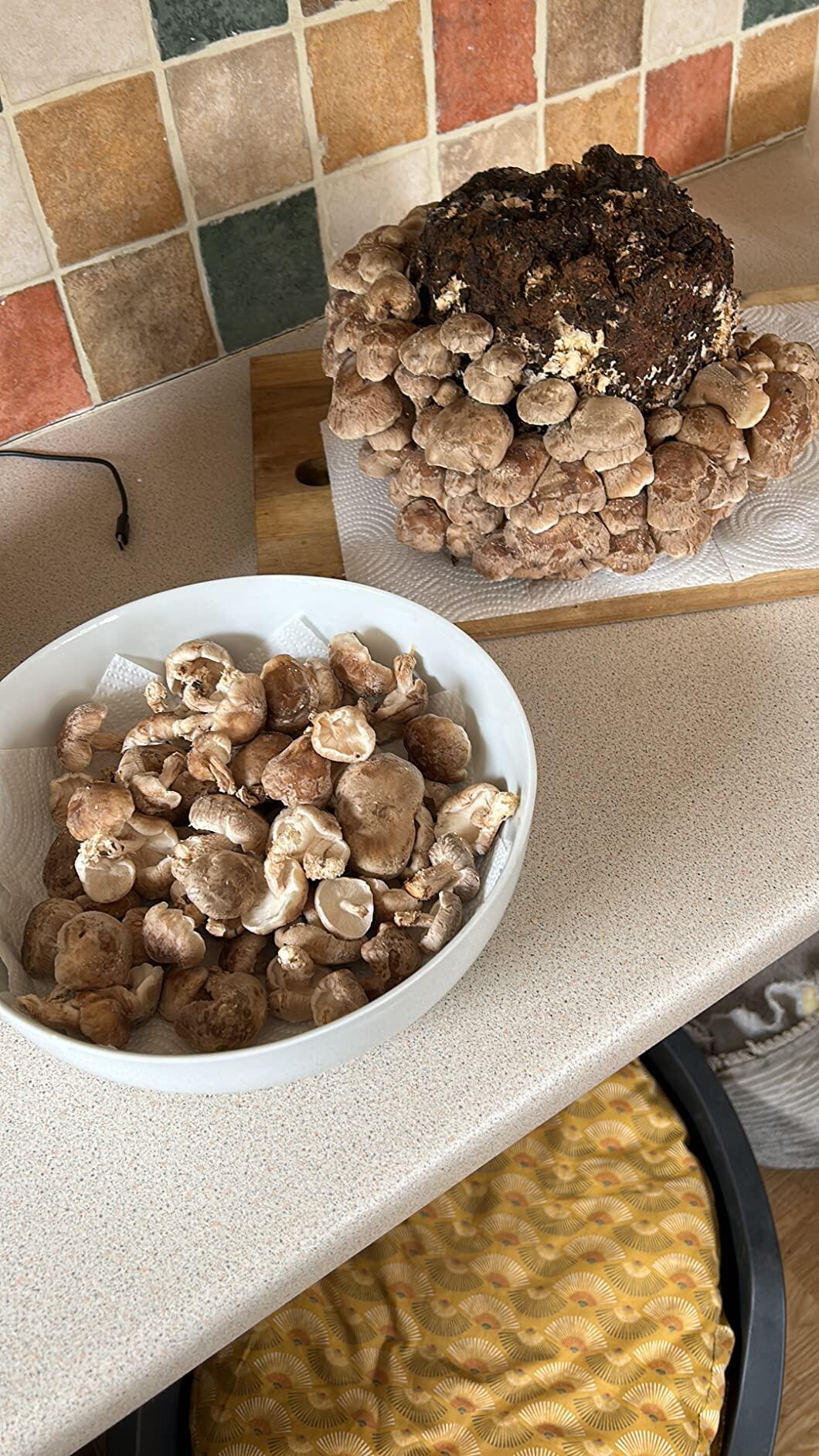
Place the kit somewhere stable and out of reach of pets and young children
Seasonal placement tips for UK homes
The best room for your kit may change with the seasons. UK homes behave differently in winter and summer, so it helps to think about where temperatures are most stable at the time of year you are growing.
Winter
Central heating is the biggest factor. Rooms with radiators running frequently can get too warm and too dry. The best winter spots are rooms where the heating is lower or off entirely but still above 14 degrees. A spare bedroom with the radiator valve turned down is often ideal. Avoid placing the kit near a radiator, even if the rest of the room feels cool.
Spring and autumn
These are often the easiest seasons for growing. UK homes naturally sit within the 14 to 21 degree range without much intervention. Most rooms will work, provided they get some natural light and are not completely sealed. The main thing to watch is overnight temperature drops in early spring or late autumn if the heating is off.
Summer
Heat is the challenge. South-facing rooms, conservatories, and upper floors can climb well above 21 degrees during warm spells. Move the kit to the coolest room in the house, ideally a north-facing or ground-floor room. If temperatures stay above 21 degrees for several days, growth may slow or stall. It will usually resume once conditions cool down.
Ready to Start Growing?
Every Merryhill Mushrooms growing kit arrives fully colonised and ready to fruit indoors. Choose your variety and find the perfect spot at home.
Shop Growing KitsFrequently asked questions about mushroom kit placement
What is the best temperature for growing mushrooms at home?
Between 14 and 21 degrees Celsius, with 17 to 18 degrees being the optimum for steady growth. Consistency is more important than precision. A room that holds at a stable temperature throughout the day will produce better results than one that fluctuates widely.
Can I grow mushroom kits outdoors?
Merryhill Mushrooms growing kits are designed for indoor use only. Outdoor conditions are too variable in the UK for reliable results with substrate-based kits. If you want to grow mushrooms outdoors, log inoculation kits use inoculated dowels inserted into wood and are built specifically for outdoor growing.
Can I put my mushroom kit in a cupboard?
No. Small cupboards and enclosed spaces restrict airflow, which causes carbon dioxide to build up around the kit. This can trigger the mycelium to overgrow the surface instead of producing mushrooms. The kit needs to be in an open room with natural air movement.
Do mushrooms need sunlight to grow?
Mushrooms do not need sunlight in the way plants do. They do not photosynthesise. Indirect daylight is enough to guide growth direction, and a bright room is better than a dark one. Direct sunlight should be avoided because it heats the block and dries the surface.
Why is my mushroom kit growing white fuzz but no mushrooms?
Thick white growth covering the surface without any pin formation usually means the growing environment is too enclosed. The mycelium is healthy but is not receiving the fresh air trigger it needs to start producing mushrooms. Move the kit to a more ventilated space and the overgrown mycelium guide explains the next steps.
Is it safe to grow mushrooms in a bedroom?
Yes. Mushroom growing kits are safe to keep in bedrooms. The mushrooms are edible culinary varieties and the substrate is organic material. The kit does not produce harmful fumes or allergens. A spare bedroom is actually one of the best growing locations because it tends to stay cool, stable, and undisturbed.
Can I move my kit to a different room if growth stalls?
Yes. If growth has stalled or slowed, moving the kit to a room with better conditions is often the fastest fix. Check that the new spot has stable temperature between 14 and 21 degrees, indirect light, and good airflow. Improvement should be visible within a few days if the environment was the issue. If nothing changes after a week, contact support with a photo of the kit.
Related reading
Published by Merryhill Mushrooms
Sussex, UK | Six generations of mushroom growing excellence