
How to Prepare Enoki Mushrooms: Trimming the Base and Separating Strands Cleanly
How to Prepare Enoki Mushrooms: Trimming the Base and Separating Strands Cleanly
A simple, no-waste method for getting fresh enoki ready for the pan in under two minutes.
To prepare enoki mushrooms, trim off the bottom 1 to 2 cm where the stems are pressed together in a compact base, then gently separate the loose strands above with your fingers. A very quick rinse is optional, but patting them dry is essential if you want them to brown rather than steam in the pan.
Quick answer
Typically Cut 1 to 2 cm off the base. Separate the strands above with your fingers. Skip rinsing where possible, or rinse briefly and pat thoroughly dry. One 150 g crop feeds roughly two people in a stir-fry or four in a soup.
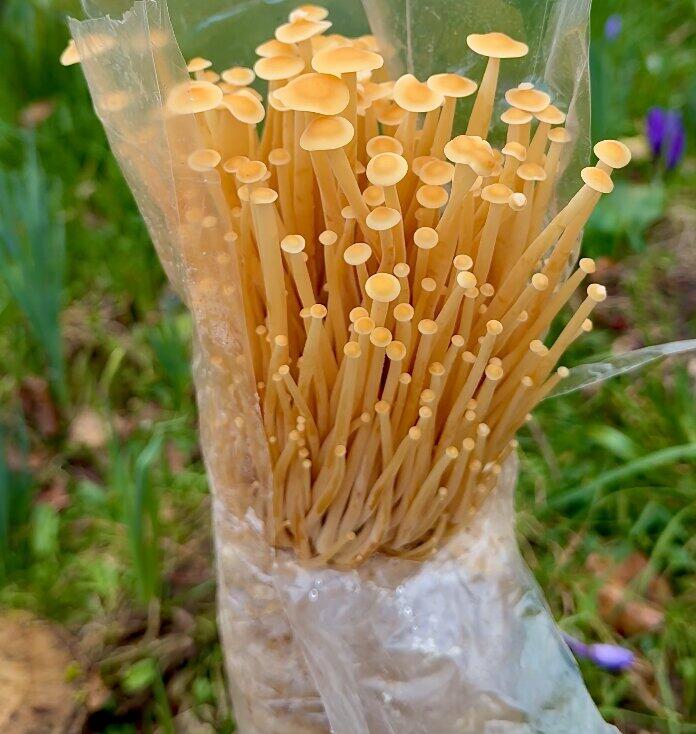
Fresh enoki come with a dense compressed base that needs trimming before the strands will separate cleanly.
Where to cut and why the base is removed
Fresh enoki are sold as a tight cluster with a compressed pad at the bottom. That pad is the growing medium the mushrooms were fruited in, pressed together with the base of the stems. It has a tough, slightly gritty texture and does not soften properly when cooked. Removing it is not about food safety, it is about texture and cleanliness.
Place the cluster on a board with the base pointing to one side. Cut straight across, roughly 1 to 2 cm up from the bottom. If you can see a clear line where the compact pad ends and the loose strands begin, cut just above that line. You will lose a little of the edible stem, but the trade-off is faster cooking and a cleaner mouthfeel.
Discard the base in your food waste or compost. It is not useful for stock because it will not impart flavour and can leave broth slightly gritty.
Kitchen tip
A serrated bread knife often cuts through the base more cleanly than a standard chef's knife, especially if the pad has dried slightly in the fridge. You are cutting through compressed fibres, not a soft vegetable.
How to separate the strands quickly
Once the base is off, the strands above will start to loosen on their own. Hold the cluster lightly at the stem end and fan it out with your fingers, gently breaking it into smaller bunches. You are not trying to separate every single strand, just to loosen them enough that they will cook evenly and not clump into one solid mass in the pan.
For most dishes, aim for bunches of roughly 8 to 12 strands. That size holds together nicely when stirred, gives you something substantial to pick up with chopsticks, and browns properly on the outside while staying tender inside. For soups and broths, keep the bunches a little smaller so they cook through in 30 to 60 seconds. For stir-fries, slightly bigger bunches give you more texture contrast.
If you are wrapping enoki in bacon or pancetta for a Japanese-style bundle, stick to around 15 to 20 strands per bundle and do not try to break them down further.
Rinsing: why less is more
Enoki are grown in clean, controlled indoor conditions, not in soil, so they rarely need washing. Any packaged fresh enoki from a supermarket or specialty grocer has already been prepared for the consumer shelf. A quick visual check is usually enough.
If you do want to rinse them, keep it fast. Run them under cold water for no more than five seconds, shake off the excess, and pat thoroughly dry with a clean tea towel or kitchen paper. Enoki absorb water quickly, and wet mushrooms steam rather than sear. If you are making a stir-fry or air-fryer dish, wet enoki will taste bland and limp. If you are making a soup, a quick rinse is fine because the mushrooms will cook in liquid anyway.
Dryness matters even more when you are battering or coating enoki. If you are planning tempura-battered enoki with a dipping sauce, the batter will not cling properly to damp strands, and the oil will spit aggressively the moment wet mushrooms hit the pan.
Common mistake to avoid
Soaking enoki in a bowl of water to "clean" them is the fastest way to ruin the texture. The strands become waterlogged, lose their signature crispness, and will release that water back into your pan as they cook, leaving you with a watery dish.
How much enoki per person
A standard supermarket pack of fresh enoki weighs 150 to 200 g. That is a surprisingly large volume once fluffed out, and people tend to under-estimate how far it goes. As a rough guide:
For a stir-fry or pan-fry where enoki is the star, plan on 75 to 100 g per person after trimming, which is roughly the right amount for dishes like crispy enoki mushrooms and egg. For a soup, ramen, or hot pot where enoki is one of several ingredients, 40 to 50 g per person is plenty because the strands swell and take up space in the bowl. For a side dish or garnish, a small handful, roughly 25 to 30 g per person, is enough to add texture without overwhelming the plate.
If you have leftover prepared enoki from one meal, they keep for 24 to 48 hours in a paper-lined container in the fridge. Do not store them pre-separated in a sealed plastic bag because they will sweat and go slimy within a day.
A quick note on Golden Enoki
Golden Enoki is prepared in exactly the same way as standard White Enoki. The base is trimmed, the strands are separated, and the same portion guidance applies. The only practical difference in the kitchen is that Golden Enoki holds its colour slightly better when cooked briefly, so it is worth keeping visible in the finished dish rather than burying it under sauce.
Grow your own gourmet mushrooms at home
Our ready-growing kits arrive already colonised and fruit within days on your kitchen counter. No experience needed.
Browse growing kitsFrequently asked questions
Do I need to wash enoki mushrooms before cooking?
Usually no. Fresh enoki are grown in clean indoor conditions and packaged ready to eat. If you want to rinse them, keep it to five seconds under cold water and pat them thoroughly dry before cooking.
How much of the base do I cut off?
Roughly 1 to 2 cm from the bottom, or just above the point where the compact pad ends and the loose strands begin. You will see a clear visual line on most packs.
Can you eat enoki mushrooms raw?
Enoki should be cooked before eating. They are always served cooked in traditional Japanese, Korean, and Chinese cuisine, even in cold dishes where they are blanched first and then chilled.
Why are my enoki watery in the pan?
The most common cause is rinsing and not drying properly. Enoki absorb water fast and release it back into the pan as they cook. Pat them thoroughly dry with a tea towel or kitchen paper before they go anywhere near heat, and cook them on a high heat in a hot pan so the surface moisture evaporates quickly.
How long do prepared enoki last in the fridge?
Trimmed and separated enoki will keep for 24 to 48 hours in a paper-lined container in the fridge. Store them loosely, not sealed in plastic, and use them sooner rather than later for best texture.
What to cook first
With the base trimmed and strands separated, the quickest path to a good first meal is enoki mushrooms with butter and soy sauce: small bunches, hot pan, salted butter, a splash of soy at the end. It is hard to get wrong and the mild flavour of enoki carries the butter beautifully. From there, miso soup and quick noodle bowls are the logical next steps.
If you like what enoki bring to the kitchen, they are also one of the more rewarding mushrooms to grow yourself. Our Enoki growing kit and Golden Enoki growing kit produce fresh clusters on your kitchen counter in a couple of weeks. You get the satisfaction of watching them grow, and the first cook is always noticeably fresher than anything you buy in a pack.
Published by Merryhill Mushrooms, six generations of growers in Storrington, West Sussex.